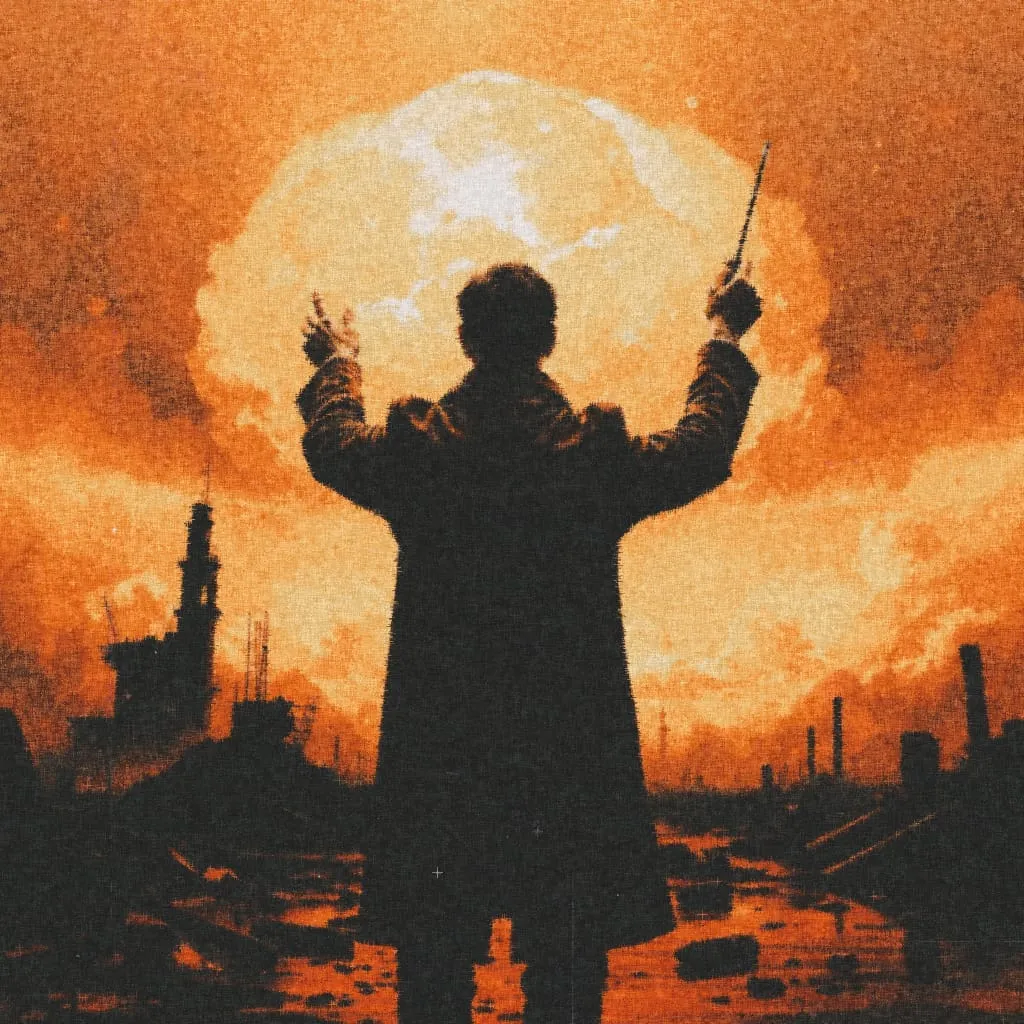
Spring 2025, CairoThematic Course
Confronting Modernity: Art, Politics, Religion and Science
Course details
- Cycle
- Spring 2025, Cairo
- Length
- 13 sessions
- Format
- In person
- Taught in
- English
Share
Discuss it with AI
- Choose your preferred AI assistant.
- A new tab will open with a prompt prepared for this page.
- Press Send to begin exploring the page through dialogue, CILAS-style.
About the course
Confronting Modernity: Art, Politics, Religion, and Science invites students to explore the intricate and often contentious relationship between modernity and its various dimensions. This course delves into how modernity shapes our understanding of art, politics, religion, and science, prompting critical reflections on contemporary society.
Through a carefully curated selection of foundational texts, we will engage with influential thinkers such as Martin Heidegger, Walter Benjamin, Michel Foucault, and Frantz Fanon. We will investigate key themes, including the impact of technology on human experience, the commodification of art in the age of mechanical reproduction, and the dynamics of power and surveillance in modern governance.
As we navigate these complex ideas, we will also confront critiques of modernity itself, examining alternative perspectives that challenge prevailing narratives. From John Zerzan's reflections on postmodernism to Ian Almond's exploration of Sufism and deconstruction, this course encourages students to question assumptions and clarify the meaning of modernity in their own lives.
Course Objectives:
By the end of this course, students will: - Develop a critical understanding of modernity's impact through reflections on art, politics, religion, and science. - Engage with key philosophical texts that add to our conceptual vocabulary. - Foster skills in critical analysis, discussion, and written expression regarding complex ideas related to modernity.
Who teaches it
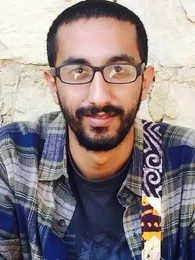
Omar El-Rakhawy is an AUC graduate of philosophy and has a Leiden Master degree in religious studies. In his Master’s thesis, which was titled “Religion and its Counter-Tendencies: A Reflection on the Question of Religion”, he discuss different approaches to the question of religion, especially criticizing objective approaches, and particularly when these are suppressive to subjective considerations. In doing this, he relied on a comparative approach between figures and thinkers of different backgrounds, among them Kierkegaard, Derrida, and two Sufi figures who were equally singular in their own contexts, namely Ibn ‘Arabi and al-Niffari. At CILAS Alex, he will serve as Teaching Fellow in the Humanities and Arts.
From the fellow Assessment Methods:
Assessment will be based on participation in discussions, written reflections on readings, and a final research paper exploring a topic related to modernity.
Course flow
Sessions without a date
Topics: Technology as a mode of revealing; the essence of technology; critique of technological thinking.
- Martin HeideggerReading for Session 1.
Topics: The relationship between art and truth; the significance of dwelling; architecture as a reflection of human existence.
- Martin HeideggerReading for Session 2.
Topics: The impact of mechanical reproduction on art; authenticity and aura; changes in perception and experience.
- Walter BenjaminReading for Session 3.
Topics: The concept of governmentality; mechanisms of power; surveillance and control in modern societies.
- Michel FoucaultReading for Session 4.
Topics: Colonialism and decolonization; violence and liberation; identity and culture in postcolonial contexts.
- The Wretched of the Earth (and other segments)Frantz Fanon.
Topics: The spectacle as a social relation; critique of consumer culture; implications for politics and society.
- The Society of the SpectacleGuy Debore.
Topics: The role of communication in rational discourse; public sphere and democracy; critique of instrumental reason.
- Jürgen HabermasReading for Session 7.
Topics: Meaning as use; the role of context in language; implications for philosophy and communication.
- Ludwig WittgensteinReading for Session 8.
Topics: Metaphor in language and thought; how concepts shape our understanding of reality.
- George Lakoff and Mark JohnsonReading for Session 9.
Topics: Critique of postmodernism; technology and alienation; alternatives to modernity.
- John ZerzanReading for Session 10.
Topics: Intuition vs. intellect; the role of religion in moral development; critique of mechanistic views of life.
- Henri BergsonReading for Session 11.
- Madness and CivilizationMichel Foucault.
- Wouter KustersReading for Session 12.
Topics: Historical perspectives on madness; critique of modernity through networks; implications for sociology and anthropology.
- We Have Never Been ModernBruno Latour.
- Grahamm HarmanReading for Session 13 (listed as "Readings: Grahamm Harman, Bruno Latour").
Course reading list
- The Postmodern ConditionJean Lyotard. Extra accompanying text.
- Philosophical InvestigationsLudwig Wittgenstein. Extra accompanying text.
- The Wretched of the EarthFrantz Fanon. Extra accompanying text.
- We Have Never Been ModernBruno Latour. Extra accompanying text.
- Sufism and DeconstructionIan Almond. Extra accompanying text.
Get the CILAS newsletter
New courses, open calls and articles from CILAS, in your inbox.



18 October 2026
Join CILAS's Spring semester of 2026
- Spring 2026, Cairo