Fall 2026, CairoShort Course
Of Planetary Boundaries and Limitless Humans
Course details
- Cycle
- Fall 2026, Cairo
- Starts
- Wednesday, Nov 25
- Meets
- Wednesday, 17:30–20:30
- Length
- 6 weeks
- Format
- In person
- Taught in
- Instruction in English only.
Share
Discuss it with AI
- Choose your preferred AI assistant.
- A new tab will open with a prompt prepared for this page.
- Press Send to begin exploring the page through dialogue, CILAS-style.
About the course
The purpose of the course is to generate constructive awareness and discussion of overwhelming environmental and social challenges that threaten the well-being of humans and perhaps the survival of civilization as we currently know it. The “food system” will provide a thread taking us through the course.
The course adopts a fully systemic (or “nexus”) approach, breaking down traditional academic silos, encouraging participants to globally examine:
the state of our planet’s key life-sustaining systems (e.g. climate regulation, nutrient cycling, etc.) to identify critical risks, thresholds and trends; and the governance and operation of production systems that depend on ecosystem services to meet society’s demand (e.g. energy, food, water) to gauge their reliability and efficiency in meeting human needs.
Students will develop a lucid outlook on the grave predicament we face because of:
the growing imbalance between what humans draw against what the Earth can supply; and very importantly increasing inequalities, political polarization and deeply entrenched vested interests, that constitute overwhelming barriers to change.
Various socio-economic development pathways leading to distinct futures (from utopia to extinction and many in-betweens) will be discussed. With student participation, the course will downscale the analysis and identify potential outcomes for Egypt, and implications for our personal choices.
The course will conclude with an acknowledgement of the immense pressure laid on the shoulders of today’s youth. Feelings of despair, hopelessness and anxiety are increasingly common and will be discussed openly with students.
For this course, the language of instruction is English exclusively.
Who teaches it
Mr. Nicolas Tremblay is a Professional Engineer from Montreal, Canada.
After working for an NGO, in private consulting firms (both small and large), in three agencies of the United Nations and two International Development Banks… Nicolas decided to take a pause from full-time work and settle in Egypt.
Nicolas’ career spans three decades and seven different duty stations, including Cairo, working in diverse but closely related sectors:
Adaptation to climate change, resilience of food systems and humanitarian aid Management of natural resources (land, water, biodiversity) Analysis of environmental and social impacts of development projects
As a CI-LAS Fellow, Nicolas provides guidance to students in the exploration of global issues of critical importance (e.g. climate change, inequalities, geopolitical conflict), looking across scientific and disciplinary silos.
Course flow
The flow may change as the course goes.
November 2026
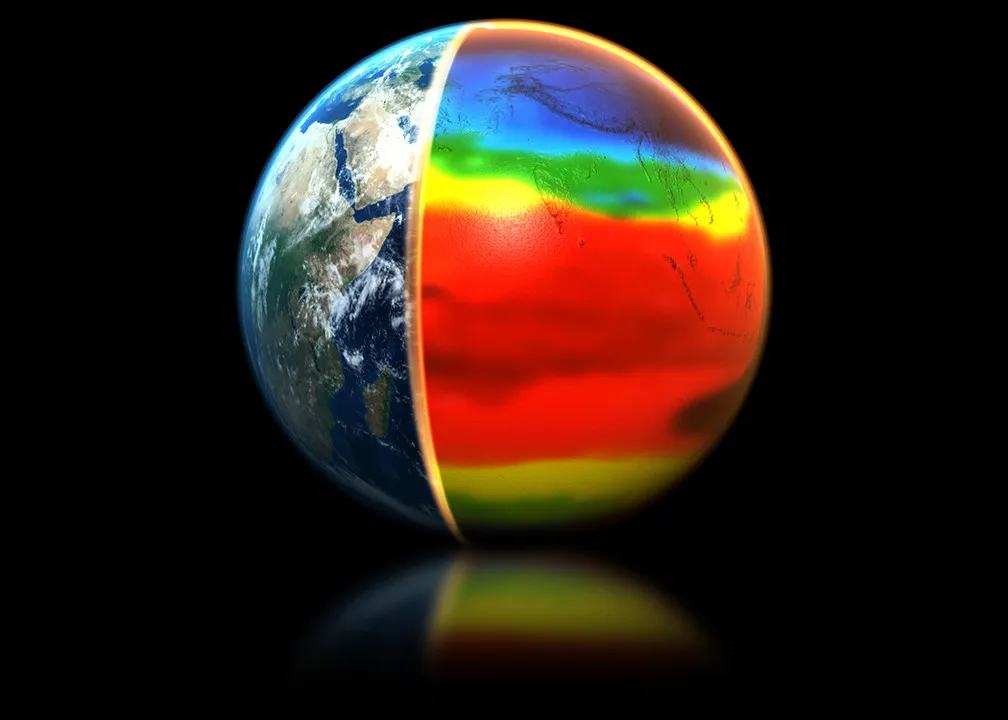
Following a round of introductions, we will look at the Earth’s 2026 Health Report, looking at it through the wholistic Planetary Boundaries approach. The symptoms (disasters, persistent poverty) are aligned with the lab results (7 out of 9 boundaries have been crossed). We will discuss in more detail two specific boundaries (nutrients cycling & climate change), that directly condition humanity’s ability to feed itself.
- Planetary Health Check 2026: A Scientific Assessment of the State of the Planet - Summary
- 2026 state of the climate report: challenges and opportunities | BioScience | Oxford Academic
- New report suggests more global temperature records ahead
- How Does the Use of Fertilizers Impact the Environment? - The Institute for Environmental Research and Education
- Modification of Biogeochemical Flows - Planetary Health Check
December 2026
Modern economies – and in particular our food value chains – are still highly dependent on fossil fuels, that are becoming ever more costly to extract. But what is and who controls the food system? Can it be oriented towards providing affordable healthy diets through adaptive agroecological approaches? What are the short- and long-term prospects for Egypt’s food security and sovereignty?
- Energy Usage vs. GDP in the Context of Climate Change.
- Blindspots of the green energy transition Olivia Lazard 2025
- EAT-Lancet Report - A Diet for Human and Planetary Health 2025
- The Future of Agriculture in the MENA Region: Navigating Food Security and Climate Resilience — Carboun Institute (download required)
We are in a global emergency. A strong El Niño is on us and we are dangerously close to multiple tipping points. But we don’t react (or very badly). Why? To understand our paralysis, we will need to consider: vested interests, a failing international order, global inequalities, technical realities, systemic inertia and a global epidemic of cognitive dissonance.
Key global development pathways (Club of Rome) will be presented, with their ranges of potential outcomes on the global environment and human well-being. We will downscale these pathways, focusing on Egypt to understand how diversely they condition the country’s future. Degrowth as societal projects will be presented for debate.
- Club of Rome Limits to Growth Herrington Update 2023
- Egypt_Vision_2030_EnglishDigitalUse.pdf (Intro, Principles, Enablers + Goals 1 & 4)
- Executive Summary: Policies for the Future of Farming and Food in Egypt | OECD 2026
- Degrowth: a path to transformative solutions for socio-ecological sustainability | Global Sustainability | Cambridge Core
A modest but rapidly growing share of the population believes that civilization is already doomed because of global warming’s self-amplifying feedback loops. Such existential uncertainty is new to humanity and hurts young people hardest. We will talk about our fears (if any), their impact in our lives, and discuss how to enhance our personal resilience and sense of purpose.
The final session will be developed with participant feedback.
Get the CILAS newsletter
New courses, open calls and articles from CILAS, in your inbox.



18 October 2026
Join CILAS's Spring semester of 2026
- Spring 2026, Cairo