Winter 2020, AlexandriaLab
Pedagogical Lab: An Act of Re-imagination and Reclamation of what matters in education
Course details
- Cycle
- Winter 2020, Alexandria
- Format
- In person
- Taught in
- English / Arabic
Share
Discuss it with AI
- Choose your preferred AI assistant.
- A new tab will open with a prompt prepared for this page.
- Press Send to begin exploring the page through dialogue, CILAS-style.
About the course
This lab is a journey into tracing and searching for emerging as well as long-existing pathways and pedagogical practices; it is concerned with the theory and practice of education. The lab employs theory and practice simultaneously, where theories on educational and communal practices are not just searched for and discussed but also tested, and sometimes are brought to life through the experiment itself of being together in the lab.
The lab is a collective exploration into how we can re-imagine, re-create “alternative” “education” models/spaces/communities, be it basic or higher education spaces. It is an attempt to “reclaim” our “indigenous wisdom” and find it within ourselves and our personal stories first. What does the “alternative” means, and “alternative” to what? How can education be our pathway for “emancipation”? How can stories from our lives as well as from different parts of the world help us create the meanings and forms we need for “education’? We question the roles and performances involved in any “education” process like that of “teacher” and “student” all throughout.
This lab is inspired by many traditions and practices from different parts of the world, namely self-directed and democratic education practices, emancipatory and critical pedagogy, art-based as well as place-based education practices. We try to use the space of the lab to experiment with, reclaim and live what we think education should look like, much more than talk about it.
The lab will be a work of ritual and risk. As a collective participating in this journey, we will create some rituals to provide a safe container for our explorations. Additionally, we will create a brave container to venture into many risks of collective explorations, questioning and re-imaginations.
During the journey of the pedagogical lab, participants are invited to experience the following:
co-design the course with the main facilitator based on the collective intentions, inquiries, and experiences of everyone involved. This will include co-designing the learning “outcomes”, flow of the course, what “success” means for us in this course and how we would like to “reflect”, “evaluate” and “celebrate” ourselves
shift roles between a student and a teacher intentionally, experiencing mutual discovery from a different end
engage with ideas, concepts and stories of “alternative education” places or communities that currently exist or have existed throughout history in different parts of the world
trace and question the pedagogical theory and practices informing the emergence of different alternative education places/communities
meet with, interview (sometimes in person and sometimes through Skype) pioneers in the “alternative education” movement across the world, mostly from the so-called Global South
embark on a collective journey of “healing” our “traumas” in and from education and open new portals of “re-imagining” the spaces where “education” can happen
share our own stories and experiences in relation to what is “alternative”, “de-colonial”, “emancipatory”, “cooperative” , “re-imaginative”
involve in a dialectical process of theory and experimentation where we apply bits and pieces of what we learn about, onto the model of CILAS Alexandria, as an “alternative education model”, observe and reflect on our applications
have individual and collective outputs from the journey that could span multiple mediums like journal keeping, drawings, audio recordings, with the purpose of documenting our collective journey, our reflections and our “trials” to make sense of it all
engage all the senses in learning be it the mind, body, or heart
learn through different mediums like readings, folktales, story-sharing, walking, conversations, food-sharing (taghmees), art-making and embodiments
Who teaches it
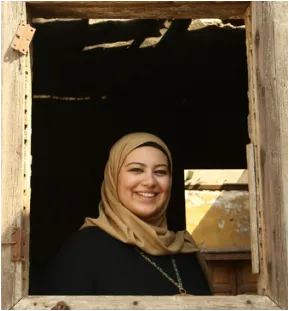
Nariman Moustafa is an activist and community organizer in the broader field of alternative learning. She is by “academic” training a dentist, who went (and still goes) through a journey of un-learning and healing from the education system. Over the past eight years, she has been working as a consultant, mentor, and facilitator (using action and theater based methods) for youth, refugees, and education projects founders. Being a self-directed, social learner, Nariman has done substantial search, through work and travel, with several alternative educational initiatives in India, Palestine, Denmark, Mexico and the US. She believes in the notion of learning shared by the Zapatistas communities in Mexico, that is “asking, we walk”. Hence, she asks questions, travels and connects to find possible answers and more questions. In these journeys, she likes to connect to as many fellows as possible to be able to inquire together, the latter being her intention for holding this space within the Pedagogy Lab at CILAS Alex.
Nariman founded “Mesahat: an Egyptian Network for Self-Organized Learning spaces” (a network of interconnected, inter-dependent alternative education spaces that apply the culture, values, and tools of Self-Directed Education). Within that framework, she is also the director of “Mesahat: Liberating Learning Spaces”, a self-directed, democratic un/school and learning community based in Cairo that works with children aged 6 to 17 years old. Nariman is a co-founder of “Mubadeeron fi Al-Taalem”, a 12-week school journey for people interested to bring about social change in the field of education, under the umbrella of “Education Square” organization. She is, additionally, a member of the global Ecoversities network, a planetary movement, initiated from the Global South for alternative, place-based, ecological, higher education models.
Get the CILAS newsletter
New courses, open calls and articles from CILAS, in your inbox.



18 October 2026
Join CILAS's Spring semester of 2026
- Spring 2026, Cairo