Winter 2020, AlexandriaThematic Course
Every cook can govern
Reflections on the philosophy of democracy and its practice
Course details
- Cycle
- Winter 2020, Alexandria
- Taught in
- English
Share
Discuss it with AI
- Choose your preferred AI assistant.
- A new tab will open with a prompt prepared for this page.
- Press Send to begin exploring the page through dialogue, CILAS-style.
About the course
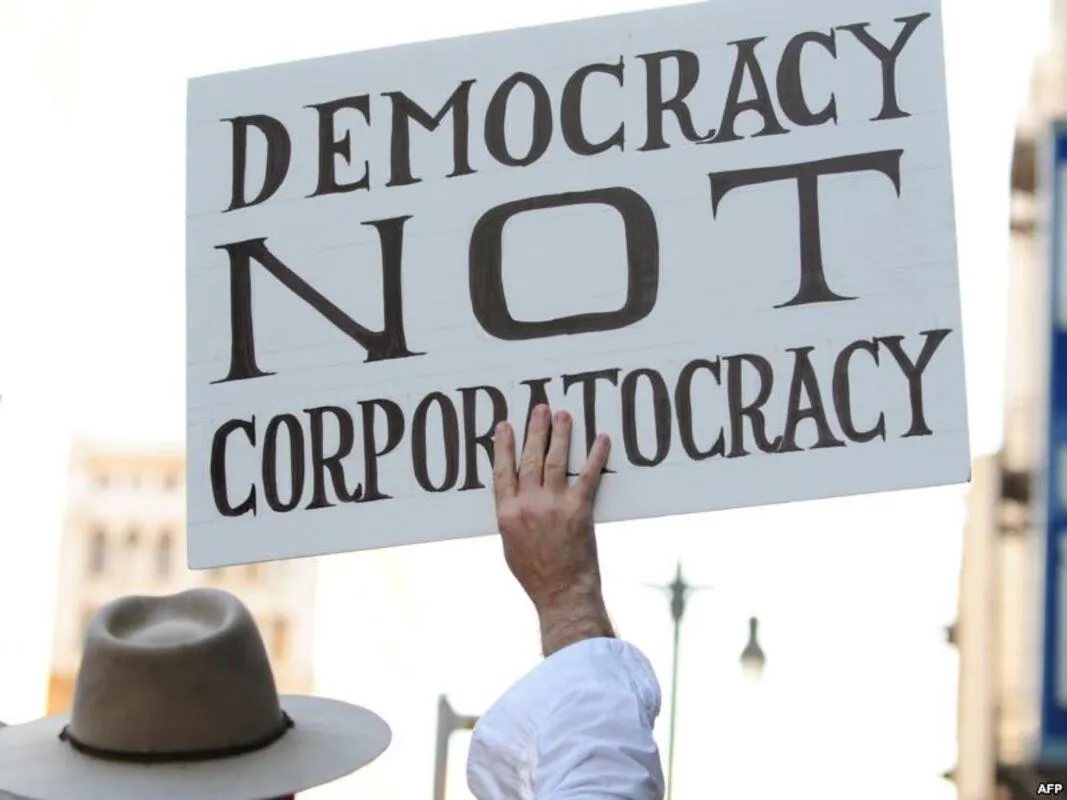
It might be that one of the simplest definitions of democracy is what the American president Abraham Lincoln once said that it is the “Government of the people, by the people, for the people”. It is also said that democracy is the fulfillment of complete collective authority in which the moment of election and voting is the moment that the citizen emancipate within his community, or as the French philosopher Rousseau once wrote: “In a democracy, people are free only at the moment of giving their votes. As for the rest of the time, they are the government’s slaves”. This hidden slavery in the representative organizations inspired the American poet Charles Bukowski to say, “The difference between democracy and dictatorship is that in democracies you vote first then you receive orders, but in dictatorships, you don’t waste your time voting.”
The one reason to reject establishing direct democracy from the perspective of most political thinkers remains that the masses cannot meet to govern all the time, it would be hard to imagine that the residents of a big city like Alexandria gather at one of its squares to vote on the decisions that affect their daily affairs as it used to happen in ancient Athens or what it is called a “city state”. And for that authority must be mandated, but once this happens, there is no more democracy, and here lays the democratic paradox.
More democracy or less democracy? This course is browsing the philosophy of democracy and its practice. We start with reading the various philosophical stances of the radical left on democracy, get introduced to its old and recent history, and analyze its patterns in contemporary societies contexts. This course is trying to deconstruct the many aspects of the concept of democracy as an entry for political philosophy and its sciences, and it ends with a non-dramatic act about the politics of democracy between centralism and de-centralism.
Who teaches it
Hussein El-Hajj is a cultural activist and researcher in the field of radical pedagogy and alternative higher education. From 2015 to 2017 he worked as a librarian at the Cairo Contemporary Image Collective. He is currently the coordinator of the Cairo Institute of Liberal Arts and Sciences in Alexandria (CILAS Alex) where he also teaches translation of the humanities and social sciences. He has published an Arabic-language poetry collection, Tuyuf / Spectres (2015). His published translations include A User's Guide to Demanding the Impossible by Laboratory of Insurrectionary Imagination (Yadawia for handmade books, 2018) and two online anthologies (2018) on alternative higher education in association with CILAS: On the Emergence of Pigeon Towers and a collection of collaborative student translations, Education as Translation. At CILAS Alex, he will serve as the teaching fellow for the Skills Lab's theoretical accompaniment.
Course reading list
- In Defence of Anarchism by Robert Paul Wolff
- Debunking Democracy by Bob Black
- The Democratic Mystification by Jacques Camatte
- Politics without Politicians by Aki Orr
- Every Cook Can Govern by C.L.R. James
- Hatred of Democracy by Jacques Rancière
- Demorcatic Centralism debate (by V. Lenin and others)
- The Tyranny of Structurelessness debate (by Jo Freeman and others)
- The Democracy Project: A History, a Crisis, a Movement by David Graeber
- On Conflict and Consensus by C. T. Lawrence Butler
- Debate: From Democracy to Freedom by CrimethInc. Ex-Workers’ Collective
Get the CILAS newsletter
New courses, open calls and articles from CILAS, in your inbox.



18 October 2026
Join CILAS's Spring semester of 2026
- Spring 2026, Cairo