Courses
310 courses since 2014
What we cover at CILAS matters less than what a student discovers.
165 courses
- 121
An Invitation to Collaborate Across Differences
What’s a monocultural society? Or for that matter a multicultural one? What is meant by ethnocentrism? Or for that matter by Eurocentrism? This course invites you to explore your relationship with the (cultural) “Other”. Our exploration will climb two stages: you will be intr…
View course - 122
Reading Aesthetics: Across Time and Space
What is art? How can we think about it? What are the different intellectual traditions that tried to elaborate a theoretical and philosophical understanding of it? In this course we are going to read and reflect on primary sources and secondary sources that try to understand w…
View course - 123
- 124
everyday piety from the margins
Studying religious practices from the margins is telling the fragmented-incoherent stories of what is out of order, uncertain, and unstable within the everyday piety of Muslims and Christians (and sometimes Jews!) in contemporary Egypt. In this course, we will mutually emphas…
View course - 125
elites in history, society, and politics
Events are often studied from the perspective of “the people.” Elites, however, are just as much a part of the picture as the masses. Changes in elites—or the ruling class—can often explain why certain events happen and the patterns that society takes after these events. This…
View course - 126
Change: A Historical Survey of Oppression and Resistance
Oppression has existed since the advent of human history. The other side of oppression is resistance and the emergence of liberatory politics and practices that counteract oppression. This course invites us to examine processes of change by looking at change not as as a static…
View course - 127
Bicycle Diaries
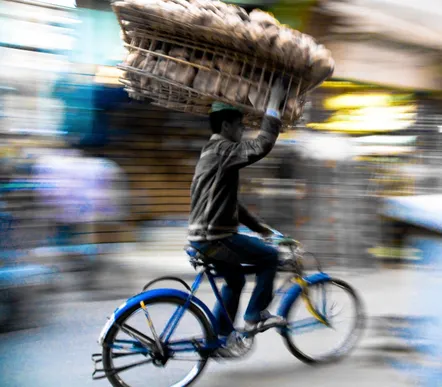
The goal of this course is to learn about cycling and urban mobility in theory and in practice. The practical part is two-fold. On the one hand we will acquire some basic mechanical skills and general knowledge of how a bicycle works, how it has developed and why it has been s…
View course - 128
literary representations of the urban global south
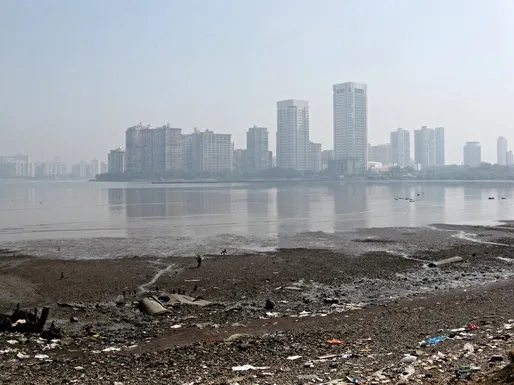
Since the 19th century, the city and urban life have been a perpetual topos in literary and sociological texts. The city can be read and told by walking, seeing, exploring and writing. However, the image of the city has changed over the years, and with it the modes and possibi…
View course - 129
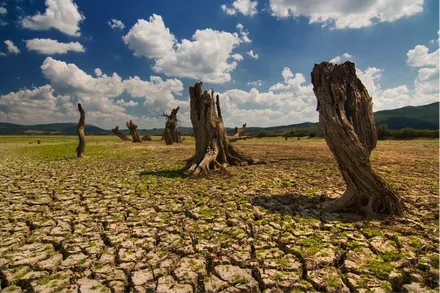
the death of Nature
The enlightenment and rise of capitalism have brought about a change in our relationship with nature. Francis Bacon, celebrated father of modern science advocated the control of nature for human use. Nature was to be predicted and controlled. This created a rift between nature…
View course - 130
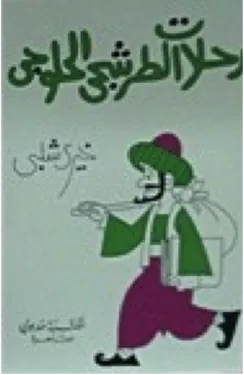
el rihla: literature and re-thinking Egypt's histories
The course asks what it means to think, narrate, and produce knowledge of history. Do these ideas, narratives, and the produced knowledge affect how we collectively shape history? We explore these questions in our journey from the 25th of January revolution in 2011 to the ‘ura…
View course - 131
theorising the state in Africa
“the state” is a term we hear all the time: in the news, in personal conversations, on TV shows. We read about it in books and we come across it in official documents. It’s a term we should be able to define because it’s literally everywhere, and yet it continues to be one of…
View course - 132
reading Plato's Republic in Cairo
Whoever desires to make the world a better place sooner or later encounters the tension between theory and practice, between ideal and reality. One might desire to unify the two: to make theory that is more in line with practice. But are impractical theories bad? Plato says no…
View course - 133
new eyes, old city
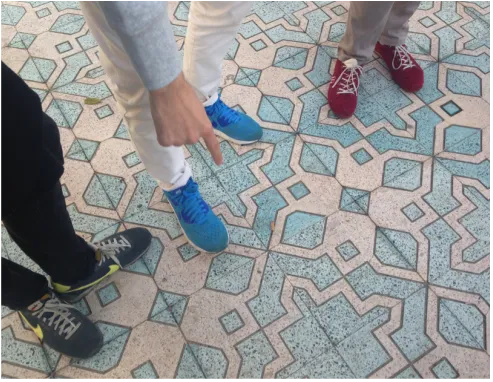
Have you ever wanted to look at the world with new eyes? This creative course explores the idea of everyday environment visually. Our everyday world is made up of objects, which we navigate in our daily routines. The course will focus on the social fabric of Cairo and invites…
View course - 134
on madness: an inquiry into margins and emotions
Living through times of revolution forced us to contemplate the place of emotions in public life and the diverse psychological states that come with deeply turbulent every- day lives. Margins is a theme that runs through the course. Together we will explore how margins are dra…
View course - 135
on gender and difference
Gender as a category of difference, and particularly woman as a subjectivity, is all the rage these days in the media, development industry, as well as in state discourse. However, gender as a social classification is rarely explored further and we often speak about gendered s…
View course - 136
the urban experience: an ethnographic approach
The city is a complex and ever-changing multiplicity of material objects and human bodies coming together in time and space. This course explores how people use and manoeuver this urban complexity, how they make sense of it, ascribe meaning to it, and integrate it into their d…
View course - 137
- 138
visible publics
Suppose there was art - and nobody showed up: a museum void of visitors, a concert without a crowd, graffiti that no one ever sees. Audiences are not a by-product of art; instead, their roles are an integral part of the works (and institutions) themselves. In galleries and in…
View course - 139
- 140