Winter 2016, CairoThematic Course
3eish, 7orreya, 3edala igtima3eya
bread, freedom, social justice
Course details
- Cycle
- Winter 2016, Cairo
- Format
- In person
- Taught in
- English
Share
Discuss it with AI
- Choose your preferred AI assistant.
- A new tab will open with a prompt prepared for this page.
- Press Send to begin exploring the page through dialogue, CILAS-style.
About the course
In this course, we will explore the issues of Right to Food and Food Sovereignty within the Egyptian context. These concepts will be discussed with the backdrop of Egypt’s history of food production, introduction of plant and animal species and food heritage. Along this line of thought, we will delve further into more complex and urgent issues such as consumers and farmers rights, fair trade, intellectual property rights, GMOs, food subsidy and sustainable food systems.
We shall also try to pinpoint the current trends in food consumption in Egypt and how these are shaping the future of agriculture and food production in general. Thereby exploring the rise in organic and aquaponic farms, vegan and vegetarian tendencies, healthy foods fads, food movements, farmers markets, “new age” restaurants and social media groups. Participants will be encouraged to contribute through their own observations of various food trends.
The course will end with a cooking class – an all “Egyptian” meal.
what to expect
Participants are expected to actively engage with all course material. They are expected to visit sites of interest: museums, markets, restaurants and food shops, read indicated parts of relevant books, watch movies, take photographs of food items, products, keep a record of impressions, observations, questions and bring them to class.
Participants will choose an issue, question, food item to explore through various media discussed in class and present their findings in a form they choose.
Participants are expected to contribute and share reflections and experiences.
why apply
To raise questions, discuss and try to come up with some answers to:
What is “Right to food” when everyone is already eating?
How does “food sovereignty” fit into the Egyptian context?
Is there an Egyptian “food heritage”?
What is the food we eat? Where does it come from? Where did it originally come from? What happened till we have come to the current food on our table ?
What is going on in so far as food quality, quantity, variety, trends and fads?
As far as food production and consumption is concerned: can we shape, better control or take things into our hands, as a state, individuals, urban and rural food producers?
Who teaches it
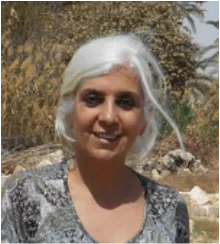
Hala Barakat has a Ph.D. in Paleoecology from the University of Aix-Marseille III, France. She worked as a lecturer at Cairo University 1995-2000 and acted as deputy director at the Center for Documentation of Cultural and Natural Heritage (CULTNAT) affiliated to the Library of Alexandria. She was in charge of the documentation of the natural heritage program as well as supervising the photographic heritage, folkloric heritage and musical heritage programs at CULTNAT (2000-2012). In January 2013, Hala joined the Egyptian Initiative for Personal Rights (EIPR) as a part time researcher on the issues of “Right to Food” and “Food Sovereignty” in Egypt. She is also a founding member and former president of Nature Conservation Egypt (NCE) a non profit organization active in the field of conservation of endangered species and habitats and raising awareness to environmental issues in Egypt. Hala is also a certified Sivananda Yoga teacher and master. As a trained botanist, she has long had deep interest and knowledge in Naturopathy, Homeopathy and vegetarianism which complement her interest in yoga as a lifestyle.
Get the CILAS newsletter
New courses, open calls and articles from CILAS, in your inbox.



18 October 2026
Join CILAS's Spring semester of 2026
- Spring 2026, Cairo