Winter 2016, CairoThematic Course
reading Plato's Republic in Cairo
Course details
- Cycle
- Winter 2016, Cairo
- Taught in
- English
Share
Discuss it with AI
- Choose your preferred AI assistant.
- A new tab will open with a prompt prepared for this page.
- Press Send to begin exploring the page through dialogue, CILAS-style.
About the course
Whoever desires to make the world a better place sooner or later encounters the tension between theory and practice, between ideal and reality. One might desire to unify the two: to make theory that is more in line with practice. But are impractical theories bad? Plato says no. In his Republic, which investigates what the best or ideal society is, he argues that only useless theories are useful, and that the ideal society is relevant even when it is not realisable.
Three questions immediately arise. Why does Plato resist the unification of theory and practice? Is the best society the same for every place and every time? Finally, are present-day conditions more favourable than in Plato's time for unifying theory with practice? This course will be a collective encounter with the Republic in light of the theory-practice problematic.
The two great themes in this work are justice and philosophy, or broadly speaking, the ideals and realities in politics and education. What is the relation between politics and education? Is education for the sake of better citizens? Can there be good education in a corrupt country, or good politics despite bad education? Since we are ourselves participating in education, the course is reflexive in spirit: an exercise in clarifying our own deepest longings and ideals.
what to expect
Everyone, myself included, will write one one-pager per week on an assigned topic, discuss it, and edit them in class.
Bring your sense of humour to the discussion because one cannot understand Plato without it!
Activate your imagination: there will be stage-directing, role-playing, and drawing.
why apply
To understand the question of justice and the nature of politics.
To become familiar with the arguments for and against the classical view of education.
To equip oneself with a preliminary framework for analysing political affairs.
To grasp the metaphysical and psychological foundations of Western political thought.
To question, interrogate, and reflect on the role of knowledge in society.
Who teaches it
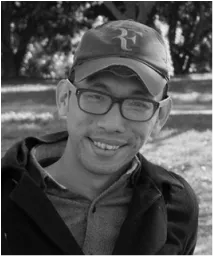
I-Kai Jeng received his PhD/MA in Philosophy and Classical Studies at Boston University. Before going back home and taking up a position in the Department of Philosophy, National Taiwan University, he was visiting fellow at CILAS for a trimester and shared his thoughts on Plato's Republic with the wonderful people there. He is a specialist in Greek philosophy, with special concentration on Plato's reflections on the philosophical engagement in politics and the character of philosophical discourse. He enjoys tennis (only theorizing, no practice!), cinema, and folding paper when he's not unfolding concepts.
Get the CILAS newsletter
New courses, open calls and articles from CILAS, in your inbox.



18 October 2026
Join CILAS's Spring semester of 2026
- Spring 2026, Cairo