Fall 2025, CairoThematic Course
Unravelling Oedipus: Wanderings of the Myth in Literature and Theory
Course details
- Cycle
- Fall 2025, Cairo
- Starts
- Saturday, Oct 25
- Meets
- Saturday, 18:00–20:30
- Length
- 9 weeks
- Format
- In person
- Taught in
- Arabic / English
Share
Discuss it with AI
- Choose your preferred AI assistant.
- A new tab will open with a prompt prepared for this page.
- Press Send to begin exploring the page through dialogue, CILAS-style.
About the course
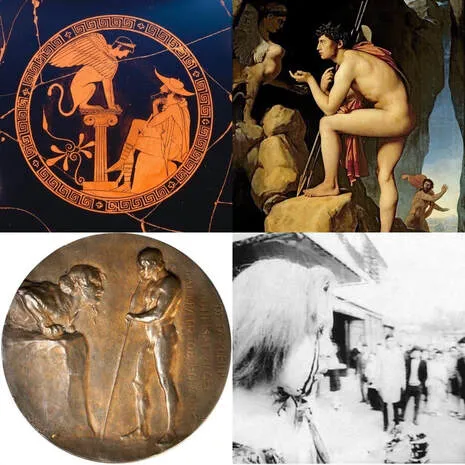
Addressing themes of agency and freedom, self-knowledge and identity, reason and truth, consciousness and the unseen, the myth of Oedipus is among the most reworked and reimagined in world literature. This disturbing story has served as a cornerstone in the construction of influential theories of desire and the unconscious, of tragedy both as a literary form and a structure of experience, and of social order, culture, and civilization. In this course we will try to understand what has made Oedipus such a compelling figure for writers and thinkers across history, and consider how the myth might yet speak to us today.
We will begin by thinking about how the strange tale may have emerged. This will involve reading early versions of it from ancient Greece, as well as comparable folktales from beyond Greece. Amongst the early Greek texts, we will read both of Sophocles’ Oedipus plays in depth: Oedipus Tyrannos and the less well-known Oedipus at Colonus. Alongside these, we will read an array of theoretical texts, including works by Aristotle, Nietzsche, Lévi-Strauss, Réné Girard, and, of course, Freud. These will help us to understand the depths of the myth, but also to think more broadly about the issues it raises beyond the confines of the myth.
In the second half of the course, we will turn to adaptations of the Oedipus story from the twentieth century, accompanied by further theoretical readings. The artistic works to be discussed will include Tawfiq al-Hakim’s Oedipus the King (1949), and Ali Salem’s Comedy of Oedipus (1970), and films by Pier Paolo Pasolini and Toshio Matsumoto. There will be two optional additional sessions devoted to Philip Roth’s novel The Human Stain (2000), a complex reworking of the Oedipus myth set in late-twentieth-century America.
As a final project, participants will have the option of producing a creative project or writing an essay in response to the course materials.
Most the readings for this course will be available in Arabic. Participation in the discussions may be in Arabic or English according to individual preference.
Who teaches it
Course flow
October 2025
Oedipus as folktale and the origins of the myth
- سوفوكليس، "أوديب ملكا"، ت. عبد الرحمن بدويص. ٩٩-١٢٧
- يوربيدس، "الفينيقيات"، ت. منيرة كروانص. ١-٣
- "قصة عنترة بن شداد العبسي"(القاهرة، ١٩٦١)، ص. ١، ٩-١٥
- Apollodorus, Bibliotheca 3.5.7–9, in Edmundspp. 51–53
- "Judas" (Latin folktale), "Andrew of Crete" (Russian folktale), "Usikulumi" (Zulu folktale) in Lowell Edmunds, Oedipus: The Ancient Legend and its Later Analoguespp. 63–5, 192–5, 214–216 (10 pages in total)
- Sophocles, Oedipus the King, trans. FaglesEnglish version; pp. 159–210
- Euripides, Phoenician Women ll. 1–87, in EdmundsEnglish version; pp. 49–50
- "Nimrud" (from Sirat 'Antara), in EdmundsEnglish version; pp. 69–73
November 2025
Theories of tragedy and Sophocles' Oedipus
- سوفوكليس، "أوديب ملكا"ص. ١٢٧-١٤٧
- أرسطو، "في الشعر"، ت. عبد الرحمن بدويص. ٣-٥٣
- نيتشه، "مولد التراجيديا"، ترجمة شاهر حسن عبيدص. ١٣٦-١٤٢
- فرويد، "تفسير الأحلام"، ترجمة مصطفى صفوانص. ٢٧٦-٢٨١
- Peter Szondi, A Theory of the Tragicpp. 1–22, 59–63
- Sophocles, Oedipus the King, trans. FaglesEnglish version; pp. 211–251
- Aristotle, PoeticsEnglish version; chps. 1–18
- Nietzsche, The Birth of TragedyEnglish version (Anchor books edition); pp. 59–62
- Freud, The Interpretation of Dreams, in The Basic WritingsEnglish version; pp. 306–9
Structuralism and the analysis of myth and society
- سوفوكليس، "أوديب في كولونوس"، ترجمة منيرة كروانص. ٤٠-١٦٦
- Claude Lévi-Strauss, "The Structural Study of Myth"(1955), pp. 428–435
- Sophocles, Oedipus at ColonusEnglish version; pp. 283–347
Mimetic theory: Oedipus as scapegoat
- سوفوكليس، "أوديب في كولونوس"، ترجمة منيرة كروانص. ١٦٦-٢٤٢
- René Girard, "The Myth of Oedipus, the Truth of Joseph," in Girard, Oedipus Unboundpp. 107–113
- Sophocles, Oedipus at ColonusEnglish version; pp. 348–388
Oedipus in mid-twentieth-century Egyptian theatre
- أندريه جيد، "أوديب"، ترجمة طه حسين
- توفيق الحكيم، "الملك أوديب"(1949)
- André Gide, OedipusEnglish version; (1930)
- Tawfiq al-Hakim, King OedipusEnglish version; (1949), in Marvin Carlson (ed.), The Arab Oedipus
- علي أحمد بكاثير، مأساة أوديبقراءة اختيارية (Optional reading); 1949
The Freudian Oedipus and beyond
- Edipo Reفيلم "أوديب ملكًا" (1967)، إخراج Pier Paolo Pasolini
- فرويد، "الطوطم والتابو"، ترجمة بوعلي ياسينص. ١٢٣-١٨٧
- مقاطع مختارة من دلوز وغواتري، "أوديب مضادًا"، ترجمة عبد العزيز العيادي(1972)
- Freud, Totem and TabooEnglish version; chp. 4
- Deleuze and Guattari, Anti-OedipusEnglish version; (1972), pp. 88–106
December 2025
Gendering Oedipus
- Funeral Parade of Roses(1969), dir. Toshio Matsumoto
- Hélène Cixous, "The Laugh of the Medusa," Signs 1.4(1976), 875–893
Fictional modes and Ali Salem's Comedy of Oedipus
- علي سالم، "كوميديا أوديب، أو أنت اللي قتلت الوحش"(١٩٧٢)
- نورثروب فراي، "تشريح النقد"ص. ٣٧-٨٥
- Ali Salem, "The Comedy of Oedipus", in Marvin Carlson, The Arab OedipusEnglish version
- Northrop Frye, Anatomy of CriticismEnglish version; pp. 33–67
Sessions without a date
Refractions of Oedipus in Philip Roth's The Human Stain
- فيليب روث، "الوصمة البشرية"(2000)، ترجمة فاطمة ناعوت
- Philip Roth, The Human StainEnglish version (2000)
Get the CILAS newsletter
New courses, open calls and articles from CILAS, in your inbox.



18 October 2026
Join CILAS's Spring semester of 2026
- Spring 2026, Cairo