Winter 2017, CairoThematic Course
The Palestinian Narrative in Modern Arabic Literature
Course details
- Cycle
- Winter 2017, Cairo
- Taught in
- Taught in Arabic, with a few English texts
Share
Discuss it with AI
- Choose your preferred AI assistant.
- A new tab will open with a prompt prepared for this page.
- Press Send to begin exploring the page through dialogue, CILAS-style.
About the course
This course offers an overview of Palestinian literature, with a special focus on the Palestinian novel and its development since the second half of the 20th century. With the establishment of the state of Israel in 1948, the brutal annihilation of the Palestinian people, their land and their collective memory began, resulting in a ‘nakba’ which saw the displacement of thousands of Palestinians. For their part, Palestinian novelists were adamant to write against these processes of uprootedness and erasure, employing storytelling as a tool of resistance against the Zionist settler-colonial project. They were also grappling with their status as refugees in diaspora, a new “minority” inside Israel, or as Palestinians living under Israeli occupation in the “Occupied Palestinian Territories” as of 1967.
It is within this context that the Palestinian novel came to acquire one of its central themes, namely the preservation of Palestinian collective memory. But more than just re-enact stories of home and confront the colonizer, Palestinian writers were equally committed to inspiring resistance, giving agency, documenting the Palestinian people’s relentless struggle against, and their unyielding sumoud (steadfastness) in the face of, the Zionist enemy as well as providing a critique of Palestinian society itself.
This course aims to familiarize students with some of the important literary contributions made by Palestinian novelists since 1948, and trace how this body of literature continued to respond to the changing local, regional and global contexts. While this course is interested in tracing how the political, historical and literary converge in the Palestinian novel, it is equally concerned with unpacking the literary work itself, and exploring the aesthetic shifts that occur within the Palestinian novel over time.
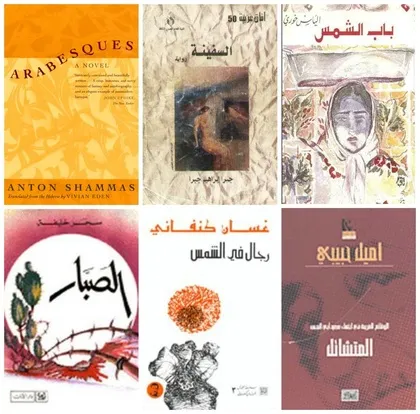
Authors to be studied in this course will include Ghassan Kanafani, Emile Habibi, Jabra Ibrahim Jabra, Sahar Khalifah, Elias Khoury and Anton Shammas. Literary texts will be studied in their original language (Arabic except for Shammas’ text which we will be reading in English). Additionally, we will be reading selections from autobiographical accounts (in both Arabic and English) by Edward Said, Mourid Barghouti, Mahmoud Darwish, Raja Shehadeh and Suad Amiry, and supplementary reading material in both English and Arabic. We will also be watching films and inviting guest speakers.
Students enrolled in the course are expected to read the assigned texts on a weekly basis, to lead panel discussions based on the assigned literary work of the week, and to write a mid-term comparative paper based on two of the texts discussed in class, as well as a final paper so that students can further explore one of the themes discussed in any of the assigned literary works.
Who teaches it
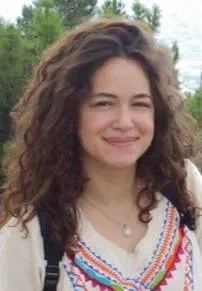
Nourhan TEWFIK is a culture journalist at Ahram Online, and an MA candidate in Arabic Literature at the department of Arab and Islamic Civilizations at the American University in Cairo (AUC). Upon graduating from AUC with a BA of Arts (major in Political Science) in 2013, Tewfik embarked on a career in cultural journalism, translation and research. As a journalist, Tewfik is interested in tracing how cultural productions speak back and to broader structures of power and renegotiate reality. She is equally interested in exploring how journalism—particularly cultural journalism--can play a role in interrupting, halting, and reversing problematic generalizations and violent processes. In her capacity as a journalist, she has freelanced for Al Ahram Weekly, Rowayat literary journal and the Beirut-based The Outpost magazine. Besides working as a journalist, Tewfik is also a freelance translator and researcher. She assisted with research at AUC’s Center for Migration and Refugee Studies (CMRS) and the Arab Council for the Social Sciences.
Get the CILAS newsletter
New courses, open calls and articles from CILAS, in your inbox.



18 October 2026
Join CILAS's Spring semester of 2026
- Spring 2026, Cairo