Winter 2017, CairoThematic Course
The Single Individual
Quality time with Soren Kierkegaard
Course details
- Cycle
- Winter 2017, Cairo
- Taught in
- English / Arabic
Share
Discuss it with AI
- Choose your preferred AI assistant.
- A new tab will open with a prompt prepared for this page.
- Press Send to begin exploring the page through dialogue, CILAS-style.
About the course
Course description
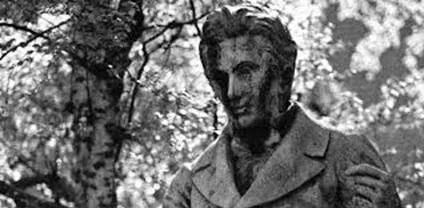
In this course we will read, interpret, and discuss the writings of Danish philosopher Soren Kierkegaard in provoking, reflective, yet relaxed sessions over tea and coffee. In a context where people all over the globalizing world are facing existential questions with regards to socio-political and religious authorities, Kierkegaard foregrounds as a thinker who is relevant to each of us as individuals.
His profound criticism of state and church as the main representations of his society’s mass orientation, made him an unrelenting thinker of the “individual”, which forms the basis of his philosophy. His thinking and his philosophy intentionally begin from everyday human situations and states such as despair, fear, and angst. As such Kierkegaard has a strong abhorrence to speculative thinking and system building, which according to him is completely uninterested in the “poor existing individual” as he puts it.
Most of Kierkegaard’s writings are written in a style that is not intended to explain a concept, but to evoke a response or feeling. He invites us to turn inward, and become subjective. As such, there is a lot of enjoyment in reading Kierkegaard besides the intellectual, social, and personal provocations of his thought.
What to expect:
Expect appealing and perhaps revealing conversations around ethics, politics, religion, and philosophy, and the attempt to relate these to the context(s) of our own lives.
These topics will not be approached from the “general” angle, but from each single individual taking the course.
That is, a discussion on ethics will be concerned with “decision”, “choice”, “will”. Just as a discussion on politics or religion, will be around the authority given to different epistemologies (theories of knowledge).
Concerning philosophy, Kierkegaard makes us ask, what is the purpose of philosophy, or what question should philosophy attempt answering? If one has fears or anxiety from a loss at what to do or should be done, Kierkegaard’s writings is a terrific landscape in which to navigate these kinds of emotions, states, and ambiguous viewpoints.
There will of course be a lot of very exciting readings, and occasional writings in response to texts and discussions.
Why take the course?
Should you be a person who is particularly interested in religion, particularly from a psychological angle, Kierkegaard is speaking to you. If you happen to be a person who cares little about religion, but has an interest in existential philosophy, Kierkegaard is the father of this movement and is definitely worth discovering.
Who teaches it
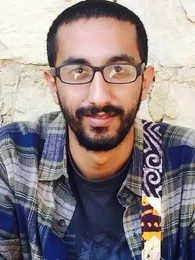
Omar El-Rakhawy is an AUC graduate of philosophy and has a Leiden Master degree in religious studies. In his Master’s thesis, which was titled “Religion and its Counter-Tendencies: A Reflection on the Question of Religion”, he discuss different approaches to the question of religion, especially criticizing objective approaches, and particularly when these are suppressive to subjective considerations. In doing this, he relied on a comparative approach between figures and thinkers of different backgrounds, among them Kierkegaard, Derrida, and two Sufi figures who were equally singular in their own contexts, namely Ibn ‘Arabi and al-Niffari. At CILAS Alex, he will serve as Teaching Fellow in the Humanities and Arts.
Get the CILAS newsletter
New courses, open calls and articles from CILAS, in your inbox.



18 October 2026
Join CILAS's Spring semester of 2026
- Spring 2026, Cairo