Spring 2017, CairoThematic Course
Falling
Course details
- Cycle
- Spring 2017, Cairo
- Taught in
- Arabic / English
Share
Discuss it with AI
- Choose your preferred AI assistant.
- A new tab will open with a prompt prepared for this page.
- Press Send to begin exploring the page through dialogue, CILAS-style.
About the course
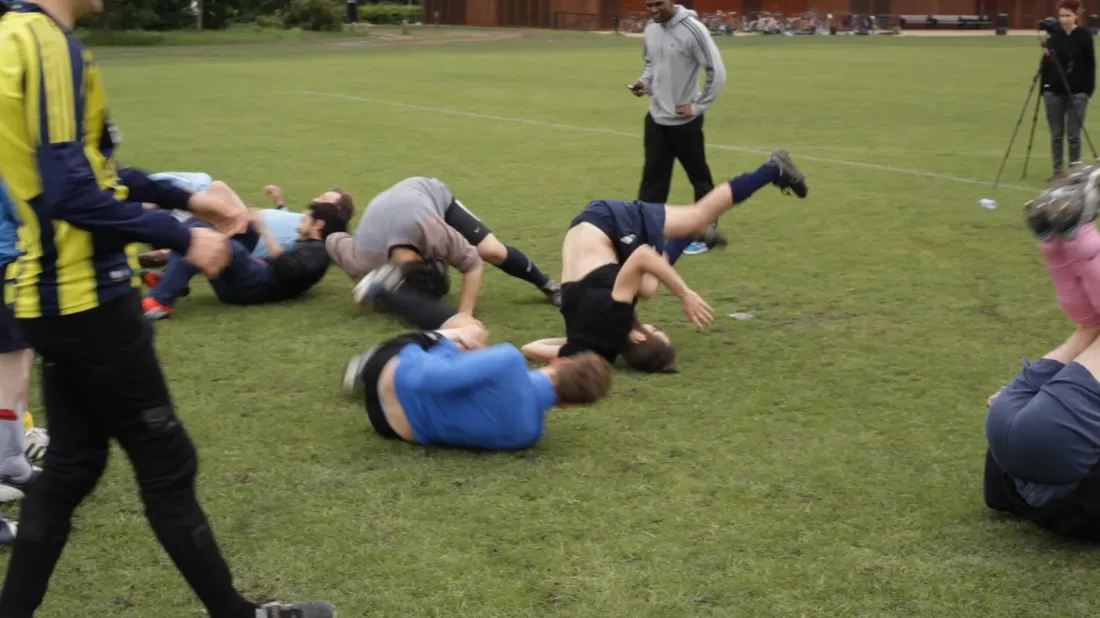
The act of falling is simple. Falling is what happens when you are off balance; it makes your body drop and loose control and often provides amusement for spectators. Defined as a downward movement from a higher to a lower level, to hang down, to drop away, to show disappointment, to lose one’s balance and collapse, to be captured or to decrease, to ‘fall’ conjures a multitude of images and associations.
Falling is typically perceived as a negative phenomenon and associated with failing. However, learning happens through failing. The course will not only consider the physical act of falling but will examine how it is seen in society, how it connects to our social order, to standards, to football and comedy. We will look at the philosophical side of a dropping object and loosing control and see how amusement parks and popular culture make us enjoy a sudden change in altitude.
What to expect from the course:
The course will
discuss various ideas, backgrounds
be very open for discussion
connecting the seemingly unconnected
include performance, photography, and experimental elements
host a group discussion by students and fellow on equal levels
employ practical and theoretical work
Why join:
to learn about the connection between art, design, and society
to learn about aesthetics
to develop a new research methodology
to develop a personal project as a student enrolled in the course
to together with experts of different backgrounds
Who teaches it
Sandra FRUEBING studied Product Design at the Royal College of Art in London where she graduated in 2013. She worked with a range of different design studios in London and throughout Europe before she moved to Cairo to teach in the product design foundation course at the German University. Besides her teaching commitment Sandra participates in a range of extra curriculum activities. She takes part in international residencies and works locally on community projects. In her own practice she explores themes as falling, walking, utopias and considers society and culture as a product of their circumstances.
Get the CILAS newsletter
New courses, open calls and articles from CILAS, in your inbox.



18 October 2026
Join CILAS's Spring semester of 2026
- Spring 2026, Cairo