Spring 2015, CairoThematic Course
Embracing the Void
On space and bodies
Course details
- Cycle
- Spring 2015, Cairo
- Starts
- Thursday, Mar 26
- Meets
- Thursday, 10:00–12:30Thursday, 17:00–19:30
- Taught in
- English
Share
Discuss it with AI
- Choose your preferred AI assistant.
- A new tab will open with a prompt prepared for this page.
- Press Send to begin exploring the page through dialogue, CILAS-style.
About the course
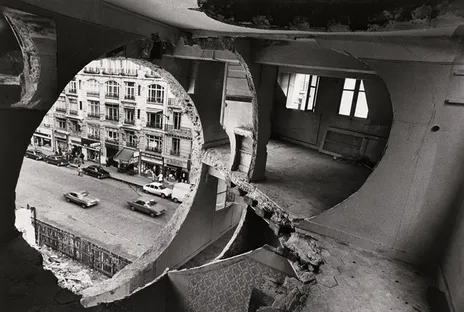
This course was conceived by a subversive urbanologist and a romantic pragmatist in the living room of a political ecologist. Its conception was sparked by an appreciation for silence, absence and emptiness; and the acknowledgement of the constitutive role of these 'voids', notably in language, philosophy and architecture. The course engages with the aesthetics and implications of these voids, in particular in relation to the spatial presence of ‘the body’. In the first half of the course we will examine the concept of the instrumental body as well as numerous interpretations of the ‘void’. We will emphasise the productive character of absence and how it provides space for our imagination.
At the same time, we will critically asses how the void has been imagined in art, culture and politics. Especially ‘the desert’ or ‘the Orient’ has been portrayed as empty and mystic often resulting in disowning and displacement. In a second part we will dialectically explore the politics of empty spaces and occupying bodies. We will examine the relation between vacant space, real estate speculation and developments, and their impact on the body. We will then study the notion of ‘non-places’ that are transitional in character and void of meaning,. Finally, we conclude with an exploration of ‘the void’ as a desirable destination, as often spelt out by Buddhist teachings for instance, which will invite us to reflect on the notion of mindfulness.
expectations
Participants should be ready to embark on an exploration of seemingly unrelated ideas.
Participants are expected to engage with different media with an open mind and heart.
Participants should be willing to spend two hours a week (or more) with an urbanist in exile and a student of chillosophy.
why apply?
To engage in abstract and trans-disciplinary thinking.
To develop an understanding of the constitutive role of silence, emptiness and the void.
To familiarise yourself with the implications of mass vacancy for society, the city and our bodies.
Who teaches it
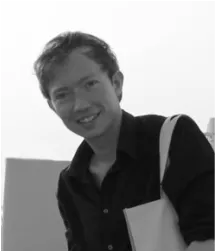
René BOER holds a Master's degree in Urban Studies from University College London's Urban Laboratory. He works as an urban and architectural researcher in Cairo and is affiliated with the Amsterdam-based research foundation Failed Architecture; and various urban social movements. His work focuses on grass root urban practices, architecture's urban afterlife and artistic representations of the built environment. In the past, he has worked as a freelance journalist for a number of media outlets in Syria, Lebanon and the Palestinian Territories. He has also been associated with the urban research collectives Citymine(d) in Barcelona, ICAHD in Ramallah/Jerusalem and Archis/Volume in Amsterdam. René joins CILAS as visiting fellow in the fields of study Arts and Natural Sciences, and will coordinate the thematic courses Art and the City, and Urban Resilience.
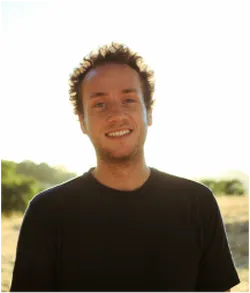
Karim-Yassin Goessinger studied political philosophy and urbanism in the Netherlands, Brazil and France. He worked with different development agencies in Latin America and the Middle East in fields including micro-finance, informal housing and local governance. A Dalai Lama and Donella Meadows Fellow, he enjoys martial arts, languages, world music, cooking and tea. After his graduate studies at Sciences Po Paris, he founded the Cairo Institute of Liberal Arts and Sciences (CILAS). At CILAS, he has coordinated the field of study Social Sciences and has directed the yearlong study programme in the liberal arts between 2013 and 2016. At the American University in Cairo, he convened two sociology courses in 2016 and 2017.
Get the CILAS newsletter
New courses, open calls and articles from CILAS, in your inbox.



18 October 2026
Join CILAS's Spring semester of 2026
- Spring 2026, Cairo