Spring 2015, CairoThematic Course
Public Policy Making & Design Thinking
On the changing nature of public goods
Course details
- Cycle
- Spring 2015, Cairo
- Taught in
- English
Share
Discuss it with AI
- Choose your preferred AI assistant.
- A new tab will open with a prompt prepared for this page.
- Press Send to begin exploring the page through dialogue, CILAS-style.
About the course
The independent, progressive media outlet Mada Masr recently asked five social theorists who the 'people' are. The piece was subtitled 'A conversation on the assemblages (and the archives) of the people'. Participants of this course are invited to a conversation on the public, issues and assemblages. Together we will explore and assess the validity of both an abstract, general entity that performs public acts, such as Rousseau's general will or Hegel's world spirit, as well as a concrete bunch of public policy makers who make decisions on the basis of scientific evidence and sectoral expertise.
Participants will in a first part be introduced to Bruno Latour's notion of Dingpolitik and the philosophy behind it, namely object-oriented philosophy. The latter suggests that in order to study the social we must account for both human and non-human actors. We will go on to inquire into the nature of public goods with the help of Nobel laureate Elinor Ostrom. Once a public good is identified and successfully advocated for, how do we effectively implement a policy to protect this good? We shall turn to Paul Sabatier for a critical look at policy implementation.
We will go on to shed light on the urban context and the shift in public service provision from managerialism to entrepreneurialism. Good old David Harvey has some leads to offer on this shift. Entrepreneurs are often asked how it is they will bring about systemic change. Participants are here invited to dig into the literature on leverage points, systems analysis and complexity theory as it was formulated at Stanford University in the late 90s. We will then turn to Clay Shirky and his idea of the cognitive surplus and the role of social media in mobilising civil society.
The last part of the course consists in a critical assessment of the social entrepreneur which we will explore through the writing of Alex Nicholls. Participants are then introduced to the term design thinking which is increasingly widely propagated and employed. We will ask what it means to employ desing thinking and extract some underlying assumptions made by enthusiasts with the help of Lucy Kimbell. We shall end the course with a study of Tony Fry's book Design as Politics and discuss whether the very act of designing is political; and whether we all ought to become design thinkers.
Expectations
Participants are expected to be familiar with the conventional -isms (basic political ideas).
Participants are expected to be on time and engage with all readings as the course tells a story.
Participants are advised to attend in the morning, if available, as the material is intellectually quite demanding.
Why apply?
To participate in a theoretically-informed conversation on the public.
To recognise non-humans or objects as actors of society.
To inquire into the nature of public goods and assess the implementation of public policies.
To study the shift from managerialism to entrepreneurialism and the conception of the entrepreneurial (wo)man.
To understand your designer friends better and find them less weird.
Who teaches it
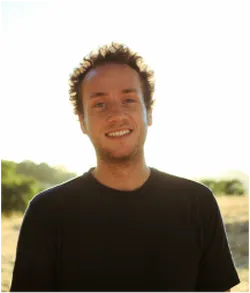
Karim-Yassin Goessinger studied political philosophy and urbanism in the Netherlands, Brazil and France. He worked with different development agencies in Latin America and the Middle East in fields including micro-finance, informal housing and local governance. A Dalai Lama and Donella Meadows Fellow, he enjoys martial arts, languages, world music, cooking and tea. After his graduate studies at Sciences Po Paris, he founded the Cairo Institute of Liberal Arts and Sciences (CILAS). At CILAS, he has coordinated the field of study Social Sciences and has directed the yearlong study programme in the liberal arts between 2013 and 2016. At the American University in Cairo, he convened two sociology courses in 2016 and 2017.
Get the CILAS newsletter
New courses, open calls and articles from CILAS, in your inbox.



18 October 2026
Join CILAS's Spring semester of 2026
- Spring 2026, Cairo