Spring 2014, CairoThematic Course
Africa since Independence
Course details
- Cycle
- Spring 2014, Cairo
- Taught in
- English
Share
Discuss it with AI
- Choose your preferred AI assistant.
- A new tab will open with a prompt prepared for this page.
- Press Send to begin exploring the page through dialogue, CILAS-style.
About the course
Africa, the second largest continent in the world and arguably the most diverse and dynamic is often overlooked and dismissed. In its recent history and until the present day the continent is in many ways the fastest changing in the world. In the future these changes are likely to have an increasingly meaningful impact on its inhabitants and the world at large. Despite this, the diversity of the continent almost renders it meaningless to talk about Africa in general As such, this course provides an overview and insights into the most important ideologies, events and transitions that the continent has undergone since gaining independence and what this means for the future of the continent. Specifically the course investigates the creation and changing nature of African development, governance and societies, this allows us to situate Africa in the global arena and consider the future of the continent.
Objectives: To acquaint students with Martin Meredith and Crawford Young's concept of the state of Africa To familiarise students with different national development programmes and their underlying values To understand the working of patrimonial governance To debate the relationship between ethnicity and nationality To engage with promising initiatives to break with the past
Who teaches it
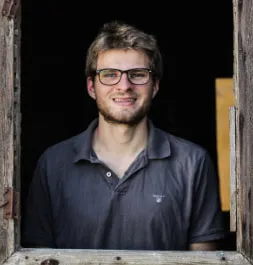
Meet Bas Paris. He has coordinated the field of Natural Sciences at CILAS since the beginning of the second trimester. Bas completed two Master's degrees in London at SOAS and UCL, respectively. As a graduate student, Bas looked at the history and politics of Africa as well as the environment. He has a particular interest in agriculture and urban farming. Bas hopes to witness CILAS-grown tomatoes and has contributed to the re-invention of CILAS as a learning environment. He grew up in Ghana and Tanzania, and appreciates reggae music, exotic foods and Greek islands. At CILAS, he has assumed the role of Research Director.
Get the CILAS newsletter
New courses, open calls and articles from CILAS, in your inbox.



18 October 2026
Join CILAS's Spring semester of 2026
- Spring 2026, Cairo