Spring 2014, CairoCore Course
Waste
Course details
- Cycle
- Spring 2014, Cairo
- Taught in
- English
Share
Discuss it with AI
- Choose your preferred AI assistant.
- A new tab will open with a prompt prepared for this page.
- Press Send to begin exploring the page through dialogue, CILAS-style.
About the course
The world is experiencing a crisis of waste. Growing populations, changing lifestyles and consumption habits are leading to the creation of alarmingly high levels of waste. Generally waste is referred to as unwanted materials or things. At the same time we can imagine the usefulness and potential re-usability of certain types of waste. Both of these perceptions are created by the everyday economic and political systems we live in. Oppositely, in the natural world, the concept of waste does not exist; instead all the outcomes (waste) of processes are productive inputs into other processes. For instance, a waste product from a plant (leaves) provides an essential and productive input into other organisms and the soil. This course explores how as a society we interact with waste and how we can move from one perception that sees waste as unwanted to another where all waste is reused. It is likely that to achieve the latter perception we need to radically redesign our waste systems and arguably the societies we live in.
Participants in the course will gain the following: To examine the processes that lead to different perceptions of waste To approach waste artistically To assess how man-made waste effects natural systems To learn about methods of managing and recycling waste To visualise flows of waste
Who teaches it
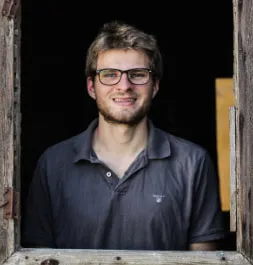
Meet Bas Paris. He has coordinated the field of Natural Sciences at CILAS since the beginning of the second trimester. Bas completed two Master's degrees in London at SOAS and UCL, respectively. As a graduate student, Bas looked at the history and politics of Africa as well as the environment. He has a particular interest in agriculture and urban farming. Bas hopes to witness CILAS-grown tomatoes and has contributed to the re-invention of CILAS as a learning environment. He grew up in Ghana and Tanzania, and appreciates reggae music, exotic foods and Greek islands. At CILAS, he has assumed the role of Research Director.
Get the CILAS newsletter
New courses, open calls and articles from CILAS, in your inbox.



18 October 2026
Join CILAS's Spring semester of 2026
- Spring 2026, Cairo