Spring 2014, CairoThematic Course
Digital Media
Course details
- Cycle
- Spring 2014, Cairo
- Taught in
- English
Share
Discuss it with AI
- Choose your preferred AI assistant.
- A new tab will open with a prompt prepared for this page.
- Press Send to begin exploring the page through dialogue, CILAS-style.
About the course
The world is online; so are we directly, or indirectly. Tremendous changes in technology have changed the world we live in many ways. The course critically engages with the internet, new media and digital technologies, and the roles they play in contemporary society, culture, business, politics, the arts and everyday life. Our online and offline worlds integrate and at times disintegrate in myriad ways. In this context it becomes important to explore the limits and possibilities of technology in dealing with the challenges faced by respective societies and the world at large. Throughout the course we look at the interplay between emerging media technologies and culture, information, communication, knowledge, identities and power. We shall try and understand the factors that determine how new technologies are created, travel and are consumed by specific cultures. The course looks at - amongst others - the following themes: World Wide Web, Digital Culture, social media, online identities, virtual communities, theories of technology and culture, digital research, digital counter-culture, digital resistances and digital culture in the 21st century. The course encourages the use of the diverse interpretive and representational media: academic texts, documentary and feature films, literary writings, web sites and other media.
As for the objectives of the course, they could be summed up as follows:
To introduce the concept of digital culture
To explore how the internet has shaped communication
To provide a theoretical framework to understand media communication, internet and culture
To investigate virtual communities, identities and resistances
To understand the phenomenon of social media and its relation to other media
Who teaches it
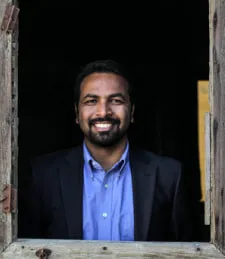
Raju Hittalamani was Media Associate at the Indian Institute for Human Settlements (IIHS) in Bangalore prior to joining CILAS. He completed a graduate degree in Media and Cultural Studies at the School of Media and Cultural Studies at Tata Institute of Social Sciences in Mumbai. Raju is trained as a documentary film-maker and researcher in the field of media and cultural studies producing remarkable insight into the Indian public sphere, media representation of community identities and expressions of resistance. Previously he had been a visiting student at Sciences Po Paris where he followed coursework in International Affairs. Raju has worked in the field of education both with and at public and private schools in India. At CILAS, Raju serves as Media Lab Director and coordinates coursework in Arts and Culture.
Get the CILAS newsletter
New courses, open calls and articles from CILAS, in your inbox.



18 October 2026
Join CILAS's Spring semester of 2026
- Spring 2026, Cairo