Winter 2022, CairoShort Course
Wisdom in Despair
Living Your Existential Crisis Through the Lens of Literary Fiction
Course details
- Cycle
- Winter 2022, Cairo
- Length
- 7 weeks
- Format
- In person
- Taught in
- English
Share
Discuss it with AI
- Choose your preferred AI assistant.
- A new tab will open with a prompt prepared for this page.
- Press Send to begin exploring the page through dialogue, CILAS-style.
About the course
An existential crisis is once the most universal and individual of experiences. Where do we look and what do we seek in times of despair? Can literature offer companionship, wisdom, consolation?
We read to know we are not alone, to seek a deeper understanding of ourselves— a need which surfaces acutely in periods of crisis. In such a time, the pursuit of meaning becomes an absolute priority.
Although reading is the most solitary of exercises, it is fundamentally a move towards connection. We read in search of an understanding of our place in the universe; we read because literature offers what Harold Bloom describes “the only secular transcendence we can ever attain”.
This course looks at points of crisis in the lives of a vast range of literary characters. From Odysseus, homesick and forlorn on a lone Greek island, to Gregor Samsa’s nightmarish transformation into a horrible insect; from mythology to science fiction, from Japanese to Czech literature, our rich reading list spans genres, centuries and continents in the effort to explore the universality of human crisis and despair. Throughout, we look to literature as a guide and companion in our quest to live more soulfully as we search for acceptance, understanding and healing.
Who teaches it
Lena Naassana is a creative entrepreneur with a diverse background in publishing, media and development. Born in New York to a multicultural and multilingual family of mixed Czech-Syrian descent, Lena grew up in Cairo, leaving to read English literature at Oxford University. After graduating, she worked as a documentary filmmaker and photographer with local and international nonprofits and NGOs. In 2017, she moved to Prague to study film and photography, later moving to London to begin an MA in Comparative Literature at the School of Oriental and African Studies. In 2020, Lena moved back to Cairo to co-found El Batron, a music label and creative consultancy supporting young talents in the rising trap and mahragan scenes. As chief Creative Strategist of El Batron, Lena oversees all of the label’s creative output as well as the visual identities of El Batron’s roster of music artists. In parallel, continues to pursue interdisciplinary artistic projects grappling with themes of exile, alienation and nostalgia.
Course flow
Sessions without a date
Summary: Theoretical framework + soft intro to Homer’s Odyssey
- The work of Ahmed MorsiPrompts
- Jung’s Bollinger tower as a symbol we will carry through this course
In class
- DiscussionExistentialism vs. the existential crisis - definitions/discussions
- DiscussionWays of thinking about ‘existential crisis’: Philosophically, theologically, psychologically. Bloom/Merton/Jung
- DiscussionWhy did this course interest you? Be as personal as you’d like. Examples in the news and/or Egyptian pop culture. An acute crisis you can think of? (Your own, a friend). In different moments, life as a…
- DiscussionWhat is the role of mythology the way we think about crisis points? Can it offer comfort? Wisdom? Consolation? (tie back to Jung)
- DiscussionIntroducing The Odyssey. Discuss why we have chosen to start with Homer (tie to Bloom). What do we already know about the Odyssey? What was our first encounter with it? Is there an equivalent?
- DiscussionConclusion: Reconsidering Ahmed Morsi’s images
- The Odyssey, Homer
- Ithaka, Constantine P. Cavafypoem
In class
- ScreeningWarmup: Extracts from films Solaris and 2001: A Space Odyssey? What are some of the themes that come to the surface here?
- DiscussionClose reading of The Odyssey. What do we know about Homer? Extract from The Odyssey. Discussion. What is the crisis at the heart of this myth?
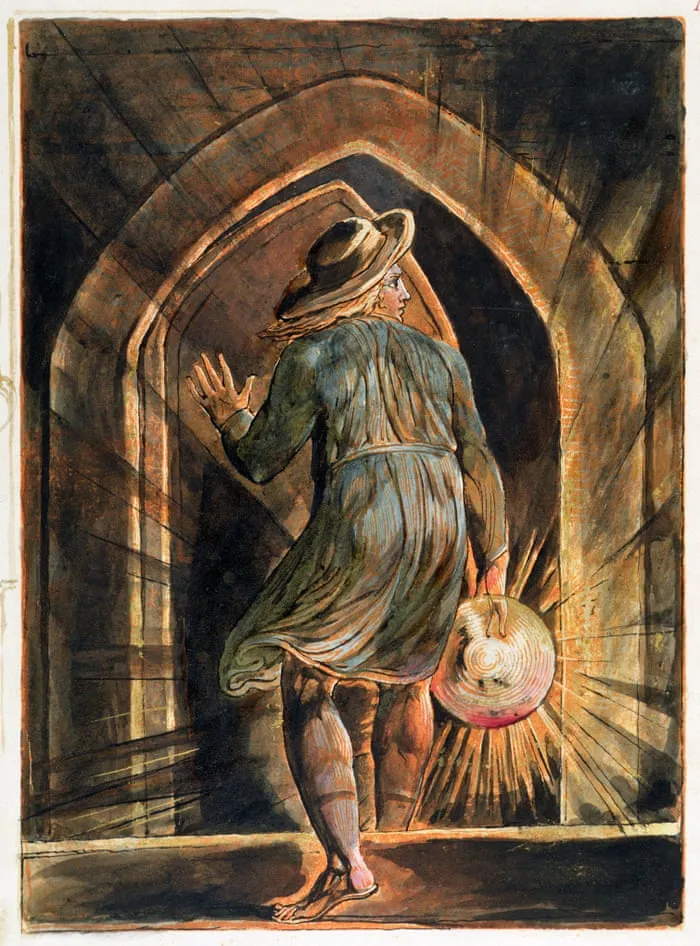
- DiscussionThe afterlife of The Odyssey: Illustrations of The Odyssey (Blake etc.); modern and classic. What has this text inspired? Read Constantine P. Cavafy’s poem Ithaka
- DiscussionHow can we tie Homer back to Jung? (Bollingen tower)
- The Kreutzer Sonata, Leo Tolstoy
In class
- DiscussionGeneral discussion: The family ideal; the ideal of marriage. In your opinion, are these both idealized?
- DiscussionLocal literature/culture as starting point: Naguib Mahfouz; realism in Egyptian literature and film.
- DiscussionThe text: General discussion of Tolstoy’s story. Close reading of key passages from The Kreutzer Sonata: The trigger of the crisis, solitude in spite of company, depression & self-absorption. Broaden discussion: Why is the shattering of the family ideal so unsettling? How is this portrayed in this particular text? How is this comparable to our day and age? Compare to Homer.
- DiscussionTie back to Jung + previous readings. What is the mythology at play here? How can we view such a crisis in light of Jung’s much more ancient view of things? In light of Solaris’ cosmic perspective?
- Metamorphosis, Franz Kafka
- Solitude of the Ravens, photography series by Masahisa Fukase
In class
- DiscussionContext: Introducing Kafka’s time and life. Why Metamorphosis? + Link back to the Greek myth. The crisis: In the midst of a bustling life, everything suddenly stops
- DiscussionClose reading of text. Close look at experience of time and space. Close look at relationships: between self + self; self + family, self + society, self + world etc… Ways of thinking about crisis: abstract vs. material
- DiscussionGeneral discussion + connecting the dots. What is it that makes us who we are? The way we look/feel/behave? Shift in the self vs shift in the world. Or are they one and the same thing?
- Rama and the Dragon, Edwar El-Kharrat
- Interview with Ahmed Morsi
In class
- DiscussionContext: Elaborate on relationship between Kharrat and Morsi. Introducing Kharrat + common thread: Alexandria
- DiscussionClose reading: a strange reading of love presented by Mikhail. Mikhail & Kharrat’s unconventional narrative technique. Mikhail’s experience of time during love. ‘TIMES’ of our lives - Mikhail’s interplay between adolescence and middle age. Concrete vs. abstract, existential
- DiscussionGeneral discussion + connecting the dots. Looking forward to Kundera - the concrete as a sanctuary? The escape into the abstract? Which do you find more helpful in times of crisis? Looking back at our characters, who chose the tangible vs. abstract?
- The Joke, Milan Kundera
- Creative writing exercise: the passage of time in two contrasting situations
In class
- DiscussionThe burden of choice: existentialism as a framework for reading Kundera. Sartre, Camus etc.
- DiscussionClose reading of The Joke. The experience of time during crisis. Tragedy, satire, absurdity - what is the ultimate tone?
- DiscussionGeneral discussion: the many tones of crisis. Reflect on the approaches to the various crises we have read about - Gregor Samsa/Kafka; Ulysses/Homer; Ludvik/Kundera; Mikhail/Edwar; Pozdnyshev/Tolstoy.
- Men in the Sun, Ghassan Kanafani
In class
- DiscussionRecap discussion: Which literary characters, thus far, have you sympathized with most?
- DiscussionPolitical despair. Kanafani, like Kundera, takes it to the political sphere, in our corner of the world. Both novels written in the 1960s. Why is satire, as a way of handling ‘despair’, less common in the Arab world? What are some of the tones of despair that have resonated with you most, thus far?
- DiscussionClose reading. Extracts describing the town; extracts from the journey, the desert environment; frantic pace as build up to tragic ending. Where does Kanafani inject humor? What do we make of the ending?
- DiscussionGeneral discussion. Link final image of men overheated in back of closed truck to Jung’s Bollinger tower. Ongoing despair - in a situation such as the Israel/Palestine conflict. What consolation does Kanafani offer? What wisdom does literature offer in such circumstances?
Get the CILAS newsletter
New courses, open calls and articles from CILAS, in your inbox.



18 October 2026
Join CILAS's Spring semester of 2026
- Spring 2026, Cairo