Spring 2024, CairoShort Course
On Motherhood: Between Gendered Identities and Tools of Resistance
Course details
- Cycle
- Spring 2024, Cairo
- Format
- In person
- Taught in
- English / Arabic
Share
Discuss it with AI
- Choose your preferred AI assistant.
- A new tab will open with a prompt prepared for this page.
- Press Send to begin exploring the page through dialogue, CILAS-style.
About the course
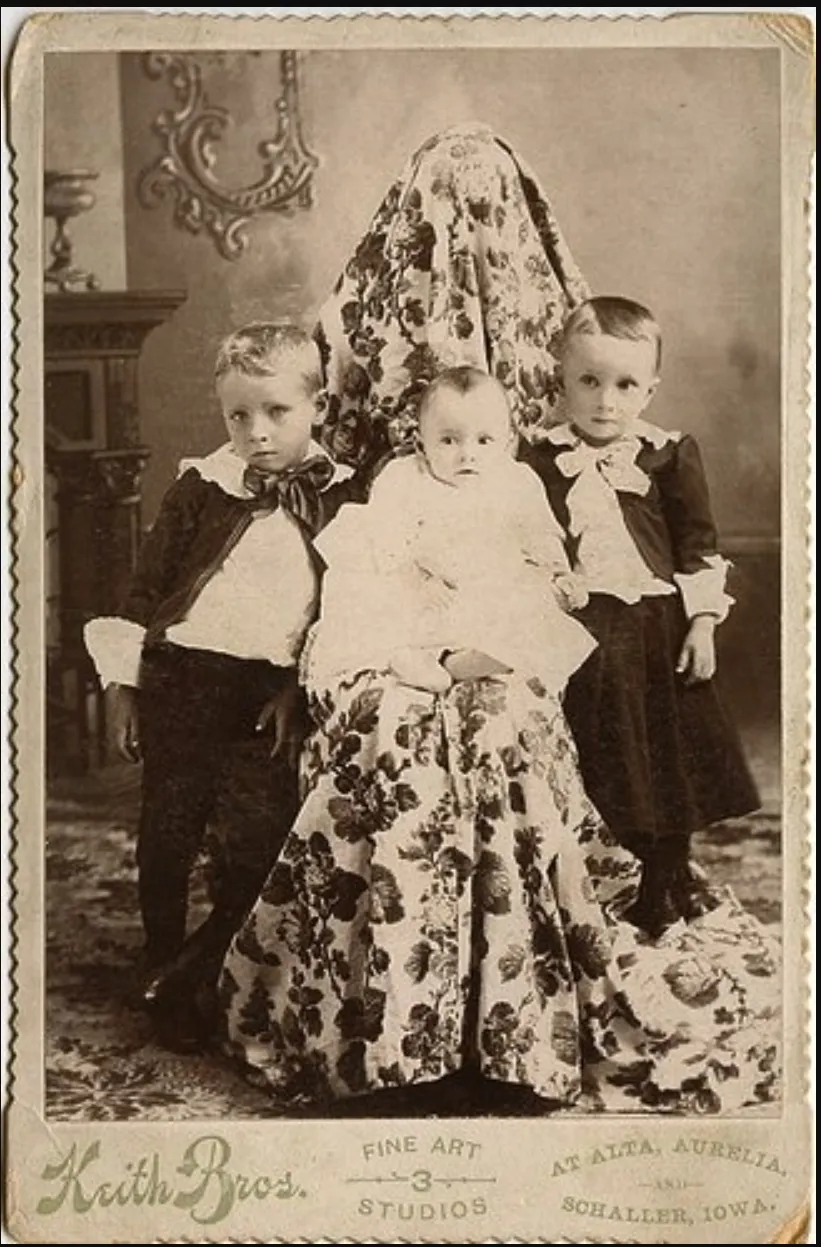
As motherhood has been the haunting ghost in women’s life, it surely has constructed their self-image and directed their gender performance. Mothering has been sold to the world as the sacred mission that cannot be questioned or challenged. Yet, in real life, motherhood is not an easy experience and its impact on selfhood is complex. As such, it is crucial to trace and deconstruct the centrality of this experience in the formation of the gendered selfhood. How has this experience gained its complexity on a social level? What can it tell and convey about gender performance and sexuality? And most importantly how was it used to bargain and maneuver within social structures?
In this course, we will maneuver between different academic pieces attempting to trace mothering and motherhood as a social tool that formulates and constructs the gendered subjectivity.
As we visit different scholarly works, we will be able to unravel gendered structures and attempt to make sense of the world around us through grounding our knowledge with an academic theoretical framework that tackles gender as analytical categories. Throughout the course, we will see how motherhood was extracted from the private realm and pushed to the public realm by states and political systems to serve a national agenda. Moreover, we will trace how agency is pivotal when we talk about gendered subjectivity. Finally, we are going to unpack how motherhood and gender performance was crafted to serve as a tool of resistance.
What to Expect:
This course is a discussion-based seminar. You are expected to be fully present and show the best you can to make the discussion fruitful and insightful. This course does not only aim to deconstruct the long-lived rigid image about motherhood but also to equip you with tools of critical thinking and academic writing. Generally, you will be asked to do the readings, in addition to providing a short reflection on the assigned readings. The flow of readings are divided into 3 categories: first is the theoretical framework which will anchor our knowledge about gender studies through unpacking notions like agency, power and negotiation of private and public spheres. The second category will include the core readings that will guide our discussions about motherhood and gender performativity. The last category will include thematic readings and case studies to enrich our discussion and gain a detailed picture about the topic.
Who teaches it
Dedicated researcher Nahla Mansour, a MEPI scholar and honoree graduate of AUB in Media Studies, is currently pursuing a master's in Sociology. With a keen focus on gender, media, and societal dynamics, Nahla's academic journey has led her to explore the role of political parody in media, particularly through a semester at the University of Pennsylvania. Nahla's research interests pivot around gendered subjectivity, power dynamics, and the politics of the body. With an extensive background as a research assistant, she has critically engaged with questions of modernity, colonialism, and knowledge production.
Course reading list
- The Liberation of Women and The New Woman Two Documents in the History of Egyptian FeminismAmin, Q., & Peterson, S. S. (2004). Cairo: The American University of Cairo Press.
- Rethinking the Public Sphere: A Contribution to the Critique of Actually Existing DemocracyFraser, N. (1990). Social Text, 56-80.
- Making Sense of an Untold Story: A Personal Deconstruction of the Myth of MotherhoodHager, T. (2011). Qualitative Inquiry, 35-44.
- Bargaining with the Devil: States and Intimate LifeHasso, F. S. (2014). Journal of Middle East Women's Studies, 107-134.
- Bargaining with PatriarchyKandiyoti, D. (1988, September). Gender and Society, 2(3), 247-290.
- Politics of Piety: The Islamic Revival and The Feminist SubjectMahmood, S. (2005). New Jersey: Princeton University Press.
- Agency, Performativity, and the Feminist SubjectMahmood, S. (2009). In H. R. Christensen, & L. Sjorup (Ed.), Pieties and Gender (pp. 11-45). Brill.
- How to Mend: Motherhood and Its GhostsMersal, I., & Moger, R. (2019). Sternberg Press.
- The Performativity of Motherhood: Embodying Theology and Political AgencyOh, I. (2009). Journal of the Society of Christian Ethics, 3-17.
- Of Woman Born: Motherhood as Experience and InstitutionRich, A. (1995). New York: W. W. Norton & Company.
- Gender: a useful category of historical analysisScott, Joan W. (1986). The American Historical Review, 91(5): 1053-1075.
Get the CILAS newsletter
New courses, open calls and articles from CILAS, in your inbox.



18 October 2026
Join CILAS's Spring semester of 2026
- Spring 2026, Cairo