Winter 2023, CairoShort Course
Hashtag Heritage
Understanding cultural heritage is the age of social media
Course details
- Cycle
- Winter 2023, Cairo
- Length
- 7 sessions
- Format
- Online
- Taught in
- English
Share
Discuss it with AI
- Choose your preferred AI assistant.
- A new tab will open with a prompt prepared for this page.
- Press Send to begin exploring the page through dialogue, CILAS-style.
About the course
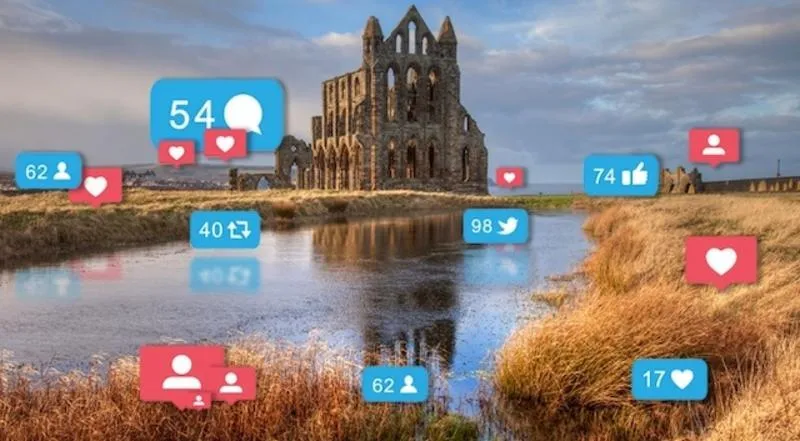
This course explores how social media reframes our understanding and experience of heritage. Through the idea of ‘participatory culture’ the course begins to examine how social media can be brought to bear on the encounter with heritage and on the socially produced meanings and values that individuals and communities ascribe to it.
To highlight the specific changes produced by social media, the course is structured around three major themes:
Social Practice. New ways of understanding and experiencing heritage are emerging as a result of novel social practices of collection, representation, and communication enabled and promoted by social media.
Public Formation. In the presence of widely available social technologies, peer to-peer activities such as information and media sharing are rapidly gaining momentum, as they increasingly promote and legitimate a participatory culture in which individuals aggregate on the basis of common interests and affinities.
Sense of Place. As computing becomes more pervasive and digital networks extend our surroundings, social media and technologies support new ways to engage with the people, interpretations and values that pertain to a specific territorial setting.
Finally, this course aims to provide participants with a critical framework to understand how the participatory culture fostered by social media changes the way in which we experience and think of heritage.
SO PREPARE YOUR SOCIAL MEDIA ACCOUNTS TO EXPLORE AND EXPERIENCE CULTURAL HERITAGE LIKE NEVER BEFORE!
Who teaches it
Throughout his five-year study of architecture in Helwan university, Egypt. Mohamed W.Fareed participated in several international workshops and competitions, Heritage conservation was and still his main focus since he started his internship with Megawra built environment collective in 2018, where he worked closely with Dr May al-Ibrashy in several conservation projects in old Cairo. His research and field experiences include projects such as: Old shali restoration, wekalat qaytbay adaptive reuse and Bulaq historic quarter documentation.
After graduation in 2020, He Finished my pre-master course in Helwan University, in which he started to gain knowledge about academic writing and scientific thinking. In the last two years, he tried his best to boost my academic experiences with active participation in ICOMOS various working groups, international conferences and academic publications. In addition to that, he is currently studying for an online post graduate diploma for urban heritage strategies from Erasmus University Rotterdam (I.H.S).
From the fellow Assignment: In no more than 500 words define the themes, key concepts, what you loved and hated about using social media on cultural heritage sites and why.
What You Expect from Me (Course Objectives): - Understanding the different conceptual frameworks that tackle cultural heritage in the age of social media. - Cultivating the ability to analyze and discuss digital cultural heritage in both verbal and written forms.
What I Expect from You: - Preparedness for class by doing the readings, preparing points of discussion and questions. - Interaction in class. This class is an example of what an interactive learning experience looks like. We are both learning with each other along the way. Having an ongoing, open discussion in class will make the whole experience more informative and entertaining.
Course flow
Sessions without a date
This introductory session examines the potential of several kinds of social media in support of community-based heritage activities using examples from the United States, South America, South Africa, Asia and Europe. The session stresses how the value of cultural heritage in a digital age lies in its power to stimulate ever-evolving community-based reflection and conversation on past, present and future identities.
Take a look at the syllabus, prepare questions and points of discussion for class.
This session describes self-organizing curatorial activities by members of the public using social media in times of disasters. the session discusses the potential of social media technologies as both tools and sites for grassroots heritage practices of online curation, focusing on the crisis narratives of the 1984 Bhopal gas leak (India) as a case study.
This session reviews current practices around online data storage in relation to memory and death. It also offers a critical discussion of the various strategies concerning how the personal legacy data that people leave behind could be accessed, curated and engaged for historical and heritage purposes, while at the same time being shared and kept ‘alive’ within communities of loved ones.
This session discusses how the ‘social traces’ that visitors leave on cultural heritage sites can be used to facilitate broader connections, and create new communities and patterns of social interaction around the heritage.
This session explores how social media redefine the temporal and spatial boundaries of a historical event, and discusses how social media can support the formation of new publics by enabling strangers to share their experiences and renegotiate their relations to specific historical events and to each other.
This session discusses how digital technologies and social media can be integrated in sustainable ways to support the documentation and sharing of intangible heritage knowledge and practices.
This final session provides an overview of how social media and social networking technologies are becoming increasingly important in the development of museum communication, and how audiences are invited to engage with cultural content.
Course reading list
- Heritage and Social Media: Understanding heritage in a participatory cultureMain reference. Giaccardi, E. (Ed.). (2012). 1st ed. Routledge.
- Understanding, fostering, and supporting cultures of participationOptional. Fischer, G. (2011). Interactions, 18(3): 42–53.
- Things we valueOptional. Giaccardi, E. (2011). Interactions, 18(1): 17–21.
- Heritage matters: Designing for current and future values through digital and social technologiesOptional. Giaccardi, E., Churchill, E. and Liu, S.B. (2012). Proceedings of CHI 2012, New York: ACM Press.
- Greenfield, A. (2006)Optional. Title not given in the flow.
- Rethinking the museum: Cultural heritage and the Internet of ThingsOptional. Van Oost, O. (2012). In C. van den Akker (ed.) Museum Transfigurations. Curation and Co-creation of Collections in the Digital Age, Oxford and New York: Berghahn Books.
- Understanding Heritage in PracticeOptional. West, S. (2010) (ed.). Milton Keynes: The Open University.
Get the CILAS newsletter
New courses, open calls and articles from CILAS, in your inbox.



18 October 2026
Join CILAS's Spring semester of 2026
- Spring 2026, Cairo