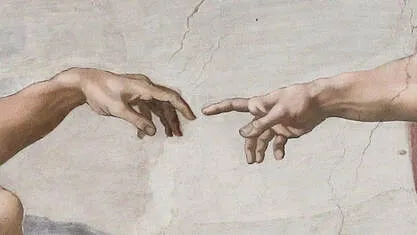
Fall 2024, CairoShort Course
A Journey to the East
Teachings from the East
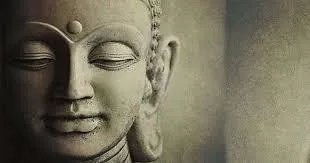
Course details
- Cycle
- Fall 2024, Cairo
- Starts
- Thursday, Sep 26
- Meets
- Thursday, 18:00–20:30
- Length
- 9 weeks
- Format
- Online
- Taught in
- English
Share
Discuss it with AI
- Choose your preferred AI assistant.
- A new tab will open with a prompt prepared for this page.
- Press Send to begin exploring the page through dialogue, CILAS-style.
About the course
This course is an opportunity to introduce ourselves to and explore various ideas from Eastern cultures (such as Buddhism, Confucianism, Sufism, and perhaps aspects of Ancient Mesopotamia/Akkadian).
The structure of the course will first look at the ‘historical’ narratives of such figures as Buddha, Confucius, and Rumi, and then explore ideas and principles as have been articulated/manifested through art.
Themes that will be explored are the i) principles behind Buddhist teachings, ii) Confucian humanism, and the attitudes of (Islamic) mysticism.
This approach will cover two thirds of the course; for the tail-end of the course, the idea is to explore a specific formulation (and perhaps rather esoteric expression) of said cultures: for example, the Mādhyamaka (Middle Way) school of thought from Buddhism and the notion of emptiness (śūnyatā); a conversation around Confucius’ ethical and political views through his Analects; a read of Rumi’s Masnavi or Attar’s The Conference of the Birds.
Alternatively, students may choose to turn to Ancient Mesopotamia, to look at the history and (cultural) attitudes revolving around the recovery of The Epic of Gilgamesh. Or they may like to introduce another culture and discuss its cultural artifact/artistic manifestation (literature, painting/drawing, statute, etc.).
Rest of the Course: the idea would be to look deeper at specific manifestations of the traditions explored so far. The above can either be all included, one each week, or students can elect one of the above to focus in length (close reading). In so doing, either students will be introduced to and discuss ideas from various traditions or get acquainted with the academic skill of close reading. Alternatively, students may opt to explore a different tradition/way of thinking from the East, such as looking at the history and (cultural) attitudes revolving around the recovery of The Epic of Gilgamesh; this last, however, will be more of an encyclopedic approach rather than the more disciplined examples above.
Who teaches it
Alexandros is student of life and a pupil of Liberal Arts, driven by the ideals of the examined life. I do not merely embody my university’s values and the principles of academia but make it my vocation to continuously learn from, live by, and share them with others.
I completed my Liberal Arts BA (with hons) at the University of Winchester, and I am currently undertaking a (research) Master’s in Philosophy at the University of Amsterdam.
Throughout my educational journey, I have drawn from these ideals and principles to help establish – in both universities – the Agora society, a place for students with curious minds across disciplines to come together and ask questions, to share their ideas and thoughts with one another – to live the examined life
Course flow
September 2024
- Buddhist ScriptureRadice, B. ed. (1959). Translated by Edward Conze. Hamondsworth: Penguin Books.
- Genius of the Ancient World. Episode 1. Buddha2015. BBC 4. 5th August. 21.00.
October 2024
- BuddhismCush, D., (1993). London: Hodder and Stoughton.
- Buddhist ScriptureRadice, B. ed. (1959). Translated by Edward Conze. Hamondsworth: Penguin Books.
We will be looking at Wheel of Life (Bhavacankra) to discuss the Buddhist ideas are depicted through it.
- The DhammapadaA few verses. Maybe also look at. Easwaran, E., trans. (2003). California: Nilgiri Press.
- The Questions of King MilindaMaybe also look at. Davis, T. W. trans. (1982). Delhi: Motilal Banarsidass Press.
- Genius of the Ancient World. Episode 3. Confucius2015. BBC 4. 19th August. 21.00.
- Understanding ConfucianismOldstone-Moore, J. (2003). London: Duncan Baird Publishers.
- The AnalectsConfucius, (2014). Trans. Annping Chin. London: Penguin.
- Understanding ConfucianismOldstone-Moore, J. (2003). London: Duncan Baird Publishers.
- The AnalectsConfucius, (2014). Trans. Annping Chin. London: Penguin.
[There is the potential to explore ideas from Taoism and the work of Lao Tzu; this will have to be discussed in advanced as it would change the shape of the following sessions].
- Li Po and Tu FuPo, L. and Fu, T. (1973). Translated by Arthur Cooper. London: Penguin Books.
- Man and Nature: A Study of Du Fu’s PoetryYang, M. V. (2002). Monumenta Serica, 50, pp. 315-336.
November 2024
- Rumi Past and Present, East and West: The Life, Teachings and Poetry of Jalâl al-Din RumiLewis, F. D. (2000). Oxford: Oneworld Publications.
- Introduction to Sufi DoctrineBurckhardt, T., (2008). Bloomington, Indiana: World Wisdom.
- Mystical Poetry in Islam: The Case of Maulana Jalaladdin RumiSchimmel, A (1988). Religion & Literature, 20(1), pp. 67-80.
- The Life and Work of Jalal-ud-din RumiIqbal, A. (1983). London: Octagon.
- Introduction to Sufi DoctrineBurckhardt, T., (2008). Bloomington, Indiana: World Wisdom.
- Rumi: Selected PoemsRumi, J. (1999). Translated by Coleman Banks. London: Penguin Books.
- Rumi: Selected PoemsRumi, J. (1999). Translated by Coleman Banks. London: Penguin Books.
- The Essence of SufismBaldock, J. (2004). Royston: Eagle Editions.
- The Life and Work of Jalal-ud-din RumiIqbal, A. (1983). London: Octagon.
- Mystical Poetry in Islam: The Case of Maulana Jalaladdin RumiSchimmel, A (1988). Religion & Literature, 20(1), pp. 67-80.
Course reading list
- Nāgārjuna's Middle WayNāgārjuna, 2013. Translated by M. Siderits & S. Katsura. Somerville: Wisdom Publications. Rest of the Course: Mādhyamaka (Middle Way) and śūnyatā.
- The Masnavi - Book OneRūmī, J. a.-D., 2004. Translated by J. Mojaddedi. Oxford: Oxford University Press. Rest of the Course: Rumi's Masnavi (option).
- The Conference of the BirdsAttar, F. (2011). Translated by Afkham Darbandi and Dick Davis. London: Penguin Books. Rest of the Course: Attar's work (option).
Get the CILAS newsletter
New courses, open calls and articles from CILAS, in your inbox.



18 October 2026
Join CILAS's Spring semester of 2026
- Spring 2026, Cairo