Winter 2015, CairoThematic Course
Urban Resilience - From Mitigation to Adaptation
From Mitigation to Adaptation
Course details
- Cycle
- Winter 2015, Cairo
- Taught in
- English
Share
Discuss it with AI
- Choose your preferred AI assistant.
- A new tab will open with a prompt prepared for this page.
- Press Send to begin exploring the page through dialogue, CILAS-style.
About the course
As cities continue to grow, an increasing amount of people is exposed to various hazards related to the urban environment. ‘Urban resilience’ refers to the capacity of different stakeholders in a city, from the inhabitants of informal areas to the municipality’s policy makers, to respond to these hazards. In this course, students will develop an understanding of the possible impact of different hazards, from state violence to climate change, on cities. The various dimensions of the concept of resilience and the difference between adaptation and mitigation will be discussed extensively. Furthermore, this course will focus on possible strategies to improve urban resilience and on a wide range of issues and controversies that influence the design of these strategies. Students will develop a toolkit that enables them to identify an urban hazard, research its different dimensions and develop a strategy to improve urban resilience with regard to this specific hazard.
expectations
Students are expected to select and summarise three (newspaper) articles on a specific type of urban hazard. Students are expected to produce a risk analysis and strategy paper consisting of the identification of a specific urban hazard in Cairo, an analysis of the risks involved and an outline of possible strategies responding to his hazard. (Ideas and drafts will be discussed in the second half of the course).
objectives
Understand the various dimensions of the concept of resilience. Analyse how cities and urban life are threatened by different hazards. Learn how cities are classified by their most characteristic and threatening hazard. Examine how hazards can pose serious risks to people’s lives and livelihoods Discover how different stakeholders can use different strategies to respond to these hazards. Distinguish between adaptation and mitigation. Identify which new technologies can improve resilience. Be able to develop a strategy to improve urban resilience
Who teaches it
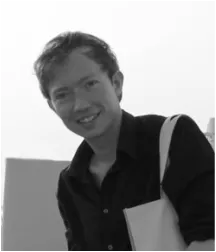
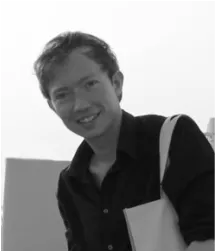
René BOER holds a Master's degree in Urban Studies from University College London's Urban Laboratory. He works as an urban and architectural researcher in Cairo and is affiliated with the Amsterdam-based research foundation Failed Architecture; and various urban social movements. His work focuses on grass root urban practices, architecture's urban afterlife and artistic representations of the built environment. In the past, he has worked as a freelance journalist for a number of media outlets in Syria, Lebanon and the Palestinian Territories. He has also been associated with the urban research collectives Citymine(d) in Barcelona, ICAHD in Ramallah/Jerusalem and Archis/Volume in Amsterdam. René joins CILAS as visiting fellow in the fields of study Arts and Natural Sciences, and will coordinate the thematic courses Art and the City, and Urban Resilience.
Get the CILAS newsletter
New courses, open calls and articles from CILAS, in your inbox.



18 October 2026
Join CILAS's Spring semester of 2026
- Spring 2026, Cairo