Fall 2021, CairoLab
the space lab
Course details
- Cycle
- Fall 2021, Cairo
- Length
- 12 weeks
- Format
- In person
- Taught in
- English
Share
Discuss it with AI
- Choose your preferred AI assistant.
- A new tab will open with a prompt prepared for this page.
- Press Send to begin exploring the page through dialogue, CILAS-style.
About the course
In this lab we will engage debates in contemporary neoliberal urbanism with a particular focus on the global south. It questions the colonially-mediated modern conceptual frameworks that undergird the urban studies field. It suggests to rethink the intimate connection between the development of capitalism and urbanisation. The space lab explores the ongoing reconfigurations of the urban as social laboratory: the production of gendered, raced, classed subjectivities, housing, land, networks, livelihoods, power, violence and social movements in the everyday life of dwelling.
Meanwhile, the space lab will provide three trajectories for creative experimentation: autonomous space building (like CILAS and its neighborhood), urban gentrification, social housing and resettlement.
Who teaches it
Shan Yang is a Post-MA Fellow for the 2019-2020 academic year at HUSSLab after obtaining an MA at the American University in Cairo. Her MA Comprehensive Examination covered three domains: political economy, time and temporality and the urban. She is currently working on a research project-Being and Living in Spaces of Global Capitalism: Time, Gender and Lifeworlds of Rural Migrant Laborers. She obtained her Bachelor's degree (2012) and first MA (2015) at Fudan University in Shanghai.

Course flow
Sessions without a date
- ‘Cairo has started to become ugly’: why Egypt is building a new capital cityMichaelson, R. (2018, May 8). The Guardian.
- Understanding Cairo: The logic of a city out of controlSims, D. (2012). Oxford University Press.
- Urban forms and colonial confrontations: Algiers under French ruleCelik, Z. (1997). University of California Press.
- Paris, capital of modernityHarvey, David. Psychology Press, 2003.
- Tale of two cities: the origins of modern CairoAbu-Lughod, Janet. Comparative Studies in Society and History 7.4 (1965): 429-457.
African Cities Reader III:
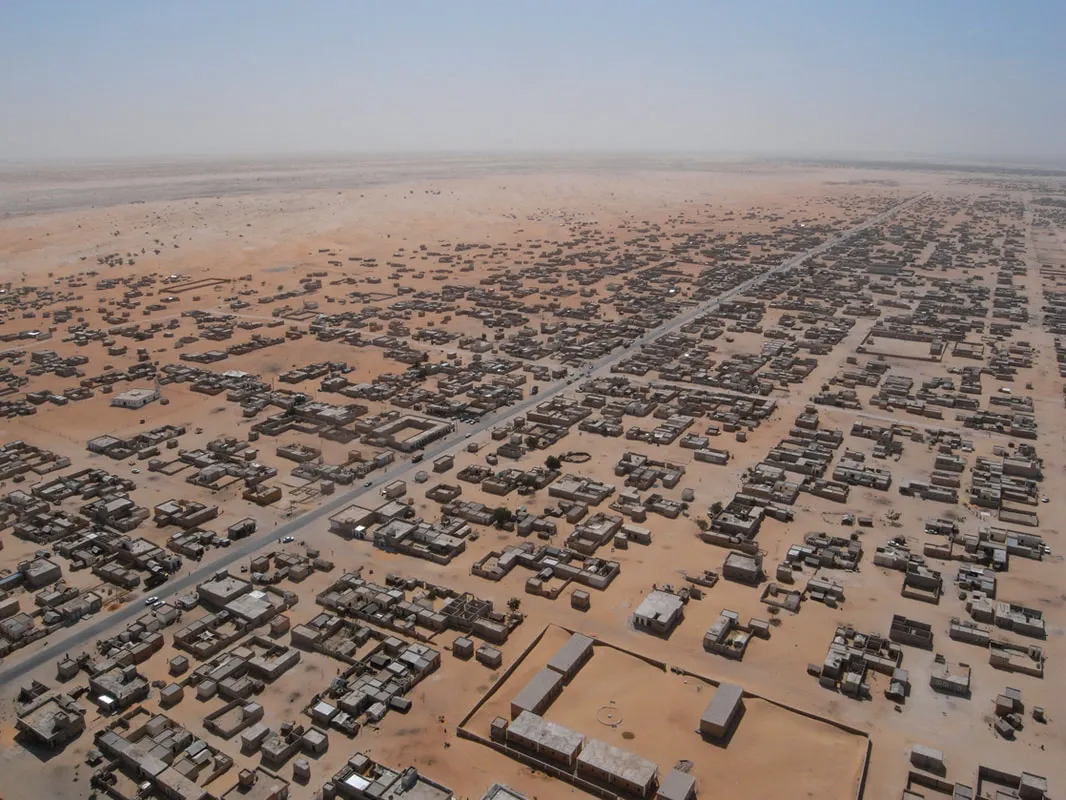
- Urban Sahara from the Sky: how Global Capitalism Fixes the Dunes (Nouakchott, Muaritania)African Cities Reader III, pp 19-21.
- High Class Shanty Towns (Dakar, Senegal)African Cities Reader III, pp 22-26.
- This Sea Shall Be Uprooted (Lagos, Nigeria)African Cities Reader III, pp 27-35.
- City Building in Post-Conflict, Post-Socialist Luanda: Burying the past with phantasmagorias of the future (Luanda, Angola)African Cities Reader III, pp 121-133.
- Dispossessed Vigils: Mourning and Regeneration in Inner-City Johannesburg (Johannesburg, South Africa)African Cities Reader III, pp 134-147.
- Social SpaceLefebvre, H (1991), in The Production of Space, ch. 2, pp 68-168.
- Invisible Urbanism in AfricaRao, V., DeBoeck, F., and Simone, A. (2007). Perspecta, 39, 78-91.
- Framing themes and questions for an engagement with African urbanismPieterse, E. (2009).
- The Right to the CityHarvey, D. (2008). New Left Review 53: 23-53.
- Inhabiting Ocular Ground: Kinshasa’s Future in the Light of Congo’s Spectral Urban PoliticsDeBoeck, F (2011). Cultural Anthropology, 26 (2) pp. 263-286.
- The Bantustan Sublime: Reframing the Colonial in RamallahAbourahme, N. (2009). City, 13(4) pp. 499-509.
- Spectral housing and urban cleansing: Notes on millennial MumbaiAppadurai, A. (2000). Public Culture, 12(3), pp. 627-651.
- Bypassing the squalor: New towns, immaterial labour and exclusion in post-colonial urbanisationBhattacharya, R., & Sanyal, K. (2011). Economic and Political Weekly, XLVI(31), pp. 41-48.
- Egypt's Housing Crisis. The Shaping of Urban SpaceShawkat, Yahia, and David Sims. American University in Cairo Press, 2020.
- Egypt's desert dreams: development or disaster?Sims, David. American University in Cairo Press, 2015.
Gautam Bhan’s text In the public's interest: evictions, citizenship, and inequality in contemporary Delhi. Please focus on the following chapters:
- Introduction ‘How did we get here’Gautam Bhan, In the public's interest: evictions, citizenship, and inequality in contemporary Delhi, pp.1-43.
- Unmaking Citizens: Spatial Illegality, Urban Citizenship and the Challenges for Inclusive Politics (Chapter 3)Gautam Bhan, In the public's interest: evictions, citizenship, and inequality in contemporary Delhi, pp. 146-187.
- ‘You can’t Just Walk into a Court’: Notes on the Judicialisation of Resistance (Chapter 4)Gautam Bhan, In the public's interest: evictions, citizenship, and inequality in contemporary Delhi, pp. 188-232.
- Urban neoliberalism, urban insecurity and urban violence: Exploring the gender dimensionsKern, L. and Mullings, B. (2013). In Rethinking Feminist Interventions into the Urban, pp. 23-40.
- A Tale of Two Walled Cities: Neoliberalization and Enclosure in Johannesburg and JerusalemClarno, A (2008). Political Power and Social Theory, 19, pp. 159-205.
- Governing three-wheeled motorcycle taxis in urban Ethiopia: States, markets, and moral discourses of infrastructureMains, D., & Kinfu, E. (2017). American Ethnologist, 44(2), 263-274.
- The politics of open defecation: informality, body, and infrastructure in MumbaiDesai, R., McFarlane, C., & Graham, S. (2015). Antipode, 47(1), 98-120.
- Ruinous city, ruinous time: Future suspended and the science fiction of the presentAbourahme, N. (2014). City, 18(4-5), 577-582.
- The Pandemic, Southern Urbanisms and Collective LifeGautam Bhan, Teresa Caldeira, Kelly Gillespie, and AbdouMaliq Simone (2020). Socity&Space.
Get the CILAS newsletter
New courses, open calls and articles from CILAS, in your inbox.



18 October 2026
Join CILAS's Spring semester of 2026
- Spring 2026, Cairo