Spring 2018, CairoThematic Course
The “Development of Underdevelopment”
Course details
- Cycle
- Spring 2018, Cairo
- Taught in
- Arabic / English
Share
Discuss it with AI
- Choose your preferred AI assistant.
- A new tab will open with a prompt prepared for this page.
- Press Send to begin exploring the page through dialogue, CILAS-style.
About the course
Progress and development have captured the imaginations of thinkers and world leaders for centuries. Inspired by a broad range of theories about the human condition from economic rationality to social and psychological evolution theories, the race towards progress has justified diverse, yet often times quite brutal policies not only in the advanced West but more so in the rest. Despite centuries of colonialism, peoples of once-colonized nations have emerged as staunch advocates of western-style progress and development more than their colonial masters.
From building dams to strict birth control to neoliberal monetary policies; every post- colonial nation-state has struggled to catch up to the advanced west. Nevertheless, why do many countries remain in dire economic and demographic conditions even though they follow programs set by global development organizations? Why have development programs concocted by western ideologues produced diverse and nuanced underdevelopment instead?
This course provides a general history of development thought and a critical political economy analysis of change on a world-wide scale that situates events such as the Gulf War, the fall of Berlin Wall, the Rio Conference and the rise of the BRICS (Brazil, Russia, India, China and South Africa) within their larger historical contexts and critiques prevalent concepts of progress, growth, and under- development in an attempt to pave the way for alternative imaginations of societal change.
The course works towards nurturing a critical approach to socio-economic change and the ideas that informed consecutive ‘development’ paradigms since the twentieth century. Readings and course activities will present and assess those paradigms within their respective political and economy contexts and historical conditions.
Learning Outcomes:
By the end of this course students will be able to:
1.Identify major theories of societal change
2.Explain the principles of international political economy
3.Assess development projects contextually
4.Identity the implications of development programs on human well being
Who teaches it
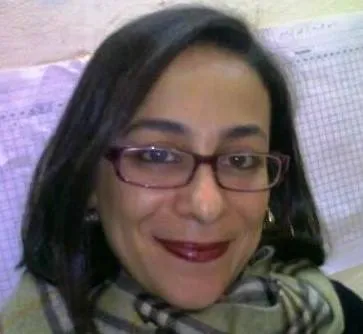
Dalia Wahdan is an anthropologist who is deeply interested in the ‘urban’ particularly the perennial dialectics of man and nature. She holds a Ph.D. from Pune University, India and a Masters from the American University in Cairo. The Masters’ thesis was an examination of spatial inequities manufactured and sustained by the construction of new urban settlements in Egypt and the doctoral dissertation was a comparison of the privatization of road networks and their implications on physical mobility in the national capital region of Delhi and greater Cairo region. She is a firm believer in liberal learning and education and has taught at the Foundation for Liberal and Management Education (FLAME University) in India, at the Centre for the Study of Law and Governance of Jawaharlal Nehru University (India) and the School of Public Administration of the American University in Cairo. She loves to wander into landscapes and observe how humans imagine and possibly create spaces of freedom within and against their mortal predicaments.
Get the CILAS newsletter
New courses, open calls and articles from CILAS, in your inbox.



18 October 2026
Join CILAS's Spring semester of 2026
- Spring 2026, Cairo