Winter 2026, CairoWorkshop
Seeing with the Eyes of your Heart: William Blake, Poet & Painter
Course details
- Cycle
- Winter 2026, Cairo
- Starts
- Thursday, Feb 26
- Meets
- Thursday, 18:00–20:30
- Length
- 4 weeks
- Format
- In person
- Taught in
- English
Share
Discuss it with AI
- Choose your preferred AI assistant.
- A new tab will open with a prompt prepared for this page.
- Press Send to begin exploring the page through dialogue, CILAS-style.
About the course
The great poet and philosopher, Ibn Arabi, saw divinity with the eyes of his heart. The English poet and painter, William Blake, can inspire you do likewise. Scholars in Pakistan, England, and Iran have compared Blake to Ibn Arabi as well as Rumi and Hafez. Blake's Songs of Innocence and of Experience are deceptively simple, but they enable us to see the unity of being, the joy of divine love, and the goodness in all created things.
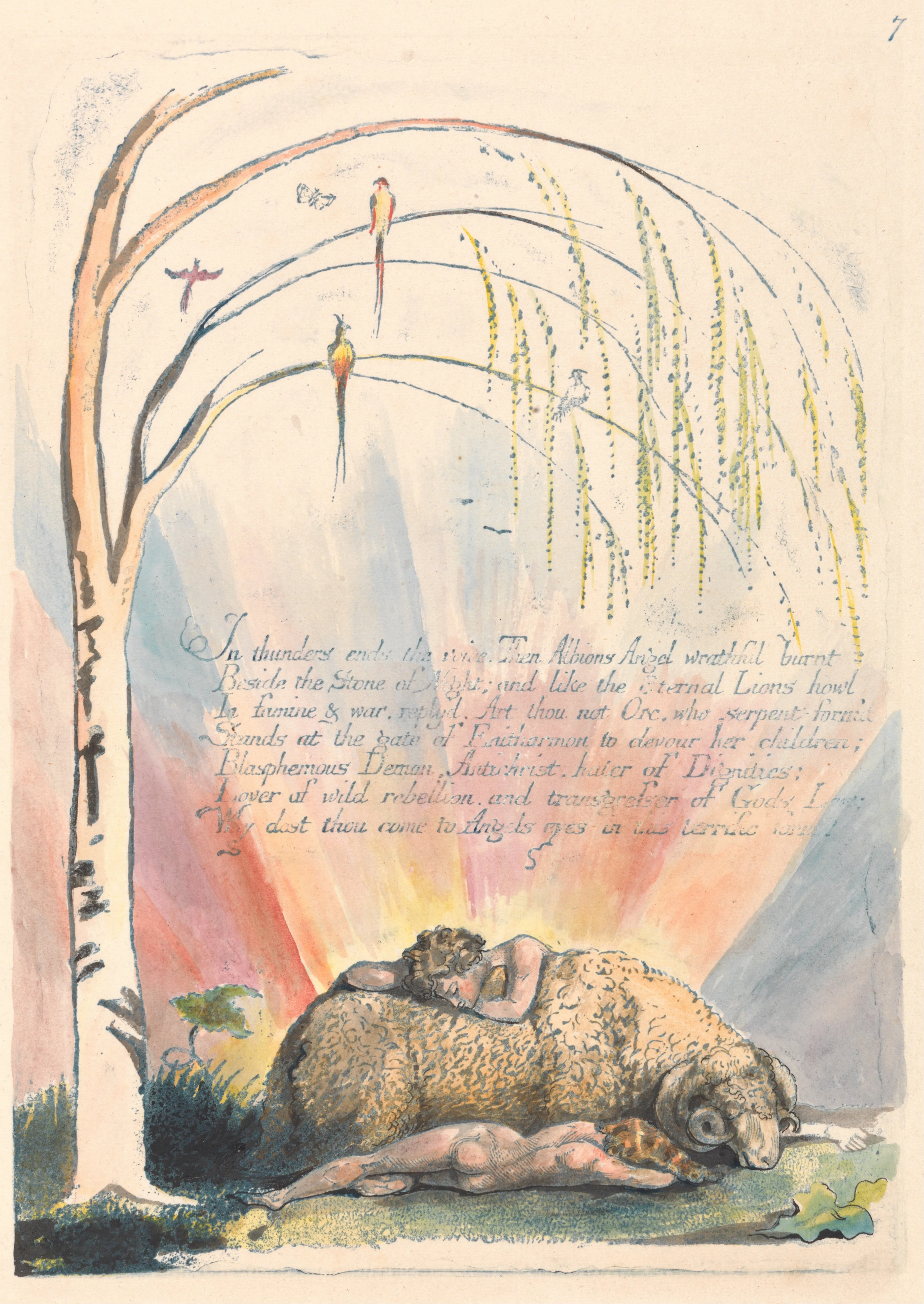
This four week class carefully explores the poetry and art of Blake's Innocence and Experience. Each poem is illuminated, flanked and framed by intriguing imagery and designs. We'll read Blake's poems aloud, discuss their designs (with the help of slides) and do a bit of in-class writing, including at least one poetry game. Our short course culminates in a celebration in which you'll be invited to bring Arabic (or Persian) poetry akin to Blake's. (If you are a poet or an artist and can bring your own work that will be a delight!) Seeing with the eyes of the heart is not confined to just one culture or tradition. When artists and poets 'converse' with one another their wisdom and beauty can be amplified.
Who teaches it
Has taught humanities — literature, religion and performance — in China, Russia, Sweden, the USA and the UK (at Oxford, where she received her doctorate). Published over twenty articles and the book Blake’s Jerusalem As Visionary Theatre; also a peace researcher, actress and social worker who created arts programmes for Chicago teenagers who had been homeless and abused.
From the fellow Course Flow
You'll be provided with copies of Blake's text (hard copy) and the full colour illuminations (online). We'll read from projected images, and listen to musical renditions of a few. Because of Ramadan we'll have snacks during class. Poetry can be a feast!
"Only from the heart can you touch the sky." (Rumi)
Course flow
February 2026
We begin with introductions. Who are you? Do you have a favourite poet? I'll then talk briefly about the life and work of William Blake. Together we'll read aloud a cluster of the very short Songs of Innocence. Before carefully analysing four of them, we'll do a bit of class writing. After reading another cluster of six - we take a short break.
Now we look closely at Blake's visual designs. Are there any patterns? Does that influence our analysis of at least three more poems?
March 2026
We continue our Innocence journey, reading aloud. And then we play a poetry game, creating group poems before returning to Blake. How do nature, culture, and the divine intermingle? How important is empathy? What is the value of Innocence? Can you see with the eyes of your heart?
After the break, we enter into Experience. What has changed? Carefully, we explore at least four poems.
We continue in Experience. How do the 'companion poems' ('Infant Joy'/'Infant Sorrow'; 'The Chimney Sweeper[s]; 'The Lamb' & 'The Tyger') interrelate? Can you be in a state of Innocence when in Experience?
In our first hour we continue in Experience. We read, write creatively, and critically analyse. Then we regain innocent wisdom in Blake's "Auguries of Innocence."
After the break, we feast poetically. You'll each be asked to read a short Arabic poem, perhaps one you have written. Translation can be enjoyable. How does poetic beauty deepen perception? How can your favourite poetry be 'in conversation' with William Blake's?
Course reading list
- Songs of Innocence and of Experience
Get the CILAS newsletter
New courses, open calls and articles from CILAS, in your inbox.



18 October 2026
Join CILAS's Spring semester of 2026
- Spring 2026, Cairo