Spring 2021, CairoLab
Pedagogy Lab
Course details
- Cycle
- Spring 2021, Cairo
- Taught in
- English
Share
Discuss it with AI
- Choose your preferred AI assistant.
- A new tab will open with a prompt prepared for this page.
- Press Send to begin exploring the page through dialogue, CILAS-style.
About the course
Education (in the liberal arts) should be an “uncoercive re-arrangement of desires” oriented towards an “ethical relationship towards the Other – before will” (Spivak).
In the spring, the pedagogy lab returns to appreciate those qualities of education that are bemoaned by current standardized testing and measurement trends as defects to be overcome. Instead of arguing for education to become stronger, more secure, more predictable, and risk-free, we will consider the case for weak education as a practice that is slow, difficult, insecure, unpredictable, and full of risks and uncertainties.
With Geert Biesta and Vanessa Andreotti as our interlocutors, we will learn about both weak and post-colonial/decolonial thought in education. The Pedagogy Lab invites us to think about higher education, in particular, philosophically and in terms of ‘actionable’ curricula. Lab participants will discuss assigned readings and develop/design a small ‘core’ curriculum in Arabic and/or English that they will teach to adults in partnership with StARS and Beit Yakan once a week during the second half of the semester. Some of the questions we will raise and address include:
How is an education based on "uncoercive rearrangement of desires" different from “transformative” or “emancipatory” education?
How can a pedagogy of self-reflexivity, self-implication, dissensus, and discomfort support people to go beyond denial and feelings of shame, guilt, or deceit (Taylor, 2011)?
How can we learn from social breakdowns in ways that complicate conversations (Pinar, 2009) and that might open ourselves to ethical obligations (Zembylas, 2010) and to being taught by the world (Biesta, 2012)?
How can one ethically and professionally address problematic patterns that abound in educational approaches benevolently concerned with helping, fixing, defending, educating, assimilating, or giving voice to the Other (Andreotti, 2011)?
How can we promote a place- and community-based approach to liberal arts education away from an Ivory Tower and towards a more grounded Pigeon Tower?
Who teaches it
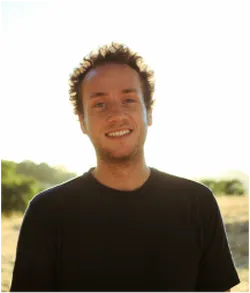
Karim-Yassin Goessinger studied political philosophy and urbanism in the Netherlands, Brazil and France. He worked with different development agencies in Latin America and the Middle East in fields including micro-finance, informal housing and local governance. A Dalai Lama and Donella Meadows Fellow, he enjoys martial arts, languages, world music, cooking and tea. After his graduate studies at Sciences Po Paris, he founded the Cairo Institute of Liberal Arts and Sciences (CILAS). At CILAS, he has coordinated the field of study Social Sciences and has directed the yearlong study programme in the liberal arts between 2013 and 2016. At the American University in Cairo, he convened two sociology courses in 2016 and 2017.
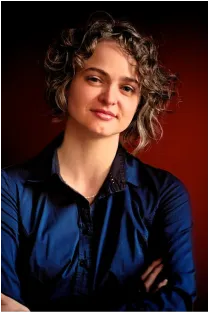
Jana Hollá has always been intrigued by how and especially why we humans behave in the ways we do. Choosing Cultural Anthropology therefore seemed like the right way to go. At some point, however, the passive observation was not enough. In a search for more, she came across the field of cross-cultural communication during her MA studies. By the time she enrolled in the Anthropology PhD program at Charles University in Prague she was a strong believer in the application possibilities the cross-cultural tools offered on top of the theoretical anthropological basis. Her academic interests refocused on the issues of identity and belonging in relation to interactions with the (culturally foreign) Others. Her PhD dissertation thus ended up examining a group of young middle class Cairenes and how their daily interactions with their semi-international shilla influenced the ongoing construction of their personal identities. By this time, a year-long study stay in Cairo turned into a proper expatriation. Career-wise she moved away from academia and became a cross-cultural consultant, trainer and group facilitator working both with the profit and non-profit sectors. After well over a decade, Jana enjoys her expat life in Cairo, living what she preaches: embracing the challenges and opportunities living abroad offers with full awareness and deep appreciation.
Get the CILAS newsletter
New courses, open calls and articles from CILAS, in your inbox.



18 October 2026
Join CILAS's Spring semester of 2026
- Spring 2026, Cairo