Spring 2026, CairoShort Course
Modernity and the Ecological Crisis: Why We Can’t Help but Destroy the World

Course details
- Cycle
- Spring 2026, Cairo
- Starts
- Thursday, Apr 30
- Meets
- Thursday, 18:00–20:30
- Length
- 8 weeks
- Format
- In person
- Taught in
- English
Share
Discuss it with AI
- Choose your preferred AI assistant.
- A new tab will open with a prompt prepared for this page.
- Press Send to begin exploring the page through dialogue, CILAS-style.
About the course
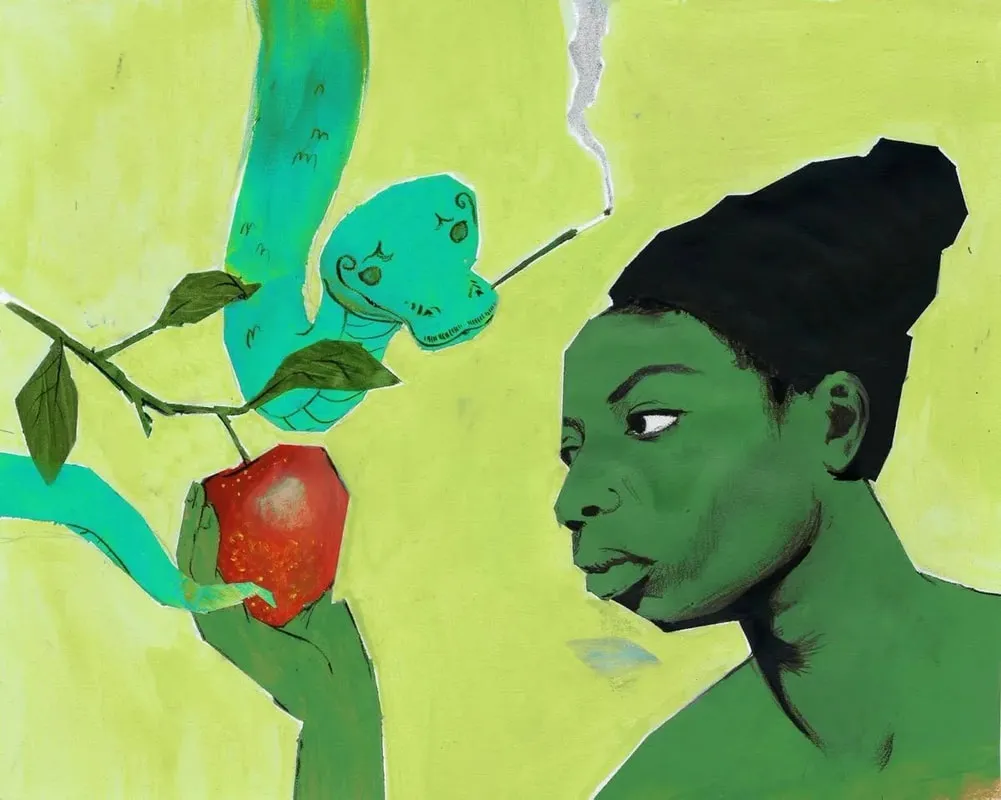
Throughout the span of human history, no period has ever alienated humankind from the natural world as much as the modern era. In it, the advent of scientific discovery, the Industrial Revolution, and technological advancement have achieved a dual effect—one that simultaneously furthered the cause of human progress while accelerating the rate of planetary destruction. While these material conditions have certainly deepened the rift between humanity and nature, the origin of this division precedes our desire to consume the planet of its resources and returns to a fundamental belief that modern humans are morally, physically, and spiritually detached from their natural environment.
In this course, students will learn to identify the material, social, and philosophical processes that define Modernity and how they continue to contribute to the worsening condition of the ecological crisis. Using a multidisciplinary approach, this course will call into question the very assumptions that underpin Modernity’s conception of nature as an objective domain with no intrinsic meaning or value beyond its exploitation, and demonstrate the inevitable destruction that such a worldview inflicts upon the world. While the course does aim to deconstruct the essence of the modernist project, students will also be given the opportunity to discover and explore the wide array of methods proposed by a variety of scholars to conceptualize and realize the possibility of a different world(s).
Who teaches it
Course flow
April 2026
- AnthropoceneChua, Liana, and Hannah Fair. (2019) 2023. In The Open Encyclopedia of Anthropology, edited by Felix Stein. Facsimile of the first edition in The Cambridge Encyclopedia of Anthropology. Online: http://doi.org/10.29164/19anthro
- Nature and Society: Anthropological PerspectivesDescola, P., & Pálsson, G. (Eds.). (1996). London: Routledge (1-21).
May 2026
- We Have Never Been ModernLatour, B. (1993). Cambridge, Massachusetts: Harvard University Press (10-48).
- Meditations on First Philosophy With Selections from the Objections and RepliesDescartes, R. (2008 [1641]). Oxford: Oxford University Press.
- The Ax of Gilgamesh: Splitting Naure and CultureElmusa, S. S. (2003). In Sharif S. Elmusa (Eds.), Culture and the Natural Environment: Ancient and Modern Middle Eastern Texts. American University in Cairo Press. (20-48).
- The political ontology of climate change: moral meteorology, climate justice, and the coloniality of reality in the Bolivian AndesBurman, A. (2017). Journal of Political Ecology. Vol. 24 (922-928)
- Uncommoning nature: Stories from the Anthropo-Not-Seende la Cadena, M. (2015). Anthropology of This Century, 13. (35-58)
- Can the Mosquito Speak?Mitchell, T. (2002). In T. Mitchell, Rule of Experts: Egypt, Techno-Politics, Modernity. California: University of California Press. (19-53)
- Reassembling the Social: an Introduction to Actor-Network-TheoryLatour, B. (2005). Oxford and New York: Oxford University Press (1-17)
- Unruly Edges: Mushrooms as Companion SpeciesTsing, A. (2012). Environmental Humanities, 141-154.
- Staying With the Trouble: Making Kin in the ChthuluceneHaraway, D. J. (2016). Durham and London: Duke University Press (1-9) and (30-57).
June 2026
- Cosmological Deixis and Amerindian PerspectivismViveiros de Castro, E. (1998). The Journal of the Royal Anthropological Institute, 4(3), (469-488).
- The Ontological Turn: An Anthropological ExpositionHolbraad, M., & Pedersen, M. A. (2017). Cambridge, United Kingdom: Cambridge University Press (1-29).
- Ecological Embeddedness and Personhood: Have We Always Been Capitalists?Hornborg, A. (1998). Royal Anthropological Institute of Great Britain and Ireland, (3-5).
- Rethinking the animate, re-animating thoughtIngold, T. (2006). Ethnos, (9-20).
- Shakhṣīyat Miṣr: Dirāsah fī ʿAbqariyyat al-Makān [The Personality of Egypt: A Study in the Genius of Place]Hemdan, J. (1980). Cairo: Ālam al-Kutub.
- Animism, Fetishism, and Objectivism as Strategies for Knowing (or not Knowing) the WorldHornborg, A. (2011). Ethnos, (21-32).
- Steps to an Ecology of Mind: Collected Essays in Anthropology, Psychiatry, Evolution, and EpistemologyBateson, G. (1972). Chicago, IL: University of Chicago Press (434-454).
- How Forests Think: Towards an Anthropology Beyond the HumanKohn, E. (2013). Berkley, Los Angeles, London: University of California Press (27-71).
Get the CILAS newsletter
New courses, open calls and articles from CILAS, in your inbox.



18 October 2026
Join CILAS's Spring semester of 2026
- Spring 2026, Cairo