Fall 2018, AlexandriaCore Course
Modern Science - Its Promises and Limitations
Course details
- Cycle
- Fall 2018, Alexandria
- Taught in
- English
Share
Discuss it with AI
- Choose your preferred AI assistant.
- A new tab will open with a prompt prepared for this page.
- Press Send to begin exploring the page through dialogue, CILAS-style.
About the course
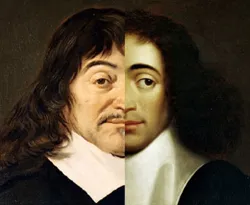
The core course in the Sciences takes a close a look at the promises and limitations of modern science. It does so by adopting historical, philosophical and sociological lenses on modern science. We will begin our journey by outlining the conventional accounts of Islamic Science, discussing their shortcomings and engaging with an alternative narrative of Islamic Science to develop an appreciation of the originality of Islamic scientific thought. From there we will turn our attention to the early modern age, or European Renaissance, and the birth of modern science. Together with Shapin and Shaffer and their book Leviathan and the Air-Pump we will reflect on the so called Scientific Revolution and the inherent conflict between inductive/experimental and deductive/theoretical reasoning represented by the figures of Boyle and Hobbes. We will deepen this analysis by examining two competing theories of substance -- in reality -- as proposed by Descartes and Spinoza. We will focus on Descartes' dualism and its relation to Spinoza's metaphysics. Moving on we will look at the emergence of the much acclaimed notion of objectivity in the mid-nineteenth century and discuss how the epistemic ideal of objectivity differs from its alternatives of (1) truth-to-nature, and (2) trained judgment. The last third of the course is dedicated to a classic in the field of ecology, namely Dave Abrams' The Spell of the Sensuous, to inquire into human language and perception in a more-than-human world, and Amitav Ghosh's The Great Derangement, engaging in a conversation about climate change and the unthinkable with one of the most astute living novelists. Throughout the course we will write reflection or response papers to help us get to the bottom of the burning issues discussed. The objective of the course is to develop a personal critique of the promises and limitations of modern science in light our changing climate.
Who teaches it
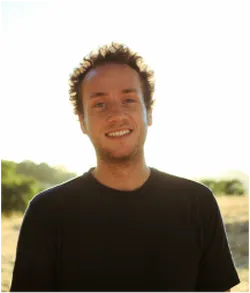
Karim-Yassin Goessinger studied political philosophy and urbanism in the Netherlands, Brazil and France. He worked with different development agencies in Latin America and the Middle East in fields including micro-finance, informal housing and local governance. A Dalai Lama and Donella Meadows Fellow, he enjoys martial arts, languages, world music, cooking and tea. After his graduate studies at Sciences Po Paris, he founded the Cairo Institute of Liberal Arts and Sciences (CILAS). At CILAS, he has coordinated the field of study Social Sciences and has directed the yearlong study programme in the liberal arts between 2013 and 2016. At the American University in Cairo, he convened two sociology courses in 2016 and 2017.
Get the CILAS newsletter
New courses, open calls and articles from CILAS, in your inbox.



18 October 2026
Join CILAS's Spring semester of 2026
- Spring 2026, Cairo