Spring 2026, CairoThematic Course
Materialities of Empire
Course details
- Cycle
- Spring 2026, Cairo
- Starts
- Tuesday, Apr 28
- Meets
- Tuesday, 18:00–20:30
- Length
- 12 sessions
- Format
- In person
- Taught in
- English
Share
Discuss it with AI
- Choose your preferred AI assistant.
- A new tab will open with a prompt prepared for this page.
- Press Send to begin exploring the page through dialogue, CILAS-style.
About the course
What can looking at materialities teach us about changing political empires?
Global history is characterized by changing and competing empires. What material impact these empires have on political realities and daily lives is a central inquiry for both political historians and anthropologists. This course reverses the question: how does matter shape these political realities, how does it change the course of empires and global history?
After diving into both the definitions of ‘empire’ and ‘materialities’, this course will address a multitude of geographies, both contemporary and historical - from the installation of telegraph lines in the Ottoman Empire to cement in mandate Palestine and 21th century data-centers in Ireland. A material approach to political history brings new perspectives on how empires take shape and change. Following materials allows for tying local specificities to global development and vice versa, and weaving a complex web of global politics to navigate.
The goal of this course is to thus to both develop an understanding of the theoretical fields that deal with materialities, political realities and global history, and develop a research attitude that attunes to detail to gain unexpected insights and analysis. At the end of the course, the students will be able to use the theoretical background to read global history from their immediate surroundings.
Who teaches it
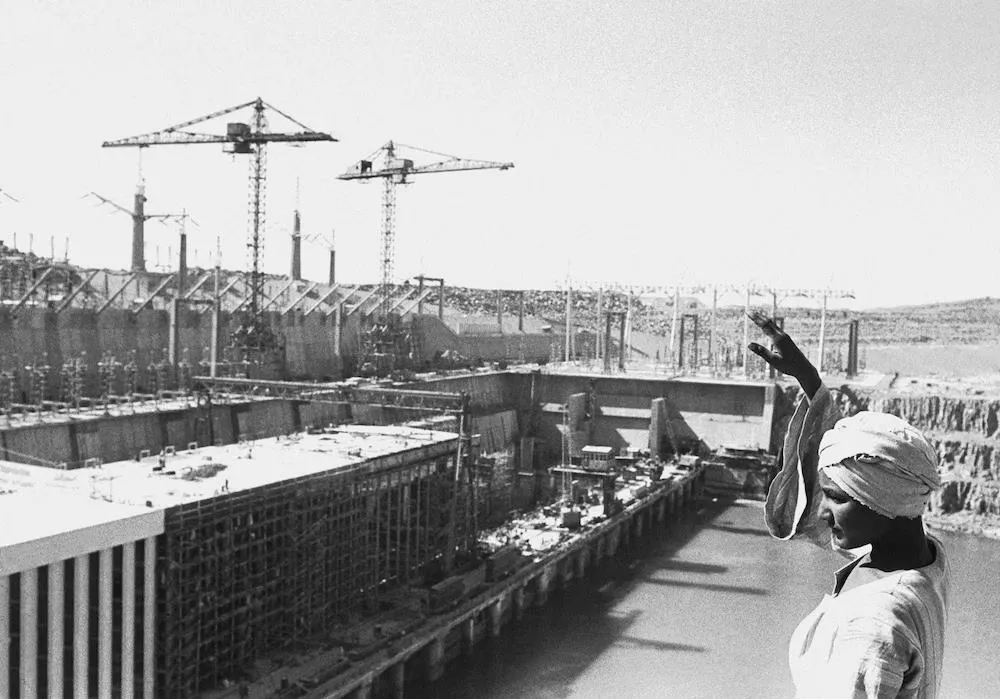
Lies T. Defever studied anthropology and architecture in Amsterdam and Paris, and has a deep love for history. She mostly researches what architecture and construction projects tell us about changing power relations, and writes about how we can understand imperia and their histories through their material connections. Her work sits at the intersection of political and material anthropology on the one hand and critical architecture theory and history on the other. Occasionally she presents her photography work on construction
From the fellow Sessions 1 to 5: genealogy of thought. Leading questions: What is empire to us? What are different ways of theoretically approaching ‘empire’? What possibilities does it open to foreground materials? What are the theoretical currents on material thinking? How do they differ and give us different outcomes/ways of analyzing?
BREAK for Eid
6 tot 10: into the world. Leading questions: diversify topics and focuses in material thinking, today and in history. Link readings/viewings back to part I. Develop your own research attitude, Start to think of your own project.
Course flow
April 2026
Reading: none
May 2026
- Empire?Wesley Renfro and Dominic Alessio. (2020)
- Material Powers. IntroductionJoyce and Bennett. (2010)
- Bodies in the System.Agard-Jones, Vanessa. (2013)
- Arts of NoticingAnna Tsing, from The Mushroom at the End of the World (2015), chapter 1.
- Contamination as CollaborationAnna Tsing, from The Mushroom at the End of the World (2015), chapter 2.
- some problems with scaleAnna Tsing, from The Mushroom at the End of the World (2015), chapter 3. Optional.
June 2026
- A River, Remade: Making Subjects on the Perennial NileJennifer Derr, from The Lived Nile. Environment, disease and material colonial economy in Egypt (2019).
- Assembling and Spilling-Over: Towards an 'Ethnography of Cement' in a Palestinian Refugee CampNasser Abourahme. (2014). Read together with the next reading (AND).
- Palestine along the colour line: race, colonialism, and construction labour, 1918–1948Nimrod Ben Ze’ev. (2021). Read together with the previous reading (AND).
June 16 or 17
- Shipping Doesn’t Do What Everyone Says it Does. For container shipping companies, the supply chain crisis was never a crisis: it was a buffetMiriam Matthiessen and Jacob Bolton. (2023). One of three options (OR).
- A Fish StorySekula. (1995). One of three options (OR).
- Palimpsests of Law and Corporate SovereignsLaleh Khalili, from Sinews of War and Trade. Shipping and Capitalism in the Arabian Peninsula (2020). One of three options (OR).
Reading: TBA
June 30 or July 1
- Ottoman Telegraphy and New Conceptions of Space and TimePauline Lucy Lewis, from Wired Ottomans: A Sociotechnical History of the Telegraph and the Modern Ottoman Empire, 1855-1911 (2018). One of two options (OR); the other is TBA.
July 2026
In class
- ActivityPROJECT PREPARATIONS - walk-in session
In class
- PresentationPROJECT PRESENTATIONS
Get the CILAS newsletter
New courses, open calls and articles from CILAS, in your inbox.



18 October 2026
Join CILAS's Spring semester of 2026
- Spring 2026, Cairo