Spring 2026, CairoThematic Course
Global Esotericism: Spirits, Cults, and a History of Magic

Course details
- Cycle
- Spring 2026, Cairo
- Starts
- Tuesday, Apr 28
- Meets
- Tuesday, 18:00–20:30
- Length
- 12 weeks
- Format
- In person
- Taught in
- English
Share
Discuss it with AI
- Choose your preferred AI assistant.
- A new tab will open with a prompt prepared for this page.
- Press Send to begin exploring the page through dialogue, CILAS-style.
About the course
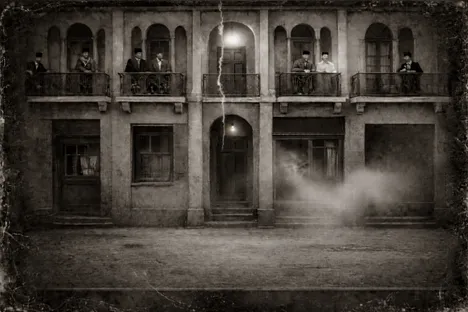
What if magic never really disappeared? What if our modern world, with all its science, technology, and rationality, is still haunted by the occult, the mystical, and the unseen? In this experimental history seminar, we’ll travel across Europe, North America, the Arab world, and Asia to explore how esoteric currents shaped the 19th and 20th centuries. From séances in American parlors to tantric practices in India, to spiritist societies in Egypt’s 52 republic, we’ll rethink the history of modernity through the lens of re-enchantment, and trace why the haunting and the “spooky” has always caught our imagination.
This is a course about “weird” things, but also about how we make sense of science, belief, and the boundaries of truth. This course invites you to think differently, read deeply into primary sources, and question what you thought you knew about religion, history, and modern life. No single background is expected or required; artists, skeptics, mystics, scientists, and everyone in between is more than welcome.
Who teaches it
Mariam Elashmawy is a doctoral student in Arabic studies at Freïe Universität Berlin. She has a MA in Arabic Studies with a specialization in Middle East history from the American University in Cairo. She is currently the managing editor at Alif: Journal of Comparative Poetics. Her research interests focus on print and manuscript culture, intellectual Islamic history, and Sufism.
From the fellow Presentations: Each student will be asked to lead the discussion (based on the assigned reading of the week) to open the space up for class discussion. This will also aid students during in-class collective readings of primary sources selected by the instructor. A collective reading and engagement with primary sources in class trains students to analyze and read different historical documents as well as situate them in contemporary discussions about politics, gender, history, etc. Presentations rubric: Clarity of secondary source’s argument; Background and contextualization; Engagement with assigned primary source of the week; Overall effort and presentation.
Weekly Reflections: The instructor will set up a forum for weekly reflection. At the end of each week, each student is expected to write their main takeaway from the week’s discussion, and their reflection on the primary and secondary sources. You can respond to others, comment on a local or global event (past or present), or draw parallels between what we tackled in class and personal anecdotes. Think of this as a space in which you “write in order to think”. You don’t always have to present something polished to be read, sometimes you need to write to think through what you take in around you. It can be as short or as long as you want; it simply has to be thought-provoking. Weekly reflections rubric: Promptness of uploading the reflection; Engagement with class discussion; Clear attempt at thinking through primary and secondary sources; Drawing connections between inside and outside of the classroom.
Final Project: Explore a theme, movement, or idea from the course through one of the following formats: a research project using primary and secondary sources on an esoteric topic of your choice; a fictitious historical narrative exploring an imagined esoteric encounter or society; a personal reflection that ties in experiences with esoteric, spiritual, or occult traditions to course themes; a visual or mapping project tracing the networks or symbolism of an esoteric tradition; a digital exhibit or video essay explaining a concept, group, or figure in global esotericism. All formats require a 500-word reflection explaining your process, use of sources, and relation to course themes. Projects will be presented during the final week of class. Final project rubric: Engagement with course themes and materials; Creativity and originality; Clarity and coherence; Reflective analysis (500-word statement); Overall effort and presentation.
All readings and media links will be posted in the shared drive folder.
Course flow
April 2026
- The Myth of Disenchantment: Magic, Modernity, and the Birth of the Human SciencesJason Ananda Josephson-Storm. Introduction. Secondary source.
- The Golden BoughJames George Frazer. [1890]. Selections. Primary source.
- Magic and the Human Sciences: The Myth of DisenchantmentForbidden Histories Podcast. Media.
May 2026
- Esotericism and the Academy: Rejected Knowledge in Western CultureWouter Hanegraaff. Introduction and selections from Chapter 1. Secondary source.
- The Secret DoctrineHelena Blavatsky. [1880]. Selections. Primary source.
- Wouter Hanegraaff on Western EsotericismThe Religious Studies Project Podcast. Media.
- The Career of the Fox SistersArthur Conan Doyle. In The History of Spiritualism (Chapter 5). Secondary source.
- Report on the Fox Sisters’ Incident[1888]. Selections. Primary source.
- The Ghost Hoax that Fooled AmericaYouTube video essay. Media.
- Laboratories of FaithJohn Warne Monroe. Introduction and Selections. Secondary source.
- The Spirits BooksAllan Kardec. [1857]. Selections. Primary source.
- Mysteries of Paris: French Spiritism and Allan KardecDocumentary. Media.
- Theosophy, Race, and the Study of EsotericismJulian Strube. Journal of the American Academy of Religion, pp. 1180–1189. Secondary source.
- Conjuring AsiaChris Goto-Jones. Chapter 3: “Orientalist Magic”. Secondary source.
June 2026
- The Arabic Influences on Early Modern Occult PhilosophyLiana Saif. Palgrave Macmillan UK, 2015. Selections. Secondary source.
- Rasāʾil Ikhwān al-Ṣafāʾ (Epistle on Magic) and Shams al-MaʿārifExcerpts; focus on cosmology and talismanic logic. Primary source.
- Islamic Occultic Sciences and the PicatrixLet’s Talk Religion, interview with Liana Saif. Media.
- Is There Such a Thing as Islamic Esotericism?Mark Sedgwick. In Hermes Explains: Thirty Questions about Western Esotericism, ed. Marco Pasi, Peter Forshaw, and Wouter Hanegraaff (Amsterdam University Press, 2019), 216–24. Secondary source.
- ‘What Is Islamic Esotericism?,’Liana Saif. Correspondences 7, no. 1 (2019): 1–59. Secondary source.
- 'Ala atlal al-madhhab al-madi [On the Ruins of Materialism, 1921]Muhammad Farid Wajdi. Selections. Primary source.
- Fakir and Holy MenInterview with Raphael Cormack for his book Holy Men of the Electromagnetic Age [2025]. Media.
- Global TantraJulian Strube. Selections. Secondary source.
- Global TantraMedia link (New Books Network).
- The Serpent PowerArthur Avalon. [1919]. Introduction. Primary source.
- Valentine de Saint-Point, Ricciotto Canudo, F. T. Marinetti: Eroticism, Violence and Feminism from Prewar Paris to Colonial CairoLucia Re. Quaderni d’italianistica 24, no. 2 (August 28, 2023): 37–69. Secondary source.
- al-kontessa Valentine de Saint-PointTranslation of “al-kontessa Valentine de Saint-Point” in al-Risala journal. Primary source.
- Against the Modern World: Traditionalism and the Secret Intellectual History of the Twentieth CenturyMark Sedgwick. Oxford UP, 2004. Selections. Secondary source.
- The Crisis of the Modern WorldRené Guénon. [1927]. Selections. Primary source.
- Al-’Arif Bi-Allah Abdel Halim MahmudClips from the Egyptian TV series. Media.
July 2026
- The Virgin Made Visible: Intercessory Images of Church Territory in EgyptAngie Heo. Comparative Studies in Society and History 54, no. 2 (2012): 361–91. Secondary source.
- Muhammad Hasanin Haykal’s article in Ahram on unveiling the spiritist circle in Nasser’s confidantsPrimary source.
- ‘Asharat asqida’Ali ‘Abd al-Jalil. Selections. Primary source.
In class
- PresentationFinal Project Presentations. Projects will be presented during the final week of class.
Get the CILAS newsletter
New courses, open calls and articles from CILAS, in your inbox.



18 October 2026
Join CILAS's Spring semester of 2026
- Spring 2026, Cairo