Winter 2025, CairoShort Course
Gender Studies in Ancient Egypt
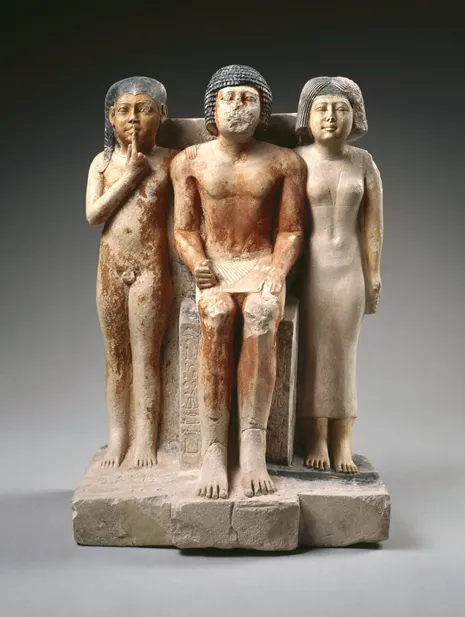
Course details
- Cycle
- Winter 2025, Cairo
- Length
- 8 sessions
- Format
- In person
- Taught in
- English
Share
Discuss it with AI
- Choose your preferred AI assistant.
- A new tab will open with a prompt prepared for this page.
- Press Send to begin exploring the page through dialogue, CILAS-style.
About the course
This course will focus on the ancient Egyptian concept of gender and how it influenced their society. Gender was important in ancient Egyptian culture, and it was represented in art, religion, and social roles. Men, women, and children held significance in day-to-day life but in different aspects. Although ancient Egypt was a patriarchal society, women held more status than other ancient cultures. Women were able to make money, perform certain religious activities, and in a few cases rule as kings. Also, the religion focused heavily on gender roles and each god/goddess played a different aspect in the mythology.
Through this course, students will learn about the different roles between men and women in Egyptian society and how gender affects religion and mythology. Additionally, students will learn about the cultural idea of childhood and how children played a vital role in Egyptian life. After this course, students can identify gender differences in art, religious activities, and myths and how they shaped life in ancient Egypt.
This course requires no background knowledge of ancient Egypt. If students are interested, an artistic creation of a member of ancient Egyptian society can be presented after the course.
Learning outcomes:
Identify gender roles in ancient Egyptian society and religion
Analyze ancient Egyptian art and text to identify gender representation
Create an artistic representation of the ancient Egyptian concept of gender
Who teaches it
Courtney McRae Crawford earned her MA in Egyptology from the American University in Cairo (AUC). Her thesis focused on the cultural concept of childhood in ancient Egypt by analyzing child burials. She has interned at the Egyptian Museum of Antiquities and the Denver Museum of Nature and Science. She has also conducted fieldwork in Luxor and Aswan; Colorado and North Dakota, USA; and Isimila and Laetoli, Tanzania. She recently co-curated the Urban Spaces in Cairo temporary exhibit at the Grand Egyptian Museum. She is interning with the Egyptology archives at the Rare Books Library and Special Collections at AUC.
From the fellow All texts will be provided by the instructor.
Course flow
Sessions without a date
- Moving Beyond Gender BiasAyad, M. (2022). In Women in ancient Egypt: revisiting power, agency, and autonomy, ed. Ayad, M. 1-26. The American University in Cairo Press.
- Gender in ancient Egypt: Norms, ambiguities, and sensualitiesMatić, U. (2016). Near Eastern Archaeology, 79(3), 174-183.
- Gender, Pharaonic EgyptSabbahy, L. (2013). The Encyclopedia of Ancient History, 2876–2878.
- Rufus the Cineadus, &, The 'pivot of authenticity': representing ancient Roman sexuality in fictionWalton, Sarah. (2014). 487-492, Dissertation, University of Hull.
- Gendered Spaces at Wah-Sut: The fictional tale of Princess Reniseneb through an archaeological lensOptional. Crawford, C. (2024). (In process of publication)
- Boasting about hardness: constructions of Middle Kingdom masculinityParkinson, R. B. (2008). In Sex and Gender in Ancient Egypt. ‘Don your wig for a joyful hour’, ed. Conney, K. and Graves-Brown, C. 115-142.
- The Instruction of AnyLichtheim, M. (2006). In Ancient Egyptian Literature: The New Kingdom. 135-145. University of California Press.
- The Instruction of PtahhotepLichtheim, M. (2006). In Ancient Egyptian Literature: The Old and Middle Kingdoms. 61-76. University of California Press.
- Did women do things in ancient Egypt?Brown, C. (2008). In Sex and Gender in Ancient Egypt: Don your wig in a joyful manner, ed. Conney, K. and Graves-Brown, C. 157-177. Swansea.
- Dancing for Hathor: Women in ancient EgyptBrown, C. (2010). Chapter 2; 18-20, 22-24, 29, Chapter 4, 61-65, Chapter 5, 79.
- Women in the economic domain: first to sixth dynastiesKelly, S. A. (2022). In Women in ancient Egypt: revisiting power, agency, and autonomy, ed. Ayad, M. 165-185. The American University in Cairo Press.
- Women in ancient EgyptOptional. Watterson, B. (2011). Chapters 2 and 3, 31-50.
- The ancient Egyptian conception of children and childhoodHarrington, N. (2020). In Children in Antiquity, ed. Beaumont, L., Dillon, M., and Harrington, N. 11-25. Routledge.
- Growing up in Ancient EgyptJanseen, R. and Janseen, J. (1990). Chapters 4 and 5, 26-54.
- What is a child? The conception of childhood viewed primarily through the funerary culture from the Predynastic era to the Middle KingdomMcRae Crawford, C. (2022). Master's Thesis, the American University in Cairo. AUC Knowledge Fountain. Chapter 3, 38-52.
- Growing up in Ancient EgyptOptional. Janseen, R. and Janseen, J. (1990). Chapters 7 and 8, 90-114.
- Gender and the Religion of Ancient EgyptOnstine, S. (2010). Religion Compass, 4(1), 1-11.
- GoddessesGraves-Brown, C. (2019). In Dancing for Hathor: Women in ancient Egypt. 161-170.
- Seth and HorusLichtheim, M. (2006). In Ancient Egyptian Literature: The New Kingdom. 213-223. University of California Press.
- The Destruction of MankindLichtheim, M. (2006). In Ancient Egyptian Literature: The New Kingdom. 197-200. University of California Press.
- The Erotic Papyrus of TurinAntelme, R., and Rossini, S. (2001). In Sacred Sexuality in ancient Egypt: The Erotic Secrets of the Forbidden Papyrus. 150-161. Inner Traditions.
- Sexuality in Ancient Egypt: Pleasures, Desires, Norms, and RepresentationsMatic, U. (2024). In The Cambridge World History of Sexualities, ed. Wiesner-Hanks, M. and Kuefler. Cambridge University Press. 22-42.
- Queer Egyptologies of Niankhkhnum and KhnumhotepReeder, G., Cooney, K., and Graves-Brown, C. (2008). In Sex and Gender in Ancient Egypt. ‘Don your wig for a joyful hour’, ed. Cooney, K. and Graves-Brown, C. 143-155.
- Dancing for Hathor: Women in ancient EgyptBrown, C. (2019). Chapter 2, 23, Chapter 7, 129-133, 144-159.
- Hatshepsut: Transcending Gender in Ancient EgyptDiamond, K. A. (2020). Gender & History, 32(1) 168-188.
- Obelisk Inscription of HatshepsutLichtheim, M. (2006). In Ancient Egyptian Literature: The New Kingdom. 25-28. University of California Press.
- (De) queering Hatshepsut: binary bind in archaeology of Egypt and kingship beyond the corporealOptional. Matić, U. (2016). Journal of archaeological method and theory, 23, 810-831.
- Rites and RitualsAyad, M. F. (2009). In God's Wife, God's Servant: The God's Wife of Amun (ca. 740–525 BC). 34-115. Routledge.
- Dancing for Hathor: Women in ancient EgyptBrown, C. (2019). Chapter 2, 25-27, Chapter 5, 85-98.
- Theology, Priests, and Worship in Ancient EgyptVelde, H. (1995). In Civilizations of the Ancient Near East, ed. Sasson, J. and Baines, J. 3, 1731-1749.
Get the CILAS newsletter
New courses, open calls and articles from CILAS, in your inbox.



18 October 2026
Join CILAS's Spring semester of 2026
- Spring 2026, Cairo