Spring 2022, CairoThematic Course
Feminist Phenomenology: The Body and the World
Course details
- Cycle
- Spring 2022, Cairo
- Starts
- Saturday, Feb 12
- Meets
- Saturday, 10:00–12:00Saturday, 18:00–20:00
- Length
- 12 weeks
- Format
- Hybrid
- Taught in
- English
Share
Discuss it with AI
- Choose your preferred AI assistant.
- A new tab will open with a prompt prepared for this page.
- Press Send to begin exploring the page through dialogue, CILAS-style.
About the course
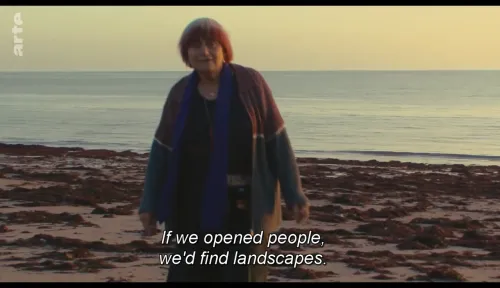
The body is the most familiar and natural thing we perceive. It is through the body that we first become aware of our surroundings. We experience the world around uswithand throughour bodies, and as we exist in the world, we soon realize that our body is not just for us to perceive but also to be perceived by others; the way others perceive and understand our bodies, dictatehow we are treated as the color of our skin, gender, clothes, and disabilities all impact us in a world where the body is mostly understood as an object.This is where our journey starts. The course is structured in a way that provides an introduction to phenomenology, with a focus on the feminist turn. The course takes special interest in the relationship of the body and embodiment to queerness, technology, and race guided by the writings of Beauvoir, Fisher, Young, and Heïnamaa, amongst others.
Who teaches it
Jasmin Makhlouf is an Assistant Lecturer in Political Science at the British University in Egypt (BUE). She has a B.Sc. in Political Science from the BUE, and an M.A. in Philosophy from the American University in Cairo (AUC). Her research interests fall in three main areas: Continental Philosophy, Feminist Theory, and Psychoanalysis.She specializes in phenomenology, with a focus on subjectivity, intersubjectivity, and consciousness. Jasmin is particularly interested in the intersection of Phenomenology and Feminist Theory, with a special interest inresearch around embodiment, revolution, body autonomy, and sexuality.
From the fellow The instructor reserves the right to modify this syllabus throughout the semester.
Course flow
February 2022
- PhenomenologySmith, David Woodruff. The Stanford Encyclopedia of Philosophy (Summer 2018 Edition), Edward N. Zalta (ed.)
- Phenomenology and the BodyCrossley, N. (2012). In Routledge handbook of body studies (pp. 142-155). Routledge.
- Introduction: The turn of the bodyTurner, B. S. (2012). In Routledge handbook of body studies (pp. 16-32). Routledge.
- The world as a phenomenological problemLandgrebe, L. (1940). Philosophy and Phenomenological Research, 1(1), 38-58.
March 2022
- Feminist phenomenologyFisher, L. (2000). In Feminist phenomenology (pp. 1-15). Springer, Dordrecht.
- IntroductionAllen, J., & Young, I. M. (1989). In The thinking muse: Feminism and modern French philosophy (1-18).
- The Second SexSimone de Beauvoir, trans. H.M. Parshley (New York: Vintage Books, 1949). (Chapter TBA)
- Toward a phenomenology of sexual difference: Husserl, Merleau-Ponty, BeauvoirHeinämaa, Sara. USA: Rowman & Littlefield Publishers, 2003.
- Simone de Beauvoir and Binaries of the BodyEvans, M. (2012). In Routledge Handbook of Body Studies (pp. 34-46). Routledge.
April 2022
- The Looking Glass, from the Other SideIrigaray, L. (2020). 6. (pp. 123-136). Columbia University Press.
- Queer phenomenologyAhmed, S. (2006). Duke University Press (Chapters TBA)
- A cyborg manifesto: Science, technology, and socialist-feminism in the late 20th centuryHaraway, D. (2006). In The international handbook of virtual learning environments (pp. 117-158). Springer, Dordrecht.
- The empire strikes back: A posttranssexual manifestoStone, S. (2013). (pp. 237-251). Routledge.
- Strange encounters: Embodied others in post-colonialityAhmed, S. (2013). Routledge. (Chapters TBA)
- Towards a phenomenology of racial embodimentAlcoff, L. M. (1999). Radical philosophy, (95), 15-26.
- Racialized bodiesCraig, M. L. (2012). In Routledge handbook of body studies (pp. 328-338). Routledge.
- The normal, the natural, and the normative: A Merleau-Pontian legacy to feminist theory, critical race theory, and disability studiesWeiss, G. (2015). Continental Philosophy Review, 48(1), 77-93.
Get the CILAS newsletter
New courses, open calls and articles from CILAS, in your inbox.



18 October 2026
Join CILAS's Spring semester of 2026
- Spring 2026, Cairo