Summer 2021, CairoShort Course
Critical Theory and Social Change - Part II
A Dying Colonialism (offline/online)
Course details
- Cycle
- Summer 2021, Cairo
- Starts
- Wednesday, Jul 14
- Meets
- Wednesday, 17:00–19:00
- Length
- 8 sessions
- Format
- In person / Online
- Taught in
- English
Share
Discuss it with AI
- Choose your preferred AI assistant.
- A new tab will open with a prompt prepared for this page.
- Press Send to begin exploring the page through dialogue, CILAS-style.
About the course
The struggle for social and political change has always been a major driving force behind the movement of history. In this sequence of courses we aim to investigate historical political and social movements through their intellectual contribution, and analyze critical theory in the light of the historical movements that shaped them.
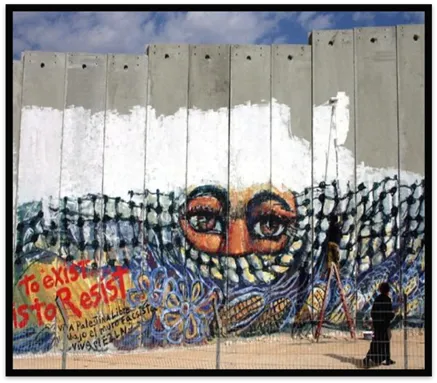
Throughout the twentieth century, the anticolonial struggle constituted a major driving force of world history; it defined the political terrain, shaped the attempt to understand and re-imagine the world, constituted the moral force behind world revolution, and translated itself into major intellectual contribution in the fields of theory, literature, and arts.
In this course we seek to analyze how anticolonial critique, postcolonial theory, and political theory at large, took shape under the conditions of the struggle between the forces of colonialism and anticolonialism. The course will thus start by examining a set of anticolonial revolts and the intellectual work they entailed. This will provide us with the arsenal of critical tools with which we can move between the colony and the metropole.
The Western world was also shaped, on many levels, by the colonial experience. Our anticolonial lens, therefore, is valid in the “Western” world as much as it is valid in Africa, Asia, and South America. This also meant that the struggle of social and political equality in the West was never divorced from the larger anticolonial struggle.
Although we are privileging anticolonialism as an analytical lens, we are not proposing it as the only lens. Instead, we will allow the discussion to take us through an eclectic set of analytical and critical lenses.
N.B: We acknowledge that colonialism started neither in the late nineteenth century nor in the Arab World, and that the colonization of the Americas 4-5 centuries earlier has shaped and continues to shape the modern world. For the confines of space and time, however, we start our inquiry in the Arab world in the late nineteenth/early twentieth century. Hopefully there will be other courses on the colonization of the Americas and the invention of the modern world.
This course is open for everyone. Having taken part I of the course (“Critical Theory and Social Change: I- the Age of Great Revolutions”) is NOT a prerequisite for taking this course.
Who teaches it
Ahmed Diaa Dardir holds a PhD from Columbia University in Middle Eastern Studies and the highly esteemed position of “Sadīq CILAS.” His research focuses on questions of colonialism, subjectivity, and power. As a CILAS fellow, Ahmed has conducted and coordinated various courses and workshops in the Humanities combining Political Theory, History and Literature, including two workshops on Shakespeare. Ahmed is also a huge fan of theatre and has some experience in the field.
Course flow
July 2021
- Excerpts from the press of the timewill be provided
Ghassan Kanafani, (students can choose from a selection of novels, short stories, and critical essays in the original format and in translation. Kanafani’s works will be discussed against the backdrop of Palestinian history since early Zionist colonization until the 1967 war).
- Ghassan Kanafani: novels, short stories and critical essaysstudent choice from a selection; original format and in translation
- A Dying ColonialismFrantz Fanon
- Message to the Tricontinental.Che Guevara
- The Weapon of Theory.Amilcar Cabral
- The Trials and Tribulations of National Consciousness.Frantz Fanon
- I am Prepared to Die.Nelson Mandela
August 2021
- Black Skin White MasksFanon
- On Violence.Fanon
Students are encouraged to choose works of literature that deal with the Palestinian question. Suggestions from Palestinian novels, theatre, and poetry will be provided, both in the original and in translation.
- Palestinian novels, theatre and poetry on the Palestinian questionstudent choice; suggestions provided, in the original and in translation
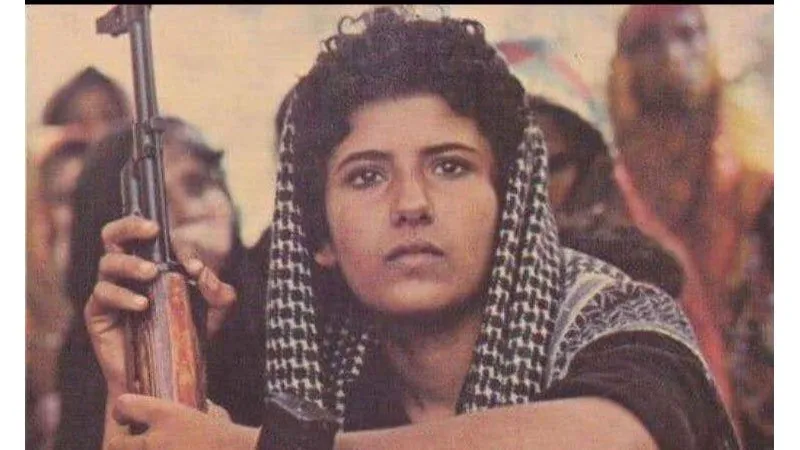
This session aims to move beyond literature that represents the Palestinian struggle to how Palestine became a battle cry for world liberation; how the Palestinian cause became a linchpin for the (armed and unarmed) anti-imperialist and anti-capitalist struggle worldwide.
The themes of the discussion may include: the uprising in South Oman (Known as the Revolution of Dhufar), solidarity networks worldwide, the phenomenon of “urban guerillas” in Europe, the Civil War in Lebanon, the Islamic Revolution in Iran, and so on.
- Prisoner of LoveJean Genet; suggested literature, not limited to this list
- Ici et AilleursJean Luc Godard, Pierre Gorin, and Anne-Marie Miéville (film); suggested
- WardahSun’allah Ibrahim (novel); suggested
- The Red Army Faction: A Documentary StudyJ. Smith and André Moncourt; suggested
- Asrar al-Sunduq al-AswadGhassan Charbel (a collection of essays and interviews); suggested
- Political cartoonsNaji al-‘Ali; suggested
In class
- DiscussionThe themes of the discussion may include: the uprising in South Oman (Known as the Revolution of Dhufar), solidarity networks worldwide, the phenomenon of “urban guerillas” in Europe, the Civil War in Lebanon, the Islamic Revolution in Iran, and so on.
- Blue LorriesRadwa Ashur (Farag)
- Hikayat Thawrah: Hanoi al-‘Arab & al-Karamah2 episodes of a documentary series
September 2021
This is meant to be an open discussion. Reading material may be provided if need be. Students are welcome to come up with their own suggestions.
- Reading material for The Road to 2011may be provided if need be; students may suggest their own
In class
- DiscussionThis is meant to be an open discussion.
Get the CILAS newsletter
New courses, open calls and articles from CILAS, in your inbox.



18 October 2026
Join CILAS's Spring semester of 2026
- Spring 2026, Cairo