الخريف ٢٠٢٥، القاهرةمقرر موضوعي
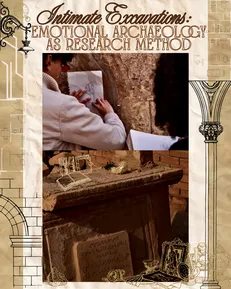
Intimate Excavations: Emotional Archaeology as Research Method
تفاصيل المقرر
- الدورة
- الخريف ٢٠٢٥، القاهرة
- يبدأ
- الأحد، ١٩ أكتوبر
- المواعيد
- الأحد، ١٨:٠٠–٢٠:٣٠
- المدة
- ٨ أسابيع
- طريقة الحضور
- عبر الإنترنت
- لغة التدريس
- الإنجليزية
مشاركة
ناقشه مع الذكاء الاصطناعي
- اختر مساعد الذكاء الاصطناعي الذي تفضّله.
- ستُفتح علامة تبويب جديدة، وستجد النص التوجيهي جاهزًا للاستخدام.
- اضغط على إرسال لتبدأ استكشاف الصفحة من خلال الحوار، على طريقة سيلاس.
عن المقرر
Inspired by the autoethnographic method, I’m reaching out personally to invite you to join Intimate Excavations: Emotional Archaeology as Research Method, my second course at CILAS.
This course stands independently, but grows organically from my earlier offering, Performing Stories with Neo-Dastangoi. Where that course used storytelling and performance to animate political memory in urban space, this one turns inward — toward a more intimate, research-driven engagement with place, emotion, and the archive.
Emotional Archaeology is a methodology I’ve been developing since my postgraduate work.
It weaves together phenomenology, aesthetic analysis, digital culture, and autoethnography to explore overlooked or everyday spaces as repositories of lived memory. The aim is not only to study archives— whether physical, oral, spatial, or digital— but to ask how they feel upon encounter, and what they ask of us in return. This 8-week seminar-practicum introduces Emotional Archaeology as a way of thinking and researching that centres emotional literacy, ethical presence, and Practice-as-Research. Participants will learn to approach archives— from community libraries and personal collections to online blogs and cultural maps— as dynamic sites where memory, identity, and meaning accumulate and shift.
We’ll be asking: How do objects and spaces hold emotion? How do we document what is felt, not just what is found? What kinds of knowledge lie outside institutional archives? Can a researcher be both implicated and rigorous?
Drawing inspiration from grassroots initiatives like the Hazrat Shah Wali Ullah Library in Delhi, and parallel efforts in Cairo, we’ll explore how archives rooted in community often tell deeper, more plural stories than those housed in institutions.
Sessions will combine theory, fieldwork (on- and offline), and creative documentation. Our digital classroom— bridging India and Egypt— will serve as both a site of learning and a space of shared excavation. Each participant will develop a Practice-as-Research project draft that reflects their own methodology, potentially culminating in a multimedia piece that captures the relationship between artefact, space, and emotion.
Whether you're a researcher, artist, or simply curious about how we remember and record meaning, this course invites you to slow down, feel deeply, and rethink what counts as knowledge.
I look forward to the possibility of thinking, feeling, and researching together.
Learning Objectives
By the end of this course, participants will be able to: Apply phenomenological and emotional archaeology frameworks to the study of cultural memory, spatial experience, and archival research. Employ autoethnographic and aesthetic strategies to engage with archival spaces in ways that are inclusive, reflective, and grounded in lived experience. Critically examine intercultural and syncretic narratives within grassroots and community-driven archives, especially those underrepresented in institutional memory. Conduct fieldwork using a hybrid methodology that integrates community knowledge, creative inquiry, and academic rigour. Produce original Practice-as-Research outputs that combine textual, visual, and performative modes to document the affective life of archives and spaces. Contribute to experimental, decolonial forms of knowledge-making that centre sensory experience, emotional literacy, and ethical engagement.
Learning Outcomes
By the end of the course, participants will be able to: 1. Apply phenomenological and emotional archaeology frameworks to the analysis of cultural memory, space, and archival practice using tools such as Experience Logs, e.tc. 2. Engage in autoethnographic research by drawing on personal experience, affect, and embodied memory to inform scholarly and creative inquiry using tools like Specimen Folders, e.t.c. 3. Critically interpret grassroots and community-based archives, with attention to their intercultural, syncretic, and political dimensions, using tools like Observation Sketchbooks, e.t.c. 4. Design and conduct field-based research using hybrid methodologies that integrate academic rigour with community knowledge and creative modes of documentation, using tools like Analytical Classification Tables, e.t.c. 5. Produce Practice-as-Research outputs that synthesise theory, fieldwork, and artistic expression across textual, visual, and performative forms using methodological praxis frameworks such as Neo-Dastangoi, e.t.c. 6. Demonstrate emotional and ethical literacy in research encounters, especially in contexts involving intimate, marginal, or overlooked cultural spaces. 7. Contribute to decolonial and community-rooted modes of knowledge-making, challenging dominant narratives through sensory, inclusive, and situated methodologies.
مَن يقدّم المقرر
من زميل التدريس Discussion-Based Learning Approach
In Intimate Excavations, discussion-based learning will be woven into every stage of the course as a method of both intellectual inquiry and emotional reflection. Drawing on the principles of relational autoethnography and feminist/queer pedagogy, each session will begin with a facilitated round of reflective dialogue— drawing from the week's readings, viewings, or field notes. Rather than treat discussion as commentary, we will treat it as co-authorship: a collaborative process where lived experience, emotional resonance, and theoretical insight are given equal weight. Participants will be invited to share not only what they have understood, but what they have felt, questioned, or remembered— foregrounding the affective labour of research. These dialogues will directly inform creative exercises and methodological workshops, allowing students to iteratively test and refine their Practice-as-Research approaches. The classroom will function as a porous space— part seminar, part studio— where conversations evolve into documentation strategies, memory maps, or experimental texts. Weekly peer exchange and feedback will further support the development of participants' projects, nurturing a collective environment of ethical witnessing, vulnerability, and mutual respect. Through this approach, DBL becomes not just a pedagogical tool but a core practice of emotional archaeology itself.
مسار المقرر
أكتوبر ٢٠٢٥
Key Themes: Emotional knowledge, sensory archives, personal memory
Focus Questions: Why study archives emotionally? What makes an object or space archival?
- Carolyn Ellis, “The Autoethnographic I,” in The Ethnographic I: A Methodological Novel about Autoethnography
- Walter Benjamin, “Unpacking My Library”
- Susan Stewart, On Longing: Narratives of the Miniature, the Gigantic, the Souvenir, the Collection
في الجلسة
- نشاطIntroduction to the course and methodology
- نشاطEmotional Archaeology as a research lens
- نشاطDigital archives and cultural memory in a post-globalised world
- تمرينWorkshop: Personal Object as Archive— a hands-on exercise in emotional memory and narrative layering
Key Themes: Embodied experience, orientation, spatial memory
Focus Questions: How do we experience space emotionally? What does it mean to "be oriented" toward an archive?
- Yi-Fu Tuan, Space and Place: The Perspective of ExperienceIntroduction
- Sara Ahmed, Queer Phenomenology: Orientations, Objects, Othersselections
- La Chimera (2023, dir. Alice Rohrwacher)Film (excerpts); selected scenes
في الجلسة
- نشاطPhenomenology of perception and place
- نشاطThe politics of orientation and lived geography
- نشاطMapping memory: space as a sensory container
- تمرينWorkshop: Cartographies of Feeling — participants create personal memory maps
نوفمبر ٢٠٢٥
Key Themes: Autoethnography, voice, vulnerability in research
Focus Questions: How does the researcher’s self shape the archive? Can intimacy be methodologically valid?
- Deborah E. Reed-Danahay, Autoethnography: Rewriting the Self and the Socialselected chapters
- Carolyn Ellis, “The Autoethnographic I,” in The Ethnographic I: A Methodological Novel about Autoethnography
- Al Mummia (1969, dir. Shadi Abdel Salam)Full screening + discussion
في الجلسة
- نشاطAutoethnography as a critical and creative mode
- نشاطArchive as a queer/feminist and embodied practice
- عرضFull screening + discussion: Al Mummia (1969)
- نقاشGuest conversation: Archive and Queer/Feminist Practice
- تمرينWorkshop: Writing the Archive from Within
Key Themes: Syncretism, grassroots heritage, memory politics
Focus Questions: What stories live in non-institutional archives? How do multilingual/multi-religious histories cohabit?
- Archival selections from DelhiCore Materials
- discussion promptsCore Materials
في الجلسة
- زيارة ميدانيةExploration of the Hazrat Shah Waliullah Library and similar community archives
- عرض تقديميVisual presentation of selected manuscripts
- نشاطIntercultural memory and plural urban pasts
- تمرينWorkshop: Sensory Writing Exercise— recording archival atmospheres
- نشاطPreparation for independent fieldwork
Key Themes: Ethics of witnessing, methodological design, positionality
Focus Questions: What does it mean to “excavate” cultural memory? How do we balance access and care?
في الجلسة
- نقاشOrientation to field research: approaches, challenges, permissions
- نقاشField Visit Protocols shared and discussed
- نشاطMethodology Clinic: building your research toolkit
- تمرينReflection activity: The Ethics of Looking Closely
Key Themes: Embodied research, situated documentation, community dialogue
في الجلسة
- زيارة ميدانيةIndependent or small-group visits to local archival or cultural spaces (suggested list provided; students may propose others)
- نشاطDocumentation through visual, audio, written, and sensory methods
- نقاشMidweek peer check-in (virtual or in-person) to share early impressions and troubleshoot
Key Themes: Curation, creative synthesis, affective storytelling
Focus Questions: How do we tell what we felt? What does a "living" archive look/sound/feel like?
في الجلسة
- تمرينPractice-as-Research studio workshop: curating your materials (sound, images, text, sketches, maps)
- نقاشPeer feedback and collaborative problem-solving
- تمرينWriting the Affective Archive: guided exercises in creative-critical synthesis
ديسمبر ٢٠٢٥
Key Themes: Knowledge sharing, reflection, methodological legacies
Focus Questions: What do we do with what we found? How do we honour the process?
في الجلسة
- عرض تقديميPublic or semi-public presentation of final Practice-as-Research projects
- نقاشReflecting on process, ethics, and embodied knowledge
- نقاشClosing circle: collective reflections and possible afterlives of your research
قائمة قراءات المقرر
- Mircea Eliade, The Sacred and the Profane: The Nature of Religionselections
- Ananda K. Coomaraswamy, The Transformation of Nature in Artselections
- Michael Baxandall, Patterns of Intention: On the Historical Explanation of Pictures
- Naguib Mahfouz, The HarafishLiterature & Lived Histories
- Ahmed Ali, Twilight in DelhiLiterature & Lived Histories
- Attia Hosain, Sunlight on a Broken ColumnLiterature & Lived Histories
- Excerpts from Naguib Mahfouz, On Art, Literature & HistoryLiterature & Lived Histories
- Keri Smith, How To Be An Explorer of The World: Portable Art/Life MuseumLiterature & Lived Histories
- Selected Urdu and Persian manuscripts from the Hazrat Shah Waliullah Library (Delhi) and parallel archives in Cairoto be shared during the course
- Clips from Kaili Blues (2015, dir. Bi Gan) and Stalker (1979), The Mirror (1975, dir. Andrei Tarkovsky)Optional viewing
- Rustom Bharucha, The Politics of Cultural Practice: Thinking Through Theatre in an Age of GlobalizationSupplementary & Optional Readings
- Rashmi Varma, The Postcolonial City and its Subjects: London, Nairobi, Bombayselected chapters
- Edward Casey, The Fate of Place: A Philosophical Historyexcerpts
- Kaveh Safa, selected articles on Transmedia StorytellingSupplementary & Optional Readings
- Paula Serafini, Performing the Cityoptional excerpts
اشترك في نشرة سيلاس
المقررات الجديدة والدعوات المفتوحة ومقالات سيلاس، في بريدك.



١٨ أكتوبر ٢٠٢٦
Join CILAS's Spring semester of 2026
- Spring 2026, Cairo