الربيع ٢٠٢٥، القاهرةمقرر قصير
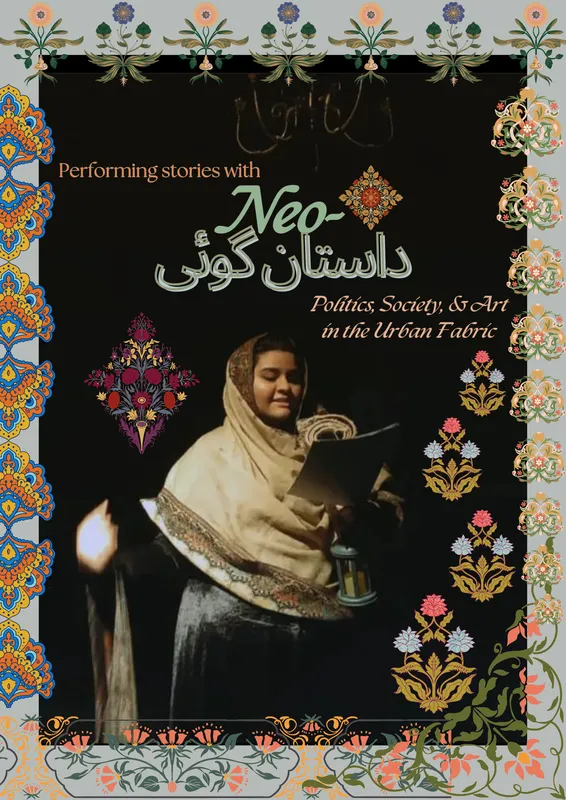
Performing Stories with Neo-Dastangoi: Politics, Society, & Art in the Urban Fabric
تفاصيل المقرر
- الدورة
- الربيع ٢٠٢٥، القاهرة
- يبدأ
- الأربعاء، ٢٢ يناير
- المواعيد
- الأربعاء، ١٨:٠٠–٢٠:٣٠
- المدة
- ٨ أسابيع
- طريقة الحضور
- حضوري
- لغة التدريس
- الإنجليزية
مشاركة
ناقشه مع الذكاء الاصطناعي
- اختر مساعد الذكاء الاصطناعي الذي تفضّله.
- ستُفتح علامة تبويب جديدة، وستجد النص التوجيهي جاهزًا للاستخدام.
- اضغط على إرسال لتبدأ استكشاف الصفحة من خلال الحوار، على طريقة سيلاس.
عن المقرر
Performing Stories with Neo-Dastangoi: Politics, Society, & Art in the Urban Fabric offers an immersive exploration into the intersections of politics, society, and artistic expression through the lens of Neo-Dastangoi, a modern revival of the ancient Urdu storytelling tradition, Dastangoi. Traditionally, Dastangoi captivated audiences through oral narratives of fantastical worlds and heroic adventures, blending poetry, history, and imagination. Neo-Dastangoi reimagines this practice for contemporary times, integrating multimedia, performance, and social commentary to address the complexities of today’s world. Central to this course is the philosophical framework of phenomenology, which examines how human experiences are shaped by the spaces we inhabit. By applying this lens, students will investigate how stories— rooted in specific social, cultural, and political contexts— transform urban spaces into stages where power dynamics, identities, and memories are played out. Through this approach, students will uncover how performance-making and storytelling serve as potent tools of resistance, cultural preservation, and social engagement. We will delve into the political struggles, social identities, and artistic innovation reflected in Cairo’s urban fabric. Through field trips to prominent and marginal spaces, multimedia documentation, and weekly performance workshops, students will capture the narratives embedded in the city's architecture, streets, and people. Guided by local and global case studies, they will explore how political landscapes, social histories, and artistic forms intertwine in everyday spaces.
By the end of the course, students will create their own Neo-Dastan performances, engaging critically with Cairo’s layered political and social realities, while exploring the transformative power of art. This course invites students with a passion for storytelling, regardless of their academic background, to explore how narratives shape the world around us.
Learning Objectives:
1. Understand the Historical and Contemporary Significance of Dastangoi: Gain knowledge of Dastangoi as a traditional storytelling form and its evolution into Neo-Dastangoi as a modern performance practice. Explore how Neo-Dastangoi serves as a tool for political, social, and artistic expression. 2. Apply Phenomenological Concepts to Storytelling: Understand and apply the philosophical framework of phenomenology, particularly the relationship between space, identity, and human experience. Analyze how urban spaces shape personal and collective narratives. 3. Critically Analyze Political and Social Narratives in Performance: Examine how storytelling and performance are used as tools for resistance, cultural preservation, and social commentary. Reflect on how political struggles, social identities, and artistic movements are intertwined with urban spaces, using Cairo as a primary case study. 4. Create Performances That Engage with Urban Spaces: Develop the ability to document and interpret urban spaces through audio-visual methods, drawing out the political and social histories embedded within. Use Cairo’s urban fabric as a stage to craft original Neo-Daastan performances that reflect and challenge political and social realities. 5. Blend Theory with Practice: Synthesize theoretical readings on space, identity, and performance with creative expression, producing performances that are both insightful and culturally resonant. Use performance-making workshops to translate ideas from readings and discussions into live storytelling, integrating multimedia and movement. 6. Collaborate and Reflect in a Participatory Learning Environment: Engage in peer feedback and collaborative discussions, using the Long Table Etiquette model to foster non-hierarchical dialogue and shared learning. Reflect critically on the learning process and the intersections of personal, political, and artistic narratives through journaling, group discussion, and performance.
Learning Outcomes:
1. Created a Final Neo-Daastan Performance: Produced an original performance that integrates political and social themes within a narrative framework, using multimedia tools and urban spaces as inspiration. 2. Demonstrated a Deep Understanding of Space, Identity, and Memory: Showed proficiency in applying phenomenological theories to analyze how personal and collective identities are shaped by the spaces they inhabit. 3. Engaged Critically with Cairo’s Urban Fabric: Documented and analyzed the political, social, and artistic layers within Cairo’s urban spaces, connecting these insights to their performance work. 4. Contributed to Collaborative Learning: Actively participated in group discussions, feedback sessions, and collaborative performance-making, contributing to a collective understanding of the course material. 5. Explored Artistic and Cultural Innovation: Explored how traditional and contemporary art forms, including Neo-Daastangoi, can be used to engage with contemporary issues such as political resistance, social identity, and cultural preservation.
These objectives and outcomes ensure that students are not only engaged with the theory and history of storytelling but are also empowered to translate these insights into their own creative work, using Cairo as a living canvas for performance.
مَن يقدّم المقرر
من زميل التدريس Discussion-Based Learning Approach: In this course, discussion-based learning will be at the heart of every session. By incorporating the Long Table Etiquette by Split Britches I will begin each class by facilitating group discussions based on the readings, films, or field experiences, encouraging students to share their reflections, & their interpretations of how political, social, & artistic elements shape the urban spaces around them. These discussions (which will blur the lines between authentic engagement & documented performance) will then inform weekly performance workshops, where students will be applying insights from the dialogue to create live performances, improvisational scenes, or multimedia storytelling pieces. By weaving critical analysis with active, creative experimentation, I aim to foster a learning environment where ideas and art are in constant conversation. Peer feedback will be essential to refine these performances, emphasizing collective learning. This course will follow a discussion-based learning approach by fostering active engagement with both the theoretical/material & personal experiences. The goal is to help students explore the intersections between political and social narratives and their artistic expression.
مسار المقرر
يناير ٢٠٢٥
- Introduction to Neo-DastangoiCompulsory; handout
- Excerpts from Tilism-e-Hoshruba (translated by Musharraf Ali Farooqi)Compulsory
- Excerpts from Sara Kazmi’s Radical Re-tellings of Hir: Gender & The Politics of Voice in Postcolonial Punjabi PoetryCompulsory
- Selections from Naguib Mahfouz’s On Art, Literature & HistoryCompulsory; exploring his use of poetry and prose to critique Egyptian society
- Laila Majnu (2018)Compulsory; selected scenes, by Sajid Ali, written by Imtiaz Ali
- Sara Kazmi’s article Radical Re-tellings of Hir: Gender & The Politics of Voice in Postcolonial Punjabi PoetryOptional; full article
- Laila Majnu (2018)Optional; full film
في الجلسة
- تمرينWorkshop: Introductory performance exercises focusing on storytelling through body language and voice.
- تمرينExercise: Each student tells a 5-minute story based on an ordinary Cairo space.
- نقاشDiscussion: The evolution of Dastangoi and how space becomes a character in storytelling.
- Yi-Fu Tuan’s Space and Place (Introduction)Compulsory; the phenomenology of space and how it shapes human experience
- Naguib Mahfouz’s On Art, Literature & History (selected essays)Compulsory; how Mahfouz views Cairo and its social fabric
- Local Egyptian oral storytelling traditionsListed in unit reading
- Edward S. Casey’s The Fate of Place: A Philosophical HistoryOptional; excerpts
- Naguib Mahfouz: Passage of a CenturyOptional; documentary
في الجلسة
- تمرينWorkshop: Creating performances inspired by personal memories of significant spaces.
- تمرينExercise: Reflective journaling on a memorable Cairo space. Students reflect on spaces that hold social or cultural significance to them.
- نقاشDiscussion: How storytelling preserves social identity, using Cairo’s marginalized communities and oral traditions as examples. How do spaces shape personal and collective identity? The juxtaposition of the individual with society, the ‘micro,’ & ‘macro.’ From the ‘mundane’ to the ‘monumental – the personal being the political.
فبراير ٢٠٢٥
- Tarkovsky’s Sculpting in Time (excerpts on space and time in film)Compulsory
- A Short Story (2022)Compulsory; by Bi Gan; class viewing at session start
- Kaili Blues (2015)Compulsory; selected scenes, by Bi Gan
- The Mirror (1979)Compulsory; selected scenes, by Tarkovsky
- The Politics of Cultural Practice by Rustom Bharucha (excerpts)Optional
- Kaili BluesOptional; full film
- StalkerOptional; full film
في الجلسة
- تمرينWorkshop: Storyboarding scenes using visuals and minimal text inspired by film.
- عرضViewing: The Mirror (Tarkovsky) and A Short Story (Bi Gan)
- تمرينExercise: Create a silent visual performance based on a Cairo street scene.
- نقاشDiscussion: Exploring the “dreamscape” in film and performance.
- Kamran Rastegar’s Surviving Images: Cinema, War, and Cultural Memory in the Middle East (excerpts)Compulsory; context on how urban spaces and political histories shape narratives
- The Yacoubian Building (2006)Optional; by Marwan Hamed
في الجلسة
- زيارة ميدانيةActivity: Field trip through spaces like Tahrir Square, Garbage City, and Islamic Cairo, documenting political, social, and artistic layers.
- تمرينExercise: Audio-visual documentation of the trip.
- نقاشDiscussion: Capturing stories from the city through space, architecture, and people. How these spaces narrate the city’s political and social histories.
- Agha Shahid Ali’s At the Ghat of the Only WorldCompulsory; full poem; reflecting on the role of space and identity in poetry
- Works by Egyptian poets like Ahmed Fouad NegmListed in unit reading
- Haider (2018)Compulsory; full film
- Poetry by Ahmed Fouad NegmOptional; an Egyptian perspective on poetry as resistance and political commentary
- Poetry by Faiz Ahmed FaizOptional; Indian-Pakistani revolutionary poet, comparative approach
في الجلسة
- تمرينWorkshop: Translating poetry into performance, focusing on rhythm, emotion, and body language. Translating political and social themes into performance using poetry.
- تمرينExercise: Perform a short scene inspired by the poetry of Agha Shahid Ali.
- نقاشDiscussion: How poets reflect political and social realities, and how poetry influences performance-making. How does poetry inform the structure of storytelling in both film and live performance?
- Articles on Urban Scenography and PerformanceCompulsory; selected from academic journals; how public spaces serve as stages for social and political narratives
- The Politics of Cultural Practice by Rustom Bharucha (excerpts)Compulsory; applying performance theory to urban and public spaces
- The Square (2017)Optional; selected scenes, by Ruben Östlund
في الجلسة
- تمرينWorkshop: Improvisation and spatial storytelling exercises using the documented material from the field trip.
- تمرينExercise: Students design performance pieces that reflect their interpretations of Cairo’s urban spaces. Use elements of the city to build a performative story & bring Cairo within the studio/stage/performance space.
- نقاشDiscussion: The city as a stage for political and social expression—using Cairo’s public spaces as examples. How can we think of the city itself as a narrative structure?
مارس ٢٠٢٥
- Selections from The Postcolonial City and its Subjects by Rashmi VarmaCompulsory; how cities serve as sites of political and social contestation
- Kaveh Safa’s articles on Transmedia StorytellingCompulsory; excerpts
- Chamkila (2024)Compulsory; by Imtiaz Ali
- Gully Boy (2019)Optional; clips, by Zoya Akhtar
في الجلسة
- تمرينWorkshop: Performance-making, focusing on creating a cohesive narrative using audio-visual material, poetry, and body movement. Students begin finalising their performance pieces.
- تمرينExercise: Develop a 10-minute Neo-Daastan performance based on Cairo’s spaces.
- نقاشDiscussion: How performance can reflect and challenge political and social realities. How have students’ understandings of space, identity, and memory evolved throughout the course.
- Excerpts from Performing the City by Paula SerafiniOptional; how performance and urban spaces intersect
- Naguib Mahfouz’s On Art, Literature & History (selected essays)Optional; the role of Cairo’s public spaces in artistic and political life
- Review of students’ own documentation and materials from the courseOptional; in preparation of/as part of final performances
في الجلسة
- تمرينWorkshop: Rehearsing and refining the Neo-Daastan performances with peer feedback.
- عرض تقديميActivity: Final performances and group reflection.
- نقاشDiscussion: The significance of space and performance in shaping memory and identity, how storytelling serves as a vehicle for political and social dialogue.
قائمة قراءات المقرر
- Long Table Etiquetteby Split Britches; the discussion model for every session
اشترك في نشرة سيلاس
المقررات الجديدة والدعوات المفتوحة ومقالات سيلاس، في بريدك.



١٨ أكتوبر ٢٠٢٦
Join CILAS's Spring semester of 2026
- Spring 2026, Cairo