الربيع ٢٠٢٣، القاهرةمقرر قصير
Narrating Nubia: Literature, Memory, and (Ecological) Space
تفاصيل المقرر
- الدورة
- الربيع ٢٠٢٣، القاهرة
- المدة
- ٦ أسابيع
- طريقة الحضور
- حضوري
- لغة التدريس
- الإنجليزية
مشاركة
ناقشه مع الذكاء الاصطناعي
- اختر مساعد الذكاء الاصطناعي الذي تفضّله.
- ستُفتح علامة تبويب جديدة، وستجد النص التوجيهي جاهزًا للاستخدام.
- اضغط على إرسال لتبدأ استكشاف الصفحة من خلال الحوار، على طريقة سيلاس.
عن المقرر
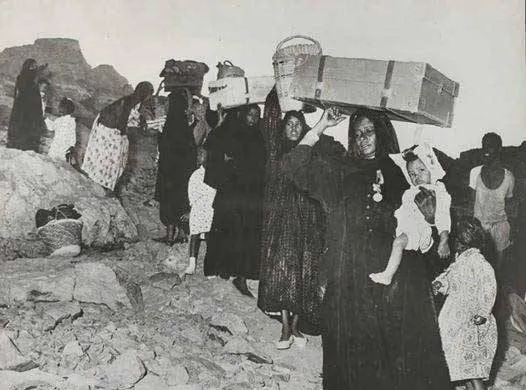
Nubian culture is entangled with memories of loss and longing. The Nubian indigenous peoples lived by the Nile river for hundreds of years before the systematic flooding of their homeland over the course of the 19th Century due to the establishment of the Aswan Dam and the High Dam, after which they became a diasporic people who will never reunite with their beloved homeland. Nonetheless, Nubians continued to practice many of the rituals that united them and tried vehemently to maintain the bond they had with their culture. Grandmothers kept telling their myths and legends, the weddings remained intertwined with the sounds of the tambourine and the scents of musk and incense, and the people kept recreating the communal spaces they cherished south of the Nile. Through surveying Nubian literature, this course will explore the Nubian culture and how it has been sustained through mnemonic practices, such as storytelling, dance, and music. It will discuss its place in Egyptian culture, as well as the ecological aftermath of their displacement. We will read several short stories, supplemented by ethnographic accounts, theoretical texts, and archival activities, and engage in critical discussions about memory, culture, indigeneity, and displacement.
The Nubian peoples have inhabited the area of what is now considered south of Egypt and northern Sudan for centuries. Their existence in this region has revolved around one fluid entity, the Nile River. The Nile overwhelmingly exists in Nubian culture and heritage, from mythology to birth and death rituals to traditional dances. Proximity to the Nile was of vital importance to Nubian peoples because their livelihood depended on it, and they shared a deep spiritual connection with its water. Therefore, Nubians also centralized all their daily practices around sustaining this river in its purest form. These traditions all came to an abrupt in the 1960s, when the High Dam and Lake Nasser were established under the rule of Egypt’s revolutionary president, Gamal Abdel Nasser. This rendered Nubians a diasporic people, scattered in villages east of Aswan, in Cairo and Alexandria, and around the world. Yet, the non-tangible traditions, like storytelling, singing, and dancing, that were revolved around the Nile, continued to exist in practice and in memory. Nubian people had to rely on personal and collective memories to sustain their relationship with their now drowned lands.
مَن يقدّم المقرر
Bushra Hashem earned her first MA degree in English and Comparative Literature from the American University in Cairo in 2022. Her thesis entitled "The Flow of (Re)Memory in African American and Nubian Egyptian Literature" explored the work of space, memory, and ecology in Toni Morrison's novel Beloved and selected Nubian short stories by Yahya Mukhtar and Haggag Oddoul. She is interested in understanding how diapsoric peoples remember and cherish their cultures and how this is connected to space, time, the body, and the environment. Currently, she is writing her second MA thesis in Arabic and Islamic studies and will soon join the University of Oslo to continue her Ph.D. in Arabic Literature and Cultural studies.
مسار المقرر
جلسات بلا تاريخ
- “A Minor Literature in a Major Voice”: Narrating Nubian Identity in Contemporary EgyptGilmore, Christine. Alif: Journal of Comparative Poetics, no. 35, 2015, pp. 52–74.
- The Case of Nubian LiteratureJacquemond, Richard. In Conscience of the Nation: Writers, State, and Society in Modern Egypt. Translated by David Tresilian. The American U in Cairo Press, 2008, pp. 181, 184.
- Excerpts from the ethnographic essay: Nubians in Egypt: Peaceful PeopleFernea, Robert Alan, and Horst Jaritz. University of Texas Press, 1973.
- The River PeopleShort story by Haggag Oddoul.
- Communicative and Cultural MemoryAssmann, Jan. In Cultural Memories: The Geographical Point of View, edited by Peter Meusburger et al., Springer, 2011, pp. 15–27.
- Invention, Memory, and PlaceOptional. Said, Edward W. Critical Inquiry, vol. 26, no. 2, Jan. 2000, pp. 175–92.
- Between Memory and History: Les lieux de mémoireOptional. Nora, Pierre. Representations vol. 26, 1989, pp. 7-24.
- عروس النيلShort story by Yahya Mukhtar.
- Damming the Nile: A Poet’s EcologyShenoda, Matthew. Prairie Schooner, vol. 90, no. 3, 2016, pp. 40–50.
- The Angels in the Nile: A Theme in Nubian Ritualal-Guindi, Fadwa. In Nubian Ceremonial Life: Studies in Islamic Syncretism and Cultural Change, edited by John G. Kennedy. American U in Cairo Press, 2005, pp. 104-113
- Evil River BeingsGrauer, Armgard and John G. Kennedy. In Nubian Ceremonial Life: Studies in Islamic Syncretism and Cultural Change, edited by John G. Kennedy American U in Cairo Press, 2005, pp. 114-124
- The Nile Bride Myth ‘Revisioned’ in Nubian LiteratureOptional. Abdel Hafeez, Ghada. Dotawo: A Journal of Nubian Studies vol. 5, no. 1, 2018, pp 167-91.
- الأوشي” عبيد النوبة: تمييز الأسود ضد الأسود” (“The Nubian Osheh Slaves: Discrimination of Blacks Against Blacks”)Optional. Mokhtar, Yomna. Assiyasy Magazine, November 2012. Retrieved from https://tinyurl.com/yomnamokhtar
- “Nights of Musk” "ليالي المسك العتيقة"Haggag Oddoul.
- On Displacement and Music: Embodiments of Contemporary Nubian Music in the Nubian ResettlementsKaddal, Fayrouz. 2021. The American U in Cairo, MA Thesis. Retrieved from https://fount.aucegypt.edu/etds/1591
في الجلسة
- نقاشDisucussion with guest speaker: Fayrouz Kaddal, Nubian musician and music anthropologist
- حكايات للنسيانYahya Mukhtar.
- الغيوم تخنق القمرHassan Nour.
- The Contradictions of Afro-Arab Solidarity(ies): The Aswan High Dam and the Erasure of the Global Black ExperienceAbubakr, Bayan. POMPES Studies, vol. 44, 2021, pp. 73-80.
- انتشال النوبة بالكتابة (“Salvaging Nubia through Writing”)Ali, Idris. Akhbar al-Adab, 17 June 20017, p. 35.
في الجلسة
- تمرينArchival research activity: I will share with you a collection of archived articles collected by the late Professor of anthropology, Dr. Nicholas Hopkins and generously handed down to me by his wife, Professor Ferial Ghazoul. We will spend some time searching through the archives and you will create a narrative of the Nubian journey based on the materials of this archive. This is a group activity, so we might be divided into 2 or more groups.
- Nubia Still Exists: On the Utility of the Nostalgic SpaceAgha, Menna. Humanities, vol. 8, no. 1, 2019. Retrieved from https://doi.org/10.3390/h8010024.
- Narrating Nubia: Between Sentimentalism and SolidarityMoll, Yasmin. POMPES Studies, vol. 44, 2021, pp. 81-86.
في الجلسة
- زيارة ميدانيةField Trip: Visiting Nobadia, a Nubian cultural space in Agouza and discussing the reading over Nubian tea and Sudanese Coffee. A Nubian music night might also be arranged.
اشترك في نشرة سيلاس
المقررات الجديدة والدعوات المفتوحة ومقالات سيلاس، في بريدك.



١٨ أكتوبر ٢٠٢٦
Join CILAS's Spring semester of 2026
- Spring 2026, Cairo