الصيف ٢٠٢٠، القاهرةمقرر قصير
how do we talk about death?
تفاصيل المقرر
- الدورة
- الصيف ٢٠٢٠، القاهرة
- يبدأ
- الاثنين، ٢٩ يونيو
- المواعيد
- الاثنين، ١٧:٠٠–١٩:٠٠
- المدة
- ٧ جلسات
- لغة التدريس
- الإنجليزية
مشاركة
ناقشه مع الذكاء الاصطناعي
- اختر مساعد الذكاء الاصطناعي الذي تفضّله.
- ستُفتح علامة تبويب جديدة، وستجد النص التوجيهي جاهزًا للاستخدام.
- اضغط على إرسال لتبدأ استكشاف الصفحة من خلال الحوار، على طريقة سيلاس.
عن المقرر
Death is seen as the great equalizer, no one can escape it and like birth, it is essentially individual. In ‘how do we talk about death?’ we will try to look at death’s inherently subjective experience and at the same time inevitable universality. Attempting to overcome modern taboos around death (contemporary culture’s obsession with youthfulness and longevity), the course will share with the participants a multi-perspective take on death, from history, anthropology, philosophy,...etc in collective exercise of sharing and discussion. Ultimately creating meaningful lexicons and terms, through these conversations and discussions, that give nuance to our perceptions and understanding of death in the here and now.
We usually don’t think or meditate on death in our modern culture, with its obsession with youthfulness and longevity, there is a taboo around death. Aside from religious convictions about the inevitability of death, we don’t think much about death in our everyday life unless we encounter it personally, as when someone we know dies or collectively as in a state of war or, like now, during a global pandemic. It is then that death becomes what it always is, an essential experience for all living things. Death then goes from the personal, individual experience to something that has to be managed, monitored, combated and even legalized (as in when is it legal to end someone’s life or when to punish those whose actions resulted in the death of someone).
Death as Derrida would say is essentially an individual experience, its inevitable, irreplaceable and terminal. No one escapes it, no one that has died has “come back from the dead” (long after they died, and not just with clinical and medical support/intervention when their vital functions are affected). And yet we lack the terms to be able to talk about it, how to understand it and understand our history in dealing with it and what can the inevitability of death mean for us, practically, philosophically but also ethically.
In this course, we will try to explore the general contours of death as a phenomenon, we will look at historical, anthropological, scientific, religious and philosophical sources that tried to examine and understand death, and what that says about the human experience. In doing so, participants collectively with the instructor would develop their own lexicon and terms in understanding and dealing with death. A central aspect of the course, that the participants relate what they read to their own subjective experience and are then able to have a meaningful engagement with the readings on hand and with their own everyday experience on the other. Thus a close reading of the materials and engaging in dialogue are absolutely essential for this course.
مَن يقدّم المقرر
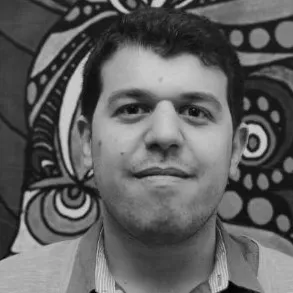
Ismail Fayed is a writer and researcher based in Cairo. He has been writing and researching contemporary artists practices in Egypt since 2007. He was part of the Critics-In-Residence for the KunstenfestivaldesArts in Belgium, Arts-Lab Critic and Festival’s Blogger for “In Transit Festival- Haus Der Kulturen Der Welt”- Germany. He is currently the associate editor of "Arab Art in the Twentieth Century: Primary Documents" published by the Museum of Modern Art in New York (2017). His writing appeared in ArteEast, Nafas Art Magazine, Mada Masr and Ma3azef.
مسار المقرر
يونيو ٢٠٢٠
- A Brief History of DeathCh. 1, 2 and 3. Douglas Davies, Wiley-Blackwell, 2005.
- Charting Death's Evolution and Life's ExtensionChapter 2, in Stanley Shostak, The Evolution of Death: Why We Are Living Longer, State University of New York, 2006.
يوليو ٢٠٢٠
- Death (Central Problems of Philosophy)Geoffrey Scarre, Ch. 4 and Ch. 7, McGill-Queen's University Press, 2007.
- Death and PhilosophyCh. 1, in Death and Philosophy, Jeff Malpas and Robert C. Solomon (eds.).
- Death and AuthenticityOptional: Ch. 11.
- Problems of Post-Mortem IdentityCh. 2, in R.W. K. Paterson, Philosophy and the Belief in a Life After Death, Palgrave, 1995.
- The Concept of the AfterlifeOptional: Ch. 6, in R.W. K. Paterson, Philosophy and the Belief in a Life After Death, Palgrave, 1995.
- The Makropulos Case: Reflections on the Tedium of ImmortalityBernard Williams (1973), in Samantha Brennan and Robert J. Stainton (eds.), Philosophy and Death: Introductory Readings, Broadview Press, 2009.
- Feminist Philosophers Turn Their Thoughts to DeathSamantha Bernnan (2006), in Samantha Brennan and Robert J. Stainton (eds.), Philosophy and Death: Introductory Readings, Broadview Press, 2009.
- The Hour of Death: The Classic History of Western Attitudes Toward Death over the Last One Thousand YearsPhilippe Aries, Ch. 3 and 4, Vintage Books, 2008.
- The Islamic Understanding of Death and ResurrectionCh. 2, in Jane Idelman Smith and Yvonne Yazbeck Haddad, Oxford University Press, 2002.
أغسطس ٢٠٢٠
- Responses to PlagueCh. 5, in Frank M. Snowden, Epidemics and Society: From the Black Death to the Present, Yale University Press, 2019.
- Plague in Medieval Islamic SocietyCh. 11, in Joseph Byrne, Daily Life During the Black Death, Greenwood Press, 2006.
- Eternity Calling: Modernity and the Revival of Death and the AfterlifeRaymond L. M. Lee, in Helaine Selin and Robert M. Rakoff (eds), Death Across Cultures: Death and Dying in Non-Western Cultures, Springer, 2019.
- Biopolitics and the Philosophy of DeathCh. 5, Paolo Palladino, Bloomsbury, 2016.
اشترك في نشرة سيلاس
المقررات الجديدة والدعوات المفتوحة ومقالات سيلاس، في بريدك.



١٨ أكتوبر ٢٠٢٦
Join CILAS's Spring semester of 2026
- Spring 2026, Cairo