الشتاء ٢٠٢٤، القاهرةورشة
Film Theory workshop
تفاصيل المقرر
- الدورة
- الشتاء ٢٠٢٤، القاهرة
- المدة
- ٧ أسابيع
- طريقة الحضور
- حضوري
- لغة التدريس
- الإنجليزية
مشاركة
ناقشه مع الذكاء الاصطناعي
- اختر مساعد الذكاء الاصطناعي الذي تفضّله.
- ستُفتح علامة تبويب جديدة، وستجد النص التوجيهي جاهزًا للاستخدام.
- اضغط على إرسال لتبدأ استكشاف الصفحة من خلال الحوار، على طريقة سيلاس.
عن المقرر
Film theory is the study of general patterns used to create and articulate film language. It differs from film history and film analysis. Film history is concerned with the study of major milestones in the progress of the filmmaking industry; and film analysis is the study of film against aesthetics, semiotics, socio-political aspects… etc. Generally, film theory is divided into two main eras: Classic, and Contemporary film theory. Classic film theory started at the beginning of the twentieth century. Theorists were focused on the answers to the questions “Is cinema an art?” and “How is cinema different from other arts?” Contemporary theorists took over from the century’s sixties, after the establishment of the film as a defined significant art. Their study was a deeper one on how film language works, and the ideologies behind filmmaking.
Our workshop focus will be on Classic film theory. We will study the two main waves defining film as an art: Formalists and Realists. Formalists are theorists who thought of film as an art that transfers reality, while Realists found film an art that represents it. Therefore, the question we will be able to answer after our course will be “How can we define Cinema?”
Learning outcomes
Understanding film theory allows viewers to find new levels of meaning within film
Identify various aesthetic aspects of film theory.
Identify, describe, and evaluate epistemological aspects of film theory.
Analyze films to understand them and their place in society better.
Film theory is valuable to everyone who enjoys film, but it also helps people who create films. Screenwriters, directors, producers, and other creatives can make more informed choices after learning the power of different film elements.
مَن يقدّم المقرر
Mohamed Hani earned his MA degree in adult learning and global change from Linkoping University in Sweden in 2022. He works as a learning and development consultant, writer, and a translator. He published a short story collection in 2021, and an Arabic translation of Truman Capote’s short stories collection. As for film discipline, he published several film critic essays on Almanassa and Medina platforms. His essays are usually a thematic analysis of filmmakers’ works against film theory. He is mainly interested in the evolution of film language, and development of film art from a formalistic perspective.
من زميل التدريس Method: The course follows a social constructivist approach to learning. The instructor will guide participants in discussing and expressing their understanding of the weekly assigned reading and watch lists. Participants will collaborate and complement their understanding through questioning and elaborating. And by the two milestones in the course, the end of formalism and the end of realism, they will be assigned essay writing to reflect on their learning.
مسار المقرر
جلسات بلا تاريخ
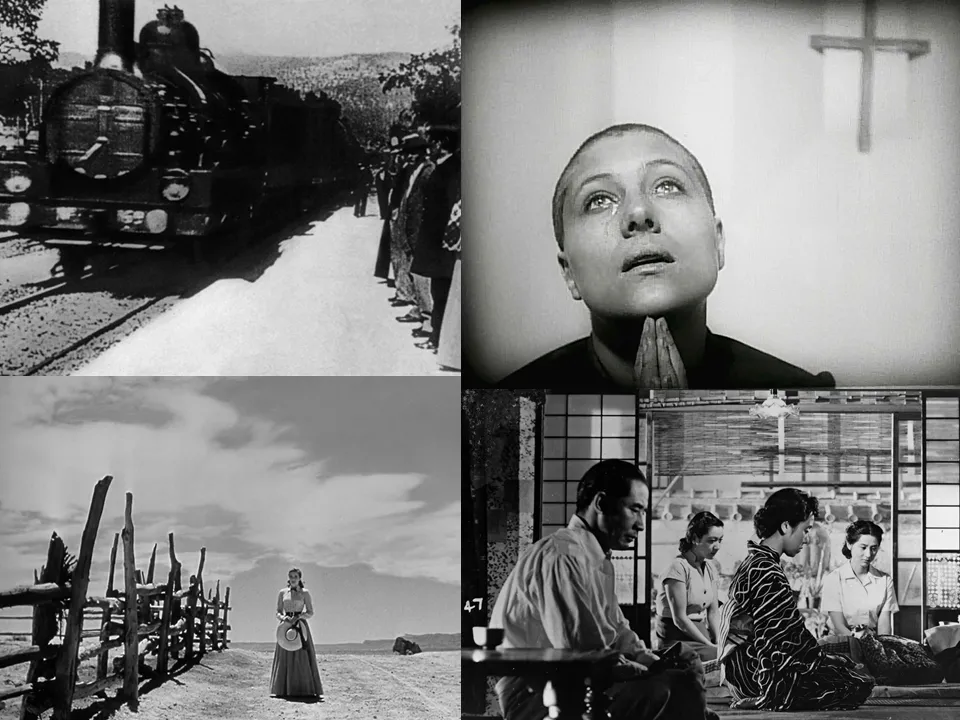
Participants will be introduced to film theory. They will get familiar with the course flow and learning method. They will read and watch the first assignment during the session, and then discuss both. The material is composed of the Lumiere brothers' movie and Maxim Gorky’s article about it.
- Kingdom of ShadowsMaxim Gorky
- the arrival of a trainLumiere brothers
في الجلسة
- نقاشThey will read and watch the first assignment during the session, and then discuss both.
Participants will discuss Rudolf Arnheim’s ideas on Gestalt psychology and the Cinematic form emerging from art’s limitations. The main concepts include framing and partial illusion.
- Film as Art: Film and RealityRudolf Arnheim
- The testament of Dr. MabuseFritz Lang
- The gold rushCharlie Chaplin
في الجلسة
- نقاشParticipants will discuss Rudolf Arnheim’s ideas on Gestalt psychology and the Cinematic form emerging from art’s limitations.
Participants will reflect on the psychological study of film through the writings of Hugo Munsterberg. They’ll explore intellectual engagement developing depth and movement in cinematic images.
- The PhotoplayHugo Munsterberg. Sections: Depth and Movement; Attention; Memory and Imagination; The means of the Photoplay.
- RashomonAkira Kurosawa
- The lost weekendBilly Wilder
في الجلسة
- نقاشParticipants will reflect on the psychological study of film through the writings of Hugo Munsterberg.
We will relate Bela Balazs and Jean Epstein’s realization of film's capability of revelation, and how shots can express duration in a transcendent way. Participants will also be exposed to the ideas of Henri Bergson on time and duration through Gestalt psychology once again.
- On Certain Characteristics of PhotogénieJean Epstein
- The Photogenic ElementJean Epstein
- L’intelligence d’une machineJean Epstein
- Esprit de cinemaJean Epstein
- Visible Man, or the Culture of FilmBela Balazs (1924)
- SabotageAlfred Hitchcock
- The passion of Joan of ArcCarl Theodor Dreyer
في الجلسة
- نقاشWe will relate Bela Balazs and Jean Epstein’s realization of film's capability of revelation, and how shots can express duration in a transcendent way.
This session is a recognition of the constructivism of film and cinema as a language. The participants will discuss editing and continuity for meaning through the works of Kuleshov and Eisenstein.
- A Dialectic Approach to Film FormSergei Eisenstein
- Montage as the foundation of CinematographyLev Kuleshov
- Le chien AndalousLuis Bunuel
- Battleship PotemkinSergei Eisenstein
- PlaytimeJacques Tati. Milestone for Formalists.
- The good, the bad, and the uglySergio Leone. Milestone for Formalists.
- Summer InterludeIngmar Bergman. Milestone for Formalists.
في الجلسة
- نقاشThe participants will discuss editing and continuity for meaning through the works of Kuleshov and Eisenstein.
Now we move to a new perspective after finishing the formalist course of classic film theory. This session is an introduction to realism and another perspective on the form of cinema. The discussion will be around Andre Bazin’s ontology of the photographic image and the indexation of time through cinema.
- The ontology of the photographic imageAndre Bazin: What is Cinema Vol_1
- The myth of total cinemaAndre Bazin: What is Cinema Vol_1
- The evolution of the language of cinemaAndre Bazin: What is Cinema Vol_1
- The rules of the gameJean Renoir
- Citizen KaneOrson Welles
في الجلسة
- نقاشThe discussion will be around Andre Bazin’s ontology of the photographic image and the indexation of time through cinema.
We will continue the discovery of realism through the works of Siegfried Kracauer. We will analyze his reflections on revelation and the un-staged among other aesthetics of realism.
- The Establishment of Physical ExistenceSiegfried Kracauer: Theory of film
- Inherent AffinitiesSiegfried Kracauer: Theory of film
- Umberto D.Vittorio De Sica
- The Life of OharuKenji Mizoguchi
- How green was my valleyJohn Ford. Milestone for Realists.
- PickpocketRobert Bresson. Milestone for Realists.
- Tokyo StoryYasujiro Ozu. Milestone for Realists.
في الجلسة
- نقاشWe will analyze his reflections on revelation and the un-staged among other aesthetics of realism.
اشترك في نشرة سيلاس
المقررات الجديدة والدعوات المفتوحة ومقالات سيلاس، في بريدك.



١٨ أكتوبر ٢٠٢٦
Join CILAS's Spring semester of 2026
- Spring 2026, Cairo