الخريف ٢٠٢٦، القاهرةمقرر قصير
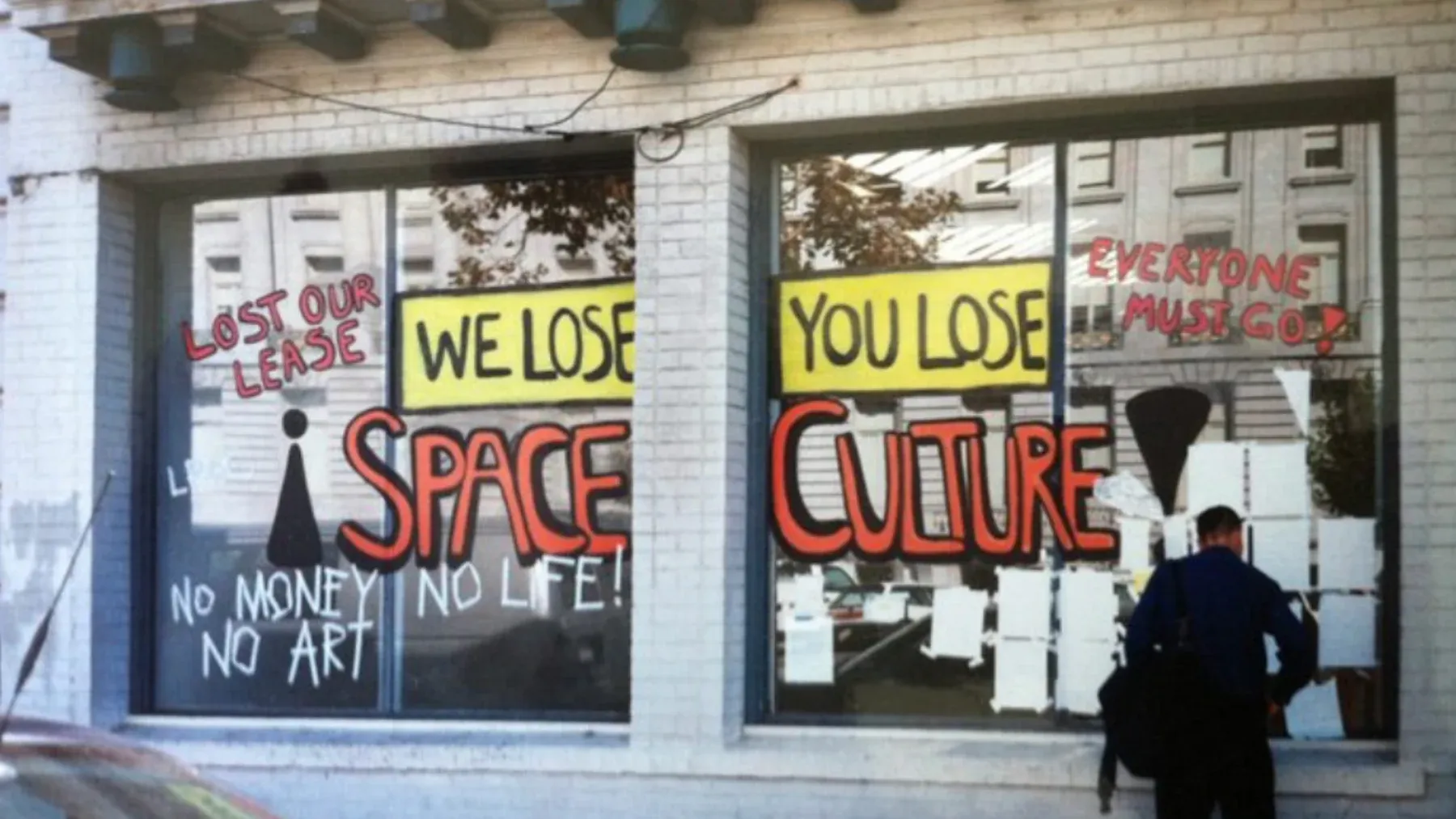
Art District or Art Washing?
Cultural Erasure, Creative Placemaking, and Reimagining the Cultural Commons
تفاصيل المقرر
- الدورة
- الخريف ٢٠٢٦، القاهرة
- يبدأ
- الاثنين، ١٦ نوفمبر
- المواعيد
- الاثنين، ١٧:٣٠–٢٠:٣٠
- المدة
- ٨ أسابيع
- طريقة الحضور
- حضوري
- لغة التدريس
- الإنجليزية
مشاركة
ناقشه مع الذكاء الاصطناعي
- اختر مساعد الذكاء الاصطناعي الذي تفضّله.
- ستُفتح علامة تبويب جديدة، وستجد النص التوجيهي جاهزًا للاستخدام.
- اضغط على إرسال لتبدأ استكشاف الصفحة من خلال الحوار، على طريقة سيلاس.
عن المقرر
Can we call it an art district if the artists and communities who created its cultural identity can no longer afford to remain?
Around the world, neighborhoods celebrated for their creativity are increasingly transformed into destinations for tourism, real estate investment, and urban redevelopment. Yet the people, traditions, and informal cultural networks that give these places meaning are often excluded from decisions about their future.
Does cultural development always come at the cost of cultural displacement? What if art and creativity could instead become instruments of community agency, collective ownership, and urban regeneration?
Drawing on experiences from Brooklyn, Casablanca, Cairo, Denver, Miami, Mexico City and beyond, this eight-week discussion-based course explores the contradictions of creative economies while investigating alternatives to extractive models of urban development.
Through provocative readings, case studies, visual inquiry, and collaborative exercises, participants will examine creative placemaking, cultural preservation, participatory design, and community-centered development.
Rather than simply critiquing existing systems, we will collectively imagine how cities might evolve while protecting cultural memory, strengthening belonging, and distributing opportunity more equitably.
The central question: How can we create places where culture and communities thrive together?
Learning approach
In accordance with the CILAS learning model, this course uses discussion-based, inquiry-led learning rather than traditional lectures.
Each session begins with a provocative image, text, case study, or question designed to challenge assumptions and invite multiple interpretations. Participants collaboratively clarify key concepts, formulate research questions, examine evidence, and explore competing perspectives through facilitated dialogue, small-group exercises, and structured debate.
Readings provide a shared intellectual foundation without prescribing conclusions. My role as facilitator is to introduce relevant frameworks, contribute professional experience where useful, challenge unsupported assumptions, and encourage thoughtful engagement across differing viewpoints. Each session concludes with collective reflection on what has been learned, what remains contested, and which questions warrant further investigation.
Course Learning Objectives
- Critically examine cultural power: Analyze how cultural identities, artistic practices, and heritage are shaped by institutions, markets, governments, and communities.
- Understand the relationship between art and urban transformation: Evaluate the complex roles of cultural development, gentrification, displacement, and cultural erasure.
- Explore community-centered alternatives: Distinguish conventional creative placemaking from approaches rooted in cultural stewardship, placekeeping, and community agency.
- Evaluate participatory practices: Examine how communities can meaningfully influence decisions concerning cultural resources, public spaces, and urban development.
- Investigate alternative economic and governance models: Assess strategies including cooperative ownership, community land trusts, and collaborative cultural infrastructure.
- Develop practical frameworks for equitable cultural development: Apply course concepts to collaboratively imagine, evaluate, and propose approaches that strengthen cultural continuity, community well-being, and shared prosperity.
Optional cumulative project
An optional, ungraded Community Cultural Stewardship Proposal.
Participants select a Cairo neighborhood or cultural ecosystem early in the course. Each week contributes one component to their investigation.
By the end, they have explored cultural assets, power dynamics, stakeholder relationships, community priorities, alternative development models, and possible measures of success.
Importantly, participants would not be claiming to speak on behalf of neighborhoods they have only studied. Their proposals would be treated as provisional, subject to further research and genuine community consultation.
مَن يقدّم المقرر
Cyren Naôs (formerly Charity Von Guinness) is a cultural strategist, arts advocate, and creative practitioner with over 25 years of experience in contemporary art and cultural development. As former Executive Director of Denver's RiNo Art District, she navigated the complex intersections of public art, urban development, community engagement, and cultural preservation. Her career includes leadership roles at Locust Projects, ProjectArt, and the Institute of Contemporary Art Miami, alongside collaborations with leading artists and institutions. Based in Cairo, she explores the relationships between art, power, cultural identity, and collective imagination, advocating for more equitable, community-centered approaches to cultural development.
مسار المقرر
قد يتغير المسار مع سير المقرر.
نوفمبر ٢٠٢٦
Guiding question: Who has the authority to define, represent, and benefit from a community's culture?
We begin by examining what culture actually means in an urban environment. Beyond galleries, museums, and designated arts districts, culture exists through everyday practices, collective memory, neighborhood relationships, traditions, and informal artistic expression.
Using Jessica Winegar's research on Egyptian art and cultural sovereignty, participants explore the tensions between cultural production, institutional legitimacy, globalization, and the communities from which cultural expression emerges.
Pre-discussion provocation: Images of informal cultural activity alongside officially designated cultural institutions and art districts. Ask: Who gets to decide which of these represents a city's authentic culture?
Research question: How do institutions, governments, investors, artists, and communities exercise different forms of authority over cultural identity?
Collaborative inquiry: Participants map a familiar neighborhood, identifying its visible and invisible cultural infrastructure. They examine who creates cultural value, who represents it, and who exercises decision-making power.
Learning goals
- Develop working definitions of culture, cultural sovereignty, cultural heritage, and creative placemaking.
- Recognize the relationships between cultural production, identity, and institutional power.
- Identify forms of cultural value that conventional economic frameworks overlook.
- Jessica Winegar, Cultural Sovereignty in a Global Art Economy: Egyptian Cultural Policy and the New Western Interest in Art from the Middle East (2006).
- Selected excerpts from Winegar's Creative Reckonings: The Politics of Art and Culture in Contemporary Egypt (2006), chapters to be determined.
Guiding question: How does cultural value become economic value, and who benefits from that transformation?
Art districts are frequently celebrated as engines of urban revitalization, attracting investment, tourism, and development. Yet the same transformations can contribute to the displacement of artists, independent businesses, and longstanding residents.
This session examines the relationship between creative activity, gentrification, real estate speculation, and cultural commodification, questioning the assumption that artists are either exclusively responsible for gentrification or merely its victims.
Pre-discussion provocation: Can we call it an art district if no artists live there?
Participants examine contrasting images and narratives of neighborhood revitalization and displacement.
Research question: Under what conditions does cultural investment strengthen an existing community, and when does it contribute to displacement?
Collaborative inquiry: Participants construct a systems map showing relationships among artists, residents, developers, investors, landlords, policymakers, and cultural organizations.
They identify reinforcing feedback loops, conflicting interests, and possible points of intervention.
Learning goals
- Examine the relationship between cultural investment and urban displacement.
- Distinguish gentrification, revitalization, cultural erasure, and artwashing.
- Understand how policy, ownership, and economic incentives influence cultural development.
- Identify opportunities for preventing displacement before it occurs.
- Carl Grodach, Nicole Foster, and James Murdoch, Gentrification, Displacement and the Arts: Untangling the Relationship Between Arts Industries and Place Change (2018).
- Selected excerpts from Sharon Zukin's Naked City: The Death and Life of Authentic Urban Places.
- Selected case studies from Denver's RiNo Art District and Miami's Wynwood Arts District.
Guiding question: How can a city evolve without erasing the histories, communities, and cultural practices that give it meaning?
Cairo provides an important setting for examining tensions between development, conservation, modernization, and cultural continuity.
Participants investigate the difference between preserving buildings and preserving the living cultures that inhabit them, while considering how Western concepts of gentrification may or may not translate into Egypt's social, political, and economic context.
Pre-discussion provocation: Historical and contemporary images of Downtown Cairo and other neighborhoods undergoing significant transformation. Ask: What does it mean to preserve a city? Its architecture, its people, its traditions, or the relationships among them?
Research question: Who determines which aspects of a city's cultural identity should be preserved, transformed, or replaced?
Collaborative inquiry: Participants select a Cairo neighborhood and collaboratively identify its cultural assets, histories, stakeholders, and development pressures.
They distinguish tangible heritage from living cultural practices and consider how preservation decisions may benefit some communities while excluding others.
Learning goals
- Examine cultural erasure within Cairo's urban context.
- Distinguish architectural conservation from cultural continuity.
- Evaluate competing claims about modernization, heritage, and development.
- Identify how community participation might alter preservation priorities.
- Mohamed Elshahed, The Prospects of Gentrification in Downtown Cairo: Artists, Private Investment and the Neglectful State (2015).
- Selected excerpts from Elshahed's Cairo Since 1900: An Architectural Guide.
- Selected visual documentation of Downtown Cairo's urban transformation.
ديسمبر ٢٠٢٦
Guiding question: What if the most important cultural interventions are not about creating something new, but sustaining what already exists?
Having examined the contradictions of conventional urban development, participants turn toward alternative approaches.
This session explores creative placemaking, creative placekeeping, cultural stewardship, and the politics of belonging. Participants consider how artists and communities might strengthen existing cultural ecosystems without transforming them primarily into destinations for consumption.
Pre-discussion provocation: Present two hypothetical proposals for the same neighborhood: One proposes a major international public-art festival to attract visitors and investment. The other prioritizes affordable cultural spaces, support for existing artists, local businesses, and community-led programming. Ask: Which intervention creates more cultural value, and who gets to decide?
Research question: How can creative placemaking support existing communities rather than imposing an externally defined vision of cultural improvement?
Collaborative inquiry: Working in groups, participants redesign a fictional cultural development proposal around community priorities, cultural stewardship, and long-term sustainability.
Groups must justify whose needs they prioritize, what trade-offs they accept, and how their approach differs from conventional development models.
Learning goals
- Distinguish creative placemaking from creative placekeeping.
- Understand the relationship between cultural participation, belonging, and community agency.
- Critically evaluate competing approaches to cultural investment.
- Explore how artists can contribute to community well-being without becoming instruments of displacement.
- Ann Markusen and Anne Gadwa, Creative Placemaking (2010), selected sections.
- Roberto Bedoya, Placemaking and the Politics of Belonging and Dis-belonging.
- Selected international examples of creative placekeeping.
Guiding question: What happens when cultural preservation begins with the needs of living communities rather than the protection of monuments?
This session examines community-led approaches to heritage conservation and cultural preservation, focusing on how historic environments can become resources for social, cultural, and economic well-being.
Using Athar Lina in Cairo's al-Khalifa neighborhood as a primary case study, participants examine approaches that connect heritage conservation with community participation, cultural education, environmental improvement, and local development.
Pre-discussion provocation: A hypothetical situation in which funding becomes available to restore a historic building in a neighborhood with pressing economic and social needs. Ask: Should the funding restore the monument, support the surrounding community, or accomplish both? Who should make that decision?
Research question: How can cultural and architectural preservation generate meaningful benefits for existing communities while strengthening their agency over the places they inhabit?
Collaborative inquiry: Participants examine Athar Lina's approach and develop a framework for evaluating community-centered preservation.
Working in groups, they consider how heritage assets might support local cultural production, education, public gathering, livelihoods, and neighborhood identity.
Learning goals
- Understand participatory approaches to cultural and heritage conservation.
- Explore connections between heritage preservation, community development, and cultural sustainability.
- Evaluate the conditions necessary for meaningful community participation.
- Identify how existing cultural assets might be activated without commodifying or displacing the communities connected to them.
- Athar Lina: Participatory Heritage Conservation, Megawra.
- Athar Lina: Project History and Mandate.
- Selected sections from Citizen Participation in Historic Cairo, Athar Lina.
Guiding question: Who has the right to shape public space, and how can creative practices redistribute that power?
Public spaces are not neutral environments. They reflect decisions about access, ownership, movement, commerce, visibility, and belonging.
This session investigates how participatory design, artistic intervention, and collaborative planning can transform underused or contested urban spaces into more inclusive environments.
Using CLUSTER's Downtown Cairo Passageways work, participants investigate the possibilities and limitations of designing with communities rather than for them.
Pre-discussion provocation: Photographs of an underused public passageway alongside proposals for its redevelopment. Ask: What makes a public space genuinely public? Is physical access enough, or must people also have a meaningful role in determining its use?
Research question: What forms of participation are necessary for communities to exercise meaningful influence over the design, use, and governance of public space?
Collaborative inquiry: Participants conduct a simulated participatory design workshop based on a public space in Cairo.
Groups represent residents, artists, small businesses, informal vendors, urban planners, and government stakeholders. Together, they must negotiate competing needs and develop a proposed intervention.
Learning goals
- Understand principles of participatory urban design.
- Identify barriers to equitable access and representation in public space.
- Examine how artistic practices can support community agency.
- Evaluate the difference between consultation and meaningful decision-making power.
- Develop collaborative approaches to resolving competing spatial priorities.
- CLUSTER: Kodak Passageway.
- CLUSTER: Cairo Downtown Passages Workshop.
- Selected visual and mapping materials from the Downtown Cairo Passageways project.
Guiding question: Can cultural communities thrive without changing the economic and ownership structures that shape urban development?
Creative placemaking initiatives often depend on temporary grants, philanthropy, or partnerships with private developers. Yet without long-term control over cultural spaces and resources, communities may remain vulnerable to displacement.
This session explores alternative economic and governance models, including community land trusts, cooperative ownership, artist-led development, community benefit agreements, and shared cultural infrastructure.
Participants consider how cultural value might circulate within communities rather than being primarily captured through real estate appreciation and private investment.
Pre-discussion provocation: A scenario in which a thriving artist-run cultural center faces eviction because the building has been sold to a developer. Ask: What would have needed to change five years earlier to protect this space today?
Research question: Which ownership, governance, and financing structures might enable cultural communities to retain greater control over their resources and futures?
Collaborative inquiry: Participants form working groups representing different community ownership and development models.
Each group develops a proposal to protect a threatened cultural space, considering financing, governance, community participation, and long-term viability.
Groups then exchange proposals and examine their limitations, trade-offs, and potential unintended consequences.
Learning goals
- Understand alternative models of cultural ownership and governance.
- Examine the relationship between economic power and cultural sustainability.
- Compare community land trusts, cooperative models, and public-private partnerships.
- Evaluate practical approaches to protecting affordable cultural space.
- Recognize the resources, institutional support, and trade-offs required to implement alternative models.
- John Emmeus Davis, The Community Land Trust Reader, selected excerpts.
- Selected community-owned cultural space and cooperative development case studies.
- National Endowment for the Arts, Creative Placemaking Resources, selected materials on partnerships and community development.
يناير ٢٠٢٧
Guiding question: What would urban cultural development look like if community flourishing, cultural continuity, and shared prosperity were its primary measures of success?
The final session brings together the course's central themes: cultural sovereignty, urban transformation, creative placekeeping, participatory design, and alternative economic models.
Participants consider whether the conventional art district remains an appropriate model for cultural development, or whether other approaches might better support creative expression and community well-being.
Rather than assuming a single ideal model, participants collectively investigate how different communities might define their own cultural futures.
Pre-discussion provocation: Return to the opening question: Can we call it an art district if no artists live there?
New question: What if a successful cultural district were measured not by how many people it attracts, but by how well it enables existing communities to thrive?
Research question: How might we design and evaluate cultural development models that prioritize belonging, affordability, collective agency, and cultural continuity?
Collaborative inquiry: Participants present preliminary Community Cultural Stewardship Proposals developed throughout the course.
Each proposal addresses a particular neighborhood, cultural ecosystem, or urban challenge and outlines possible approaches to community participation, cultural preservation, resource distribution, and long-term sustainability.
The group engages in constructive critique, identifies opportunities for collaboration, and considers the practical conditions necessary to implement proposed interventions.
Learning goals
- Synthesize the course's central concepts and competing perspectives.
- Develop and defend a community-centered cultural development proposal.
- Establish alternative indicators of success, including cultural continuity, resident retention, accessibility, and community well-being.
- Evaluate the feasibility, ethical implications, and potential unintended consequences of proposed interventions.
- Articulate how artistic and cultural practices might contribute to more equitable and sustainable urban futures.
- Participant-selected readings and case studies from previous sessions.
- National Endowment for the Arts resources on creative placemaking evaluation.
- Selected examples of community cultural impact measurement.
- Participant-developed proposals and research materials.
اشترك في نشرة سيلاس
المقررات الجديدة والدعوات المفتوحة ومقالات سيلاس، في بريدك.



١٨ أكتوبر ٢٠٢٦
Join CILAS's Spring semester of 2026
- Spring 2026, Cairo